
Reviewed · ETHIOPIAN COFFEE CEREMONY EXPERIENCES
Ethiopian Cooking Class and Coffee Ceremony with a Local in Addis with transfers
The heart of this Addis Ababa experience is not a restaurant kitchen or a staged cooking show. You enter the home of Daniel and Tigist, learn family cooking from Tigist, and talk with Daniel about Ethiopian food, culture, history, and daily life. You may also meet their three sons if you visit on a weekend.
I like the hands-on cooking and the traditional coffee ceremony, which gives you two strong introductions to Ethiopia at once. I also like the hotel transfers, especially if you are new to Addis Ababa or have only one free afternoon. The main consideration is the $154 price per person, which is high for a four-hour activity, though the private format, meal, transfers, and personal hosting add real value.
Key points to know before booking
- You cook in a private home: This is a personal visit with Daniel and Tigist, not a commercial cooking school.
- The menu is Ethiopian and may change: You might prepare shiro, tibs, injera, or another seasonal dish.
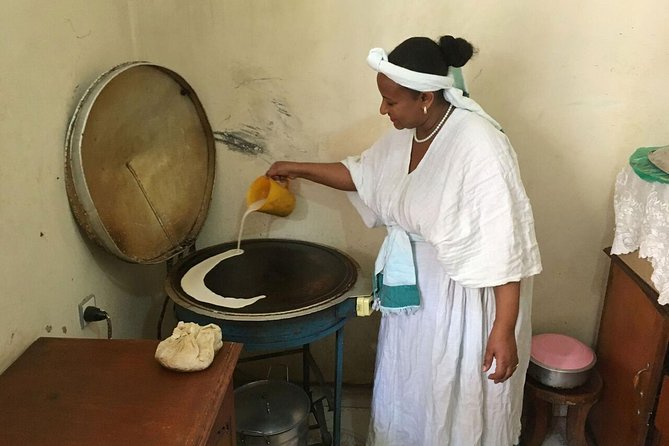
- Injera gets proper attention: Tigist shows you how to pour and cook Ethiopia’s famous spongy flatbread.
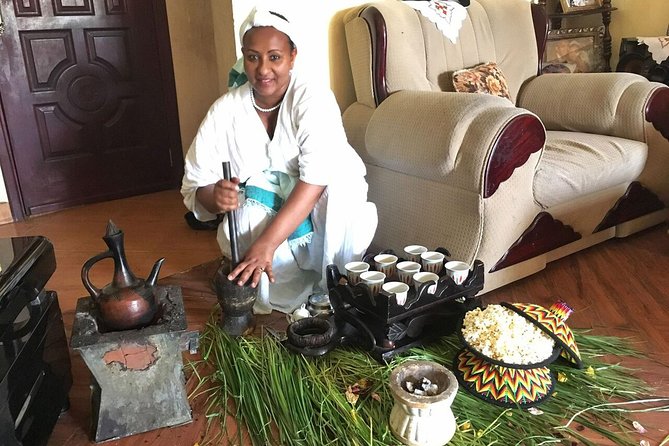
- Coffee is part of the experience: You roast beans and take part in a traditional Ethiopian coffee ceremony.
- Pickup and drop-off are included: Your day begins and ends at your Addis Ababa hotel.
- It suits curious eaters: Vegetarian meals are available, and you should report allergies or food preferences when booking.
A home kitchen instead of a staged cooking school
This experience gives you a look at Ethiopian food through a family home. That difference matters. In a formal cooking school, you might get a polished demonstration and a printed recipe. Here, you sit with local hosts, watch how food is prepared in a real kitchen, and share the finished meal with the people who made it.
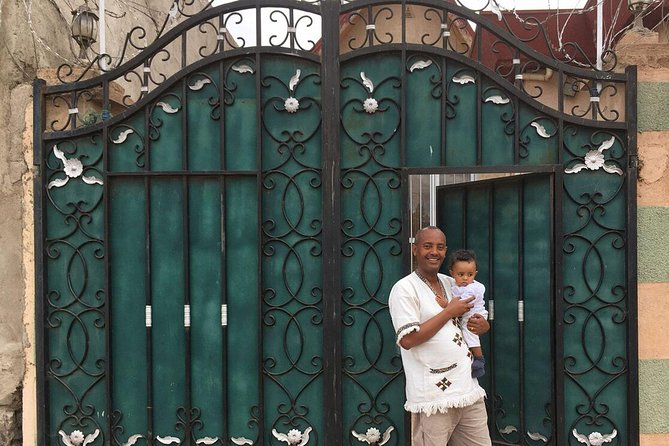
Daniel and Tigist are from the Oromia region, but they cook dishes from across Ethiopia. You should expect pan-Ethiopian food rather than a menu limited to one local specialty. Tigist learned to cook by helping her mother as a child, then ran her own kitchen after marrying Daniel.
Daniel brings a different kind of experience. He has a master’s degree in Social Anthropology and has worked in tourism for more than a decade. He speaks English very well and enjoys discussing food, history, politics, and cultural differences. If you want to ask questions, this is not a host who will rush you through a fixed script.
The family setting can also make the visit feel less formal. Their three boys may join you on weekends. That is not guaranteed, but it gives you a sense that you are visiting a household rather than attending an isolated tourist activity.
More coffee in Addis Ababa:
- Ethiopian Culinary Tour – Market, Food, Coffee Ceremony & more
★ 5.0 · 65 reviews - Market Tour and Cooking Class with a Coffee Ceremony at a Home in Addis Ababa
★ 5.0 · 32 reviews - Vintage Coffee Shops, Restaurants, Sightseeing in Addis Ababa
★ 5.0 · 17 reviews
What happens during the 3:30 pm visit
Your pickup is scheduled for 3:30 pm, and the full experience lasts about four hours. The exact driving time depends on your hotel and Addis Ababa traffic, but the included transfer removes the need to arrange a taxi or find the home yourself.
Once you arrive, the cooking portion lasts about 1.5 to 2 hours. Tigist leads the practical work, showing you how the ingredients are prepared and how the dishes come together. You should expect to participate rather than simply watch.
The menu can vary with the season. A typical class may include shiro, a stew made with chickpea or broad bean flour, or tibs, stir-fried meat cooked with vegetables and spices. The exact dish is not fixed, so this experience works best if you are interested in learning the cooking method rather than ordering a particular meal.
You will also learn how to make injera. This spongy, slightly tangy flatbread is central to many Ethiopian meals. It is used as both food and utensil, with pieces torn off to scoop up stews and meat. Learning to pour and cook it gives you a better sense of why the bread is so important than simply eating it in a restaurant.
If you want to learn an additional dish, ask for it when you book. The hosts can add another preparation, but it will extend the cooking time. This is an important detail if you have an evening appointment or a scheduled flight.
Shiro, tibs, and the practical value of cooking
Shiro is a useful introduction to Ethiopian cooking because its main ingredient is familiar in concept but distinctive in flavor. The chickpea or broad bean base becomes a thick stew, seasoned in the Ethiopian manner. It is also a good choice for vegetarians.
Tibs gives you a different lesson. Instead of a slow stew, it is stir-fried meat with vegetables and spices. You can compare the texture and cooking method with shiro, then see how both dishes work with injera.
The value here is not only the meal at the end. By handling ingredients and following the cooking process, you gain a better idea of how Ethiopian food is built. You also leave with a way to recognize dishes on later menus. If you continue through Ethiopia, that early food lesson can help you order with more confidence.
The menu may change, so do not book this expecting one exact recipe. Think of it as a chance to learn one or two Ethiopian preparations selected by the hosts. If you have allergies, dietary restrictions, or strong cooking preferences, provide that information at booking time.
A vegetarian option is available, but it must be requested in advance. The same advice applies to any ingredient you cannot eat. The more clearly you explain your needs before the visit, the easier it will be for the hosts to plan the meal.
Injera is more than a side dish
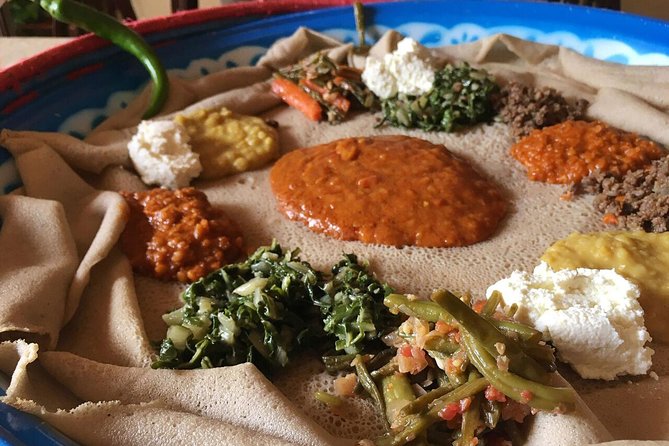
For many first-time visitors, injera is the most unfamiliar part of an Ethiopian meal. It looks like a large, soft pancake, but its texture and flavor are different from ordinary flatbread. It forms the base of the meal, and the stews or meat are arranged on top.
Tigist shows you how to pour the batter and cook the bread. That lesson is useful because injera is not just something placed beside your food. It shapes the way the entire meal is eaten.
You should be prepared for a practical lesson, not a bakery demonstration with several finished loaves waiting for you. The cooking portion takes time, and the bread may be one of the main things you work on during the class. If you enjoy learning technique, this is a strong part of the visit. If you only want to eat, the class may feel longer than necessary.
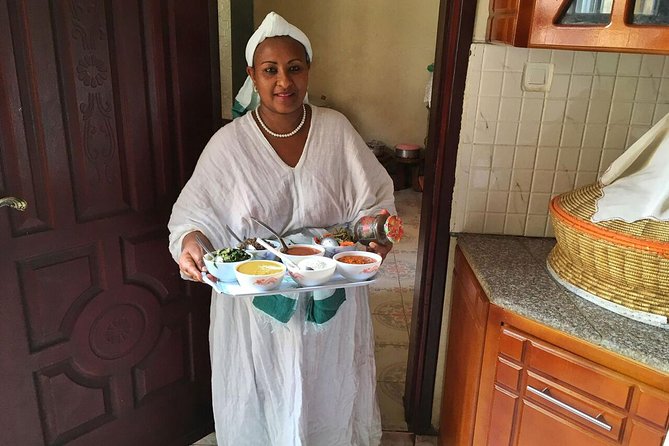
At the meal, injera also brings the group together. You eat from the shared serving area, using pieces of bread to pick up the food. The setting makes the meal social, not simply a plate delivered to your seat.
Other kitchens to sit in around Addis Ababa:
- Unique Ethiopian Cooking Class and Coffee Ceremony with a Local in Addis Ababa
★ 4.5 · 7 reviews - Addis abeba Full Cooking class.
★ 5.0 · 6 reviews - Private Ethiopian Home Cooking Class in Addis Ababa with Transfer
★ 5.0 · 5 reviews
Roasting coffee in its birthplace
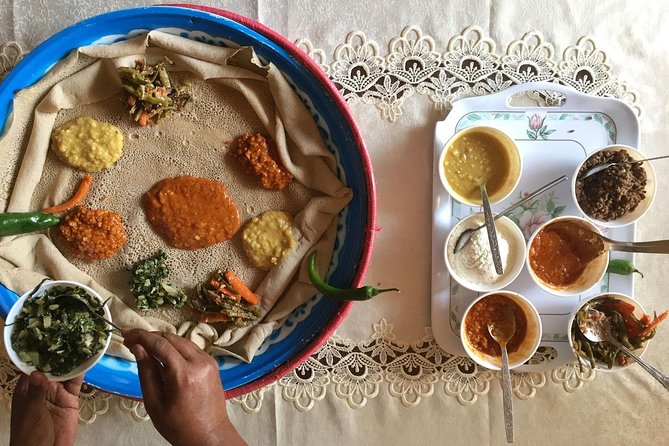
The coffee portion gives the afternoon a second focus. Ethiopia is widely known as the birthplace of coffee, and the ceremony offers more than a standard cup served after dessert.
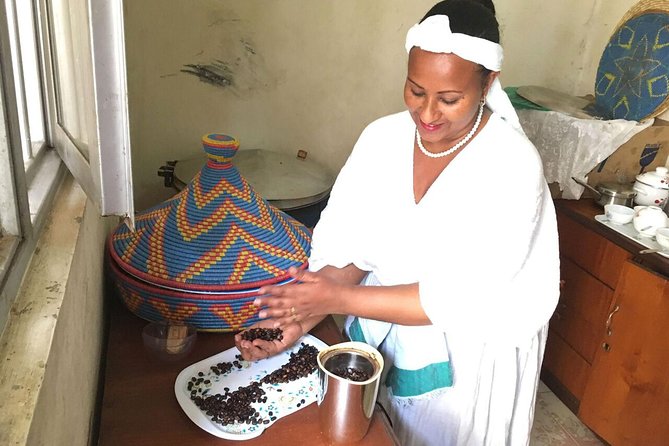
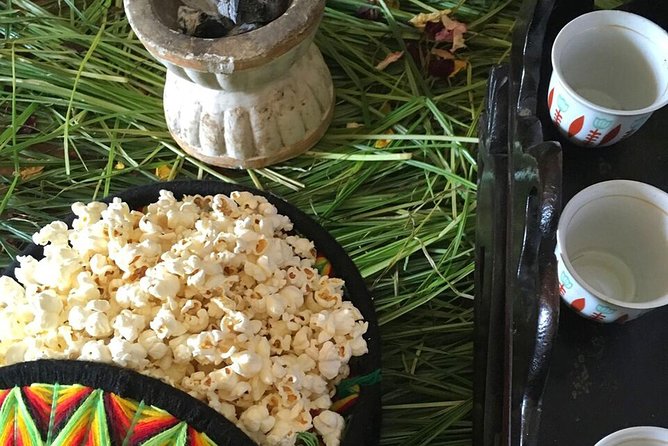
You will roast coffee beans yourself, then take part in the traditional ceremony. The roasting step helps you understand how much preparation goes into the drink before brewing. The ceremony also slows the pace of the visit after the cooking and meal.
Coffee is closely tied to hospitality in Ethiopia, so this part fits naturally into a home visit. It gives Daniel and Tigist another way to share an important part of local culture with you. If you do not drink coffee, check your comfort level before booking, but the experience does include coffee and tea as part of the provided beverages.
Alcoholic drinks are not included. Bottled water, coffee, tea, and other listed nonalcoholic provisions are covered. Do not assume that a drink purchased separately will be part of the price.
The private format and what it means for you
This is a private activity, so only your group takes part. That is a major advantage if you want to ask many questions, cook at your own pace, or discuss dietary needs without a larger class watching.
A private visit also makes the experience more personal than a group demonstration. Daniel can talk with you about subjects beyond food, including Ethiopian culture and politics. His social anthropology background adds useful context, especially if you want to understand how food connects with family life and regional identity.
The tradeoff is that a private home visit may be less predictable than a commercial class. The menu changes, the family may be present, and the format is built around conversation as much as instruction. If you prefer strict timing, standardized recipes, and a professional teaching kitchen, this may not be your ideal choice.
The personal setting is the point, though. The strongest reason to choose this activity is the chance to meet local people in their own home while cooking food they know well.
Is the $154 price worthwhile?
At $154 per person, this is not a budget meal or a simple cooking lesson. You are paying for a private experience with local hosts, hotel pickup and drop-off, the cooking class, the meal, beverages, bottled water, taxes, and gratuities.
The price makes more sense if you value convenience and personal contact. Addis Ababa traffic can make independent plans tiring, and the included transfers simplify the afternoon. You also avoid arranging separate transport to a private home.
The four-hour length gives you enough time for cooking, eating, coffee roasting, and conversation. Still, the cost is easier to justify for someone who wants a cultural experience rather than a low-cost food activity. Couples, families, and small groups may find the private format especially appealing.
The experience has a 4.9 rating from 14 reviews, with 100 percent recommending it. One particularly strong response praised the cooking with Daniel’s family, the chance to see their neighborhood in the hills on the outskirts of Addis Ababa, and Daniel’s willingness to answer questions about Ethiopian culture. That detail is worth noting: the visit may offer more than the kitchen itself, depending on how the time unfolds.
Who should book this experience
I would recommend it to you if you enjoy meeting local people and prefer a personal activity to a standard city tour. It is also a good choice if food is one of your main ways of understanding a place.
Families may appreciate the relaxed home setting, especially if the boys are present on a weekend. Couples and small groups can take advantage of the private format. Solo visitors who want conversation and a planned transfer may also find the setup useful.
This is less suitable if you need a guaranteed menu, dislike shared food, or want a fast demonstration with little conversation. It may also be a poor fit if you have dietary needs but do not provide them in advance.
The start time is another practical point. The visit begins at 3:30 pm and continues for roughly four hours, so you should keep your evening open. If you ask to add another dish, plan for extra time.
Booking advice and cancellation rules
Include your hotel name and full address when booking so pickup and drop-off can be arranged properly. Confirmation is provided at the time of booking, and the experience is offered with a mobile ticket.
The menu depends on the season, so state any allergies, dietary restrictions, vegetarian needs, or cooking preferences when you reserve. Ask in advance if you want an additional dish added to the lesson.
You can cancel for a full refund up to two full days before the local start time. Cancellations or changes made within two days are not refunded or accepted. That policy is worth remembering because the experience is private and planned around your group.
Should you book this Addis Ababa cooking class?
Book it if you want a real home visit with food at the center, not just a recipe lesson. Daniel and Tigist offer something personal: Tigist teaches the cooking, Daniel supplies conversation and cultural context, and the family setting gives the afternoon a human scale.
The best parts are the chance to make injera, the flexible pan-Ethiopian menu, and the coffee roasting ceremony. Hotel transfers also make this a practical choice for a first visit to Addis Ababa.
Skip it if $154 feels too high for a four-hour activity or if you want a fixed menu and formal cooking school. For everyone else, the combination of private hosting, a shared meal, Ethiopian coffee, and easy transport makes this a strong way to spend an afternoon in Addis Ababa.
FAQ
Where does the cooking class take place?
The class takes place in Daniel and Tigist’s home kitchen in Addis Ababa.
What time does the experience start?
The listed start time is 3:30 pm.
How long does the experience last?
The full experience lasts about four hours. The cooking portion takes approximately 1.5 to 2 hours.
Is hotel pickup included?
Yes. Hotel pickup and drop-off are included. You should provide your hotel name and address when booking.
Is the experience private?
Yes. Only your group participates in this private activity.
What dishes might I learn to make?
You might learn to make shiro, a chickpea or broad bean stew, tibs, stir-fried meat with vegetables and spices, and injera.
Will the menu always be the same?
No. The menu may vary depending on the season.
Is a vegetarian option available?
Yes. A vegetarian option is available, but you should request it when booking.
Are coffee and tea included?
Yes. Coffee and tea are included, along with bottled water. Alcoholic drinks are not included.
What is the cancellation policy?
You can receive a full refund if you cancel at least two full days before the experience start time. Cancellations and changes made within two days are not refunded or accepted.
More coffee houses and roasteries in Addis Ababa
- Ethiopian Culinary Tour – Market, Coffee Ceremony and More
★ 5.0 · 10 reviews - Ethiopia coffee cupping class/Ethiopian food injera making
★ 5.0 · 10 reviews - Coffee Cupping Tour in Addis Ababa
★ 5.0 · 5 reviews - Addis Ababa City Experience : Markets, Coffee & Local Life
★ 4.8 · 5 reviews
Just added out of Addis Ababa
- Yod Abyssinia Cultural Night: Dinner, Music, and Dance★ 5.0 · 7 reviews
- Locally crafted beer and wine tasting and nightlife in Addis tour★ 5.0 · 6 reviews
- Stunning Views Wonchi Crater Lake a Private Day Trip★ 5.0 · 3 reviews
- Two days Lake Wenchi and Menagesha Forest★ 5.0 · 3 reviews
- Tribes of the Ethiopian Omo Valley – 9 Day Tour★ 5.0 · 5 reviews
- Addis Ababa City Tours Full-Day Tours★ 5.0 · 5 reviews
- 3-Day Cultural Tour in South Omo Valley★ 5.0 · 4 reviews
- Day Trip to Tiya UNESCO Site & Melka Kunture Archaeological Site★ 4.5 · 3 reviews
Ethiopian Coffee Ceremony Experiences, compared.
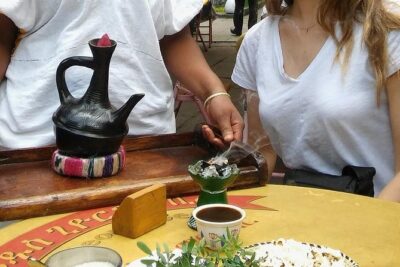
Ethiopian Culinary Tour – Market, Food, Coffee Ceremony & more
Read our review →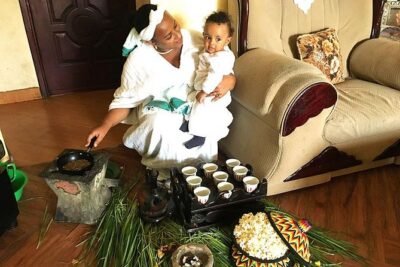
Market Tour and Cooking Class with a Coffee Ceremony at a Home in Addis Ababa
Read our review →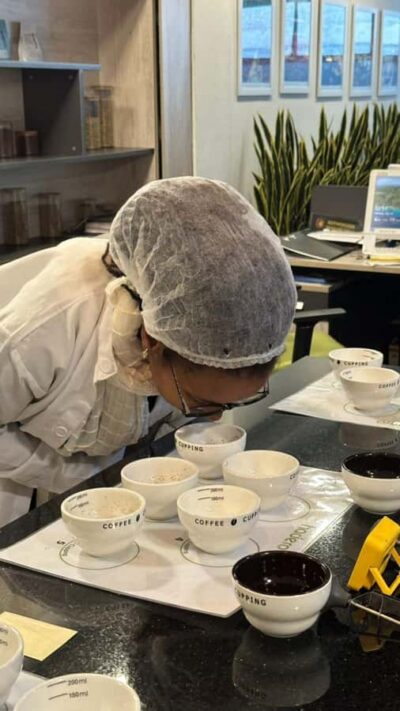
Ethiopia coffee cupping class/Ethiopian food injera making
Read our review →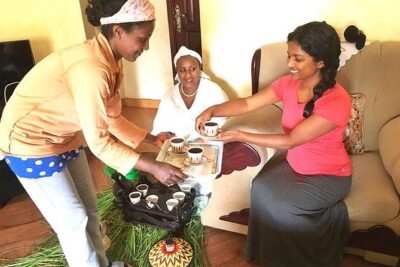
Unique Ethiopian Cooking Class and Coffee Ceremony with a Local in Addis Ababa
Read our review →
Addis Ababa City Experience : Markets, Coffee & Local Life
Read our review →
Churches Full-Day Private Tour w/Coffee Ceremony
Read our review →
Browse the lists this tour appears in