

Reviewed · OMO VALLEY TRIBAL TOURS
3-Day Cultural Tour in South Omo Valley
The best part of this South Omo tour is its range. In only three days, you travel from Jinka to Turmi, Omorate, and a Mursi village, meeting Hamer, Dassanech, Bana, and Mursi communities along the way. You see body adornment, village life, the Omo River, and the roads through Mago National Park.
I like the small maximum of six people, which makes a long journey easier to manage. I also like that the tour uses a local guide and driver, with guide Tariku and driver Sitotaw receiving especially warm praise for their care and attention. The main drawback is the pace: long road journeys leave little time for quiet observation, and lunch, dinner, tips, and possibly the flight cost extra.
Key things to know before you go

- Four cultural encounters in three days: You visit Bana, Hamer, Dassanech, and Mursi communities, each with distinct clothing, language, customs, and daily life.
- A bull-jumping ceremony is possible: If a Hamer ceremony takes place, the schedule may change so you can attend it.
- Omorate means a long day: The excursion covers about 70 kilometers each way, followed by a dugout canoe crossing of the Omo River.
- Mago National Park adds more than scenery: The park is the route to the Mursi village and gives the final day a strong sense of travel through remote country.
- The price includes useful basics: Air-conditioned transport, accommodation with breakfast, an English-speaking guide, and listed fees are covered.
- A group of six keeps things manageable: This is a better fit for people who prefer a small organized group to arranging every transfer alone.
Why South Omo feels unlike the rest of Ethiopia
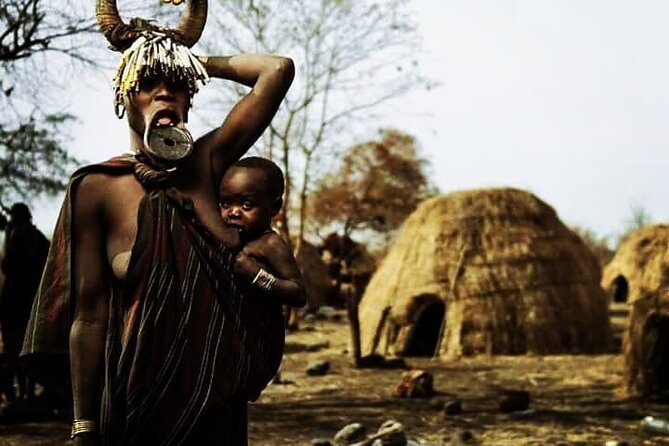
The Lower Omo River region is home to eight ethnic groups and roughly 200,000 people. That number tells only part of the story. The real interest comes from the differences between communities that live within the same broad region.
Language, clothing, food, ornament, ceremony, and work traditions vary from group to group. The visit is not a single cultural stop repeated several times. It is a quick succession of distinct communities, each with its own visual identity and social customs.
That variety is the reason to choose this tour. You are not simply driving to a scenic viewpoint and taking photographs. You are visiting places where farming, herding, craftwork, family life, and ceremony remain closely tied to older traditions.
Still, this is not a relaxed village stroll. The distances are large, roads can take time, and the schedule packs several major stops into three days. I would choose it for access and variety, not for a slow, reflective pace.
Other trips south from Addis Ababa:
- 6 Days Omo Valley Tribes Tours From Addis Ababa
★ 5.0 · 33 reviews - 3 Days Omo Valley Tour
★ 5.0 · 24 reviews - 5 Days Omo Valley Tours
★ 5.0 · 15 reviews
Day one: Jinka, Bana villages, and the Hamer country around Turmi
The first morning begins at Bole Addis Ababa International Airport, with a listed start time of 9:00 am. You fly to Jinka, then continue by air-conditioned vehicle toward Turmi, home of the Hamer people.
The drive is part of the experience. This is not a short transfer between nearby attractions. You spend about six hours on the day’s route, with Bana village included along the way. The stop gives you an early look at the people and customs of South Omo before you reach Turmi.
The Hamer, also called Hamar, live east of the Omo River, with communities around Turmi and Dimeka. They are known for colorful beads and striking body adornment. Hamer women wear heavy polished iron jewelry around their necks, a detail that catches the eye but also reflects a social and cultural tradition rather than simple decoration.
The tour description also refers to ritual scarification and ceremonial floggings connected with marriage customs. These practices can be difficult for outsiders to understand. Your guide matters here. A good guide can explain what you are seeing without turning serious traditions into a quick photo stop.
Turmi is also known for traditional events. If the timing works, you might encounter a Hamer marriage ceremony, including the bull-jumping ceremony. This is one of the most important possibilities on the trip, and the schedule can change if one is taking place. The afternoon visit to another community may be canceled because the ceremony is considered the more valuable experience.
That flexibility is a strength, but it comes with uncertainty. Ceremonies are not fixed theater performances arranged around your arrival. You may see one, or you may not. If you do, be ready for a change of plan and a more demanding cultural encounter than a standard village visit.
Day two: the long road to Omorate and a dugout canoe on the Omo
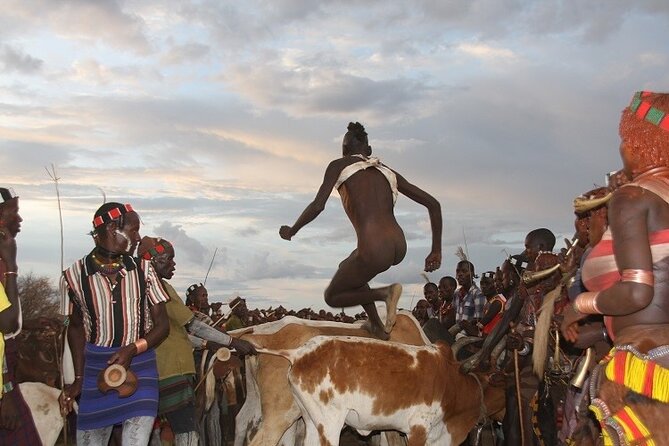
Day two is the hardest driving day. You travel from Turmi to Omorate, about 70 kilometers each way, to visit the Dassanech people. The full excursion takes around eight hours, so you should expect an early start and a late return to the road.
The Dassanech are known for a nomadic way of life, body decoration, and scarification. The route also includes a crossing of the Omo River in a dugout canoe. That crossing is one of the trip’s most memorable details because it changes the journey from a road excursion into a short river passage.
You will also get broad views of the Omo River from the crossing. The appeal is not just the boat itself. The river is central to the region, and seeing it at close range helps explain why communities live and move around this part of southwestern Ethiopia.
Omorate is valuable because it takes you farther from the main road circuit. The cost is time. Eight hours on the move can feel tiring, especially when the same day may include heat, rough roads, and waiting at the river. Bring patience and keep lunch plans clear, since lunch is not part of the stated inclusions.
The plan then returns to Turmi. If a Hamer bull-jumping ceremony is happening, the day’s order may change or the Omorate excursion may be canceled. This is worth confirming before departure, particularly if the ceremony is your main reason for booking.
Late in the afternoon, you drive to Jinka for the overnight stay. That final transfer means day two is not finished when you leave Omorate. It is a full day with three separate demands: the outward and return drive, the cultural visit and river crossing, and the evening transfer to Jinka.
Day three: Mago National Park and the Mursi village

The final morning takes you through Mago National Park to a Mursi village. The drive lasts about four hours, and the park is the setting for the route rather than a separate wildlife-focused safari.
The Mursi are widely known for lower-lip and earlobe plates. These forms of adornment are among the most recognizable cultural features in South Omo, but they can also lead outsiders to reduce a whole community to one image. The better approach is to pay attention to the wider visit: how people dress, work, interact, and present their traditions.
This stop gives the tour a strong final chapter. The Hamer visit focuses heavily on ceremony and adornment. Omorate adds the Dassanech, the Omo River, and a canoe crossing. Mago National Park then leads you to the Mursi, giving you another distinct community before the trip returns toward Jinka and the flight connection.
The four-hour drive is not excessive by South Omo standards, but it still makes the morning active. If you want a detailed wildlife tour, this is not the right product. The park serves mainly as the approach to the Mursi community.
At the end of the tour, you return to Bole Addis Ababa International Airport in Addis Ababa. Because the schedule includes several road transfers and a flight connection, confirm the exact return timing before arranging another same-day flight or a tight onward plan.
More history around Addis Ababa:
- Day Trip From Addis Ababa See Historical Monastery,Stunning Nature,Animals,Birds
★ 5.0 · 303 reviews - Hidden Treasures of Addis Ababa – Food, Culture and History Tour
★ 5.0 · 57 reviews - Addis Ababa – Half Day Cultural Experience
★ 4.5 · 23 reviews - “Addis Uncovered: Culture, Views & Everyday Vibes
★ 4.8 · 12 reviews
What the $700 price really covers
At $700 per person, this is not a cheap add-on. It is also not easy to compare with a simple city tour because the price covers a remote, multi-day route with transport, accommodation, a guide, and several listed entry fees.
The stated inclusions are:
- Air-conditioned vehicle
- All fees and taxes
- Accommodation with breakfast
- English-speaking guide
The itinerary includes a flight from Addis Ababa to Jinka, but the inclusion list does not clearly state that airfare is covered. I would ask this question before paying. A flight can make a large difference to the real cost.
Lunch and dinner are not included, and tips are also separate. Those expenses may not ruin the value, but they should be included in your budget. The accommodation is described only as lodging with breakfast, so do not book this expecting a particular hotel standard unless the operator confirms it.
The strongest value comes from logistics. South Omo is difficult to organize independently when you need a vehicle, driver, guide, route planning, accommodation, and community visits in a short window. Paying for a small organized trip can be sensible if you have limited time in Ethiopia.
The weakest value appears if you want long stays in each community. At three days, the price buys access and a broad sample, not an unhurried field trip.
The guide and driver matter more than usual
This is a route where the people leading the trip affect the whole experience. The roads are long, the cultural situations can be sensitive, and plans may shift around ceremonies.
Guide Tariku and driver Sitotaw have been singled out for being attentive and treating the group with a family-like level of care. You should ask if they are assigned to your departure, since staff can vary. Their names are useful points of reference when you confirm the booking.
An English-speaking guide should do more than translate. You need explanations of Hamer marriage customs, Dassanech life, Mursi adornment, and the differences between communities. You also need help understanding when to pause, where to stand, and how to behave during a ceremony or village visit.
The small group limit of six helps. It reduces crowding around cultural encounters and makes it easier to ask questions. It also gives the guide a better chance to notice if you are tired, unsure, or missing context.
The main drawbacks to weigh
The first issue is pace. You cover a lot of ground, with about six hours on day one, eight hours on day two, and another four hours on day three. That is normal for South Omo, but it is still tiring.
The second issue is uncertainty. A ceremony may change the plan. Weather or minimum group numbers may also lead to a different date, a different experience, or a full refund. That flexibility protects the booking, but it means you should not build a rigid onward schedule around the tour.
The third issue is cultural sensitivity. The people you meet are not performers. Their clothing, scarification, ceremonies, and family customs are part of real life. I would follow the guide’s instructions closely and treat every photo opportunity as something that requires care and permission.
Finally, the information provided about meals is limited. Breakfast is included, but lunch and dinner are not. Ask how meal stops work on the long driving days so you can plan properly.
Who should book this three-day route
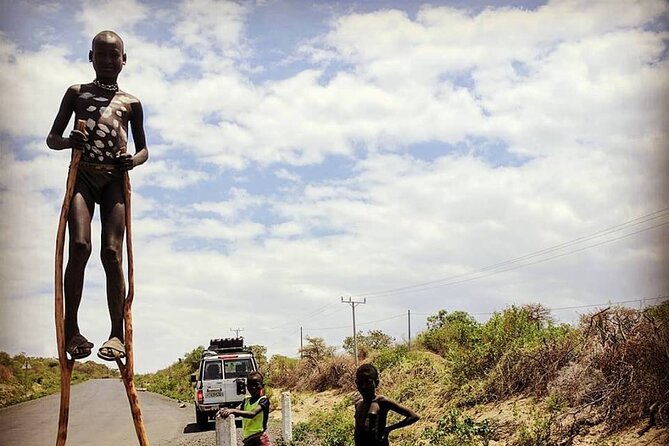
I would recommend it if you want a concentrated introduction to South Omo and have only three days available. It suits you if you value local guiding, a small group, organized transport, and access to several communities more than hotel luxury or a slow schedule.
It is also a good fit if you want the chance to see a Hamer ceremony but understand that no ceremony can be guaranteed. The possible bull-jumping event is a major bonus, not a fixed feature.
I would hesitate if you dislike long drives, need a detailed meal plan, or want to spend several days with one community. I would also ask more questions before booking if the $700 price must include every cost, since airfare, lunch, dinner, and tips are not clearly covered.
The best way to improve the experience is to contact Liyu Ethiopia Tours before departure. Confirm the flight, the exact accommodation, the return airport timing, meal arrangements, and whether Tariku and Sitotaw will be your guide and driver.
Should you book the South Omo tour?
Book it if your priority is seeing a wide range of South Omo cultures in a short, organized trip. The route combines four community visits, the Omo River, Mago National Park, a possible Hamer ceremony, and local support in a group of no more than six.
Skip it if you want a gentle holiday or a fixed schedule with no long road days. At $700, it offers practical value for a difficult region, but only if you confirm what the price includes and accept that the most important cultural moments cannot be guaranteed.
The cancellation terms are straightforward: cancel at least 24 hours before the 9:00 am start for a full refund. Cancellations or changes within 24 hours are not refunded, and poor weather or an unmet minimum group may lead to a new date, another experience, or a full refund.
FAQ
Where does the tour start and finish?
It starts and ends at Bole Addis Ababa International Airport in Addis Ababa, Ethiopia.
What time does the tour start?
The listed start time is 9:00 am.
How long does the tour last?
The experience lasts approximately three days.
How many people can join?
The group has a maximum of six travelers.
Which communities does the tour visit?
The route includes Bana, Hamer, Dassanech, and Mursi communities.
Is the flight from Addis Ababa to Jinka included?
The schedule includes a flight to Jinka, but the stated inclusions do not clearly confirm that airfare is included in the $700 price. Confirm this with the operator before booking.
Is accommodation included?
Yes. Accommodation with breakfast is included.
Are lunch and dinner included?
No. Lunch and dinner are not included.
Is a Hamer bull-jumping ceremony guaranteed?
No. A ceremony may take place during the visit, but it is not guaranteed. If one is happening, the schedule may change to include it.
What is the cancellation policy?
You receive a full refund if you cancel at least 24 hours before the experience start time. Cancellations or changes within 24 hours are not accepted for a refund. If poor weather or an unmet minimum group causes the operator to cancel, you can receive a different date or experience, or a full refund.
More 3-Day Experiences in Addis Ababa
- 3 Day Danakil Depression Ertale and Dallol Tours
★ 5.0 · 44 reviews - 3 Days Dankile Depression group Tours
★ 5.0 · 40 reviews - 2-Night 3-Day Danakil Depression Tour without Flights
★ 4.8 · 31 reviews - Trekking at Bale Mountains 3 Days
★ 5.0 · 28 reviews
Just added out of Addis Ababa
- Yod Abyssinia Cultural Night: Dinner, Music, and Dance★ 5.0 · 7 reviews
- Locally crafted beer and wine tasting and nightlife in Addis tour★ 5.0 · 6 reviews
- Stunning Views Wonchi Crater Lake a Private Day Trip★ 5.0 · 3 reviews
- Two days Lake Wenchi and Menagesha Forest★ 5.0 · 3 reviews
- Tribes of the Ethiopian Omo Valley – 9 Day Tour★ 5.0 · 5 reviews
- Addis Ababa City Tours Full-Day Tours★ 5.0 · 5 reviews
- Day Trip to Tiya UNESCO Site & Melka Kunture Archaeological Site★ 4.5 · 3 reviews
- South Omo Valley Tribes 8 Days Tour Package★ 5.0 · 4 reviews
Omo Valley Tribal Tours, compared.

Lalibela, Axum, Danakil and Omo Valley 8 DAYS
Read our review →


9 Days Tours To Danakil Depression, Simen MNP, Lalibela With Omo Valley Tribes
Read our review →
5 Day Private tour to the Omo Valley Tribes and Adventure Tour
Read our review →
8 Days Lalibela,Danakil Depression and Omo Vally Tours
Read our review →Browse the lists this tour appears in