

Reviewed · ROCK-HEWN CHURCH TOURS
6 Days Lalibela, Omo Valley and Harar
Ethiopia packs three very different worlds into six demanding days: Lalibela’s hand-cut churches, the Omo Valley’s village visits, and Harar’s old Islamic quarter with its nightly hyena feeding. You move mainly by domestic flight and private vehicle, so this is a fast way to cover ground that would take far longer independently.
I like the strong mix of places and the fact that your local guide and private vehicle stay with the program on the ground. I also like the range of experiences: sacred architecture, traditional markets, boat trips, museums, and living cultural traditions. The main caution is the pace, plus a serious cost detail: the listed price does not clearly include domestic flights, and one booking experience found that no internal flights had been arranged.
Key points before you book
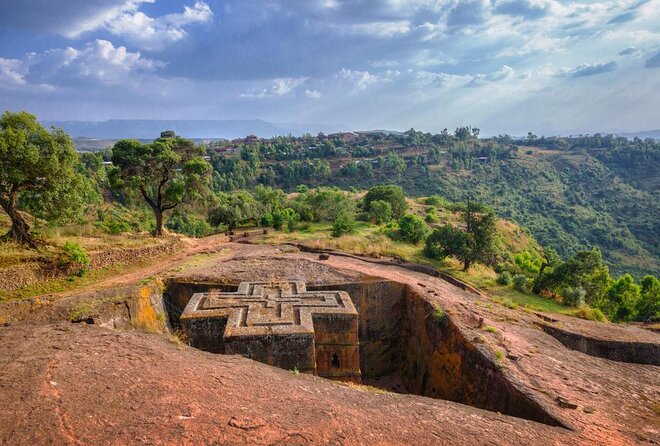
- Lalibela in one long day: You visit the northern and southern groups of rock-hewn churches, including Bet Medhane Alem, Bete Maryam, and Bete Giyorgis.
- Omo Valley by road: Jinka, Mursi, Hamer, Dasenech, and Konso are linked by long drives and early starts.
- Two boat trips: Lake Chamo brings crocodiles and hippos, while the Omo River crossing helps reach a Dasenech village near Omorate.
- Harar after dark: The evening hyena feeding is followed by museums, markets, old walls, and the home of Arthur Rimbaud.
- Private touring: Only your group takes part, with an air-conditioned vehicle and local guide service listed as included.
- Check the real total: Entrance fees, licenses, taxes, vehicle service, guides, and four breakfasts are included. Accommodation and internal flights are not clearly listed among the inclusions.
Lalibela’s churches make the first day count

Your first morning begins early, with a planned flight from Addis Ababa at about 7:10 am. After meeting your local contact at Lalibela Airport, you drive roughly 23 kilometers to the town, check in, and take a short break before beginning the church visit.
Lalibela is not a place you simply glance at from a viewpoint. Its churches were cut downward into solid rock, creating courtyards, trenches, tunnels, and passages below ground level. That makes comfortable walking shoes useful, even though the listed physical requirement is only moderate fitness.
The northern group includes Bet Medhane Alem, known for the Lalibela Cross and described as possibly the largest monolithic church in the world. You also see Bete Maryam, often considered the oldest church in the group, along with Bete Golgotha, the Selassie Chapel, and the Tomb of Adam.
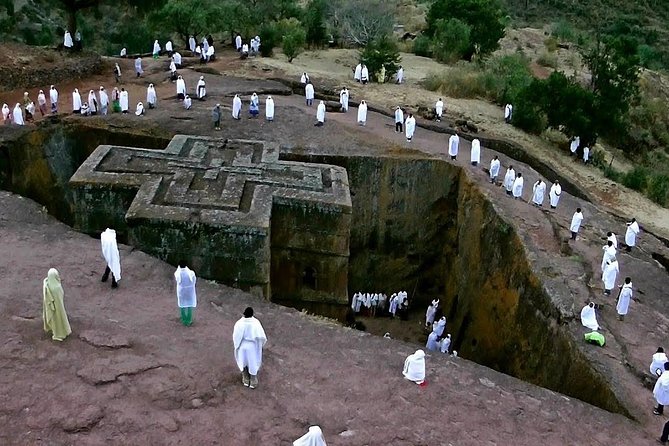
The visit continues to the second group of churches, including Bete Giyorgis, the cross-shaped church often associated with Lalibela’s most recognizable image. The schedule gives about seven hours to this stop, which is generous compared with a quick photo visit, but it also makes Day 1 tiring after an early flight.
I like that the churches are treated as places of worship rather than just monuments. The program includes entrance fees and a local guide, which matters here because the meaning of the churches, their names, and their connections to Ethiopian Christianity add much more than the stonework alone.
Other church trips from Addis Ababa:
- 12 Days SIMIEN MOUNTAIN-LALIBELA-DANAKIL-TIGRAY CHURCHES
★ 5.0 · 45 reviews - 5 DAYS Lalibela, Axum, Tigray churches and Danakil
★ 5.0 · 34 reviews - Danakil Depression and Lalibela 5 Days Tours
★ 5.0 · 28 reviews
Jinka gives you a first look at the Omo Valley
Day 2 shifts sharply from medieval religious sites to southern Ethiopia. You fly to Jinka, with arrival scheduled around 2:10 pm, then meet your driver and guide at the airport and transfer to your hotel.
The afternoon includes an Aari village near Jinka and the local ethnographic museum. This is a useful introduction before the longer drives begin. You get some cultural background in Jinka instead of arriving in the villages with no context.
The five-hour schedule sounds manageable, but the flight timing leaves limited room if there are delays. It is worth keeping this day flexible in your mind. The program provides a vehicle, guide, and entrance fees where specified, but the supplied information does not name the hotel or describe its standard.
Jinka is also where the tour changes character. The churches in Lalibela are formal religious sites. In the Omo Valley, you visit communities and markets where daily life continues around you. That calls for a more careful approach: follow your guide’s instructions, ask before taking photographs, and treat people as residents rather than scenery.
Mursi, Hamer markets, and a night in Turmi
Day 3 is one of the tour’s longest. You leave early from Jinka and drive to a Mursi village, returning to Jinka for an early lunch before continuing toward Turmi.
The route passes through Dimeka, where you may visit a Hamer market. The Hamer are known for their distinctive hairstyles, with women decorating their hair using red soil and butter. The program also includes a visit to a Hamer cultural village near Turmi.
This is a full eight-hour day before you account for the early start and the fact that road conditions can affect the timing. The reward is variety: a Mursi visit in the morning, a market stop, then a Hamer community in the afternoon.
The market matters because it places cultural traditions in an everyday setting. A cultural village can offer a more arranged presentation, while a market shows people trading and socializing as part of ordinary life. I would value both, but I would also keep expectations realistic. The experience is not a quiet museum visit. It is a close look at communities whose customs may be unfamiliar to you.
Overnight is in Turmi. Accommodation is part of the practical equation here, and the supplied details do not specify the property or room standard. If you need reliable hotel quality, ask for the names of all properties before paying.
Omorate and the Dasenech village visit

Day 4 starts early again. You drive about 75 kilometers from Turmi to Omorate to visit the Dasenech, also called Geleb, people.
The program includes a boat trip on the Omo River and a visit to a Dasenech village. The boat ride is not just a scenic extra. It is part of the route and helps connect the town of Omorate with the village visit. You should expect another hot, active day with time in the vehicle and outdoors.
After Omorate, the route heads toward Arba Minch via Konso. The schedule again lists about eight hours, so the day combines a southern village visit, river travel, a long drive, and a major cultural site. That is a lot to fit into one day.
The Dasenech visit can be one of the most memorable parts of the trip because it follows the Omo River and reaches a community that is quite different from the Hamer and Mursi areas. At the same time, the compact schedule means you will not have much free time to wander or rest.
Other trips south from Addis Ababa:
- 6 Days Omo Valley Tribes Tours From Addis Ababa
★ 5.0 · 33 reviews - 3 Days Omo Valley Tour
★ 5.0 · 24 reviews - 5 Days Omo Valley Tours
★ 5.0 · 15 reviews - Private Omo Valley Tours From Addis Ababa
★ 5.0 · 12 reviews
Konso shows a different side of southern Ethiopia

Konso is a UNESCO Cultural Heritage site and gives the tour a welcome change of focus. Here, the emphasis is on settlement design, farming, terraces, and protective walls around fields and villages.
You visit a village compound and local museum. The program also says you are usually welcomed at the Konso chief’s compound, which includes a family graveyard and house mummies. This is a distinctive cultural visit, but it also calls for respect and close attention to your guide’s instructions.
The Konso people are known for carefully built terraces and walls that help protect fields from livestock and flooding. These features show how the community has adapted farming and settlement to local conditions over time.
I like this stop because it broadens the southern section beyond village appearances and traditional dress. You see how people organize land, homes, food production, and family memory. It is also a good reminder that the Omo Valley is not one single culture. The communities on this route have different customs, livelihoods, and forms of social organization.
Lake Chamo brings crocodiles and hippos
On Day 5, you leave in the morning for a boat trip on Lake Chamo. The stated focus is the local crocodile area, sometimes called the crocodile market, along with hippos.
This is a short but worthwhile change of pace after several road-heavy days. From the boat, you can look for crocodiles and hippos rather than spending the whole morning in a vehicle. The visit includes admission, and the schedule allows about four hours for Lake Chamo and the next stop.
Before your flight, the route continues to Chencha to visit the Dorze people. The stop focuses on their culture, homes, and traditions. That gives you one more southern Ethiopian community before leaving Arba Minch.
The timing is tight. The flight from Arba Minch is scheduled for around 2:00 pm, routing through Addis Ababa to Dire Dawa. You need to be ready early and keep your belongings organized. This is not a relaxed final morning in the south, but it does make the most of a difficult region to cover.
Harar’s old walls and the evening hyena feeding

The flight is scheduled to reach Dire Dawa at about 5:20 pm. From the airport, you continue by vehicle to Harar and enter the old walled city, known as Harar Jegol.
Harar brings another sharp change. Lalibela is centered on Christian religious architecture. The Omo Valley focuses on rural communities and markets. Harar is an old Islamic city with narrow streets, historic walls, museums, markets, and strong links to trade and literature.
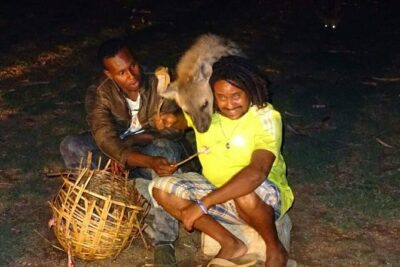
The evening visit to the Hyena Man is the city’s most unusual scheduled activity. Hyenas gather outside the town at night for feeding. It is a memorable sight, but the late arrival from Arba Minch makes the schedule dependent on the flight and road transfer working smoothly.
You should also know that the accommodation quality in Harar has been a weak point for at least one booking experience, with the hotel described as very poor. That does not erase the value of Harar itself, but it makes the property name worth confirming before you commit.
Harar by daylight: Rimbaud, markets, and museums

Day 6 gives you a morning inside Harar before the final drive to Dire Dawa. The program includes the home of Arthur Rimbaud, the French poet who lived and worked in Harar during the 19th century.
You also visit the colorful Islamic market, the National and Harari museums, and the house of Ras Mekonnen, the father of Haile Selassie. These stops help you see Harar through several lenses: literature, religion, local identity, and Ethiopian political history.
The old city is compact enough for walking, but the day still includes a drive to Dire Dawa. There, you visit the large market at Dire Kefira, which is attended by rural Oromo and Afar people in traditional clothing, along with the Awadai chat market and the Ethio-Djibouti railway station.
The evening flight back to Addis Ababa is scheduled between 5:50 and 6:50 pm. The final day is therefore not a slow farewell. It is another four-hour touring block followed by road and air travel.
What the $1,538 price really covers
At $1,538.47 per person, this is not a budget tour. Its value depends heavily on what is confirmed beyond the headline inclusions.
The listed price includes an air-conditioned vehicle, local guide service, entrance fees, licenses, taxes, and four breakfasts. A private tour also means you are not tied to an unfamiliar group, and the driver and guide can focus on your party.
But the listed inclusions do not clearly include domestic flights or accommodation. One booking experience expected the internal flights to be included and discovered at the first airport that they had not been booked. Seats happened to be available, but that is a risky way to handle a six-day route with several air connections.
Before booking, ask for a written breakdown covering:
- Every domestic flight and baggage condition
- Each hotel name and room arrangement
- Airport transfers at every stop
- Meals beyond the four listed breakfasts
- Any boat charges not covered by the entrance fees
- Guide and driver arrangements in each region
If flights and hotels are added separately, the final cost may be much higher than the advertised figure. If they are included in a custom arrangement but simply omitted from the standard inclusion list, get that promise in writing.
Pace, comfort, and who will enjoy this most
This tour suits you if you want to see major parts of Ethiopia in a short window and are willing to accept early departures, long drives, and several flights. It is especially useful for someone who wants a private structure rather than arranging guides and transport in Lalibela, the Omo Valley, Arba Minch, and Harar separately.
You need moderate physical fitness. The walking is not described as extreme, but Lalibela involves uneven church approaches, and the southern visits include road travel, village walking, boat trips, and early starts.
The itinerary is less suitable if you prefer slow travel, high-end hotels, or long free periods. It gives you an impressive range of places, but the price of that range is speed.
The overall rating is 4.9 from 15 ratings, with 93 percent recommending the experience. The strongest praise is directed at the locations, guides, drivers, and overall experiences. The practical complaints are just as useful: confirm the flights, and do not assume the Harar hotel will meet a high comfort standard.
Should you book this Ethiopia tour?
Book it if your priority is range. In six days, you reach Lalibela, Jinka, the Mursi and Hamer areas, Omorate, Konso, Lake Chamo, Chencha, and Harar. Few short programs cover such different parts of Ethiopia.
I would book only after confirming the domestic flights and every hotel in writing. I would also accept the route as a fast sampler, not a leisurely cultural journey. If you can handle early mornings, long transfers, and uneven accommodation, this is a strong way to see Ethiopia’s major contrasts with a private guide and vehicle. If comfort and free time matter more than coverage, choose a slower plan.
FAQ
How long is the tour?
The tour lasts six days.
Where does the tour begin?
It begins in Addis Ababa, Ethiopia.
What time does the tour start?
The stated start time is 6:00 am.
Is this a private tour?
Yes. Only your group participates.
Is hotel pickup offered?
Pickup is listed as available.
Are domestic flights included?
The provided inclusion details do not list domestic flights. Confirm this before booking, since the route requires flights between several Ethiopian destinations.
What meals are included?
Four breakfasts are included.
Are entrance fees included?
Yes. Entrance fees and licenses listed for the program are included.
Is a guide included?
Yes. Local guide service is included according to the program.
What happens if bad weather cancels the tour?
If poor weather causes cancellation, you will be offered another date or a full refund. You can also cancel for a full refund if you do so at least three full days before the experience starts.
More 6-Day Experiences in Addis Ababa
- 6-Day Omo Valley Cultural Private Tour
★ 5.0 · 6 reviews - 6 day Omo ValleyTours
★ 5.0 · 5 reviews - 6 days Omo valley cultural Tour
★ 5.0 · 3 reviews - 6 days 5 nights Addis Abeba sightseeing & Lalibela Rock-Hewn Churches
★ 5.0 · 3 reviews
Just added out of Addis Ababa
- Yod Abyssinia Cultural Night: Dinner, Music, and Dance★ 5.0 · 7 reviews
- Locally crafted beer and wine tasting and nightlife in Addis tour★ 5.0 · 6 reviews
- Stunning Views Wonchi Crater Lake a Private Day Trip★ 5.0 · 3 reviews
- Two days Lake Wenchi and Menagesha Forest★ 5.0 · 3 reviews
- Tribes of the Ethiopian Omo Valley – 9 Day Tour★ 5.0 · 5 reviews
- Addis Ababa City Tours Full-Day Tours★ 5.0 · 5 reviews
- 3-Day Cultural Tour in South Omo Valley★ 5.0 · 4 reviews
- Day Trip to Tiya UNESCO Site & Melka Kunture Archaeological Site★ 4.5 · 3 reviews
Rock-Hewn Church Tours, compared.

12 Days SIMIEN MOUNTAIN-LALIBELA-DANAKIL-TIGRAY CHURCHES
Read our review →
Tour 11 monolithic rock churches & museum in Lalibela & cave church with mummies
Read our review →
Ethiopia Tigray Tours: Guided tour of Tigray rock hewn churches
Read our review →
5 DAYS Lalibela, Axum, Tigray churches and Danakil
Read our review →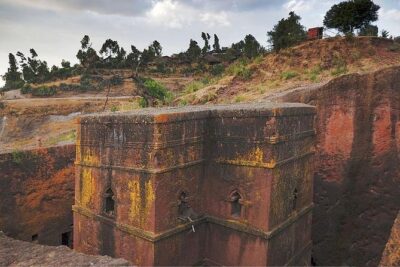
6 Days tour Package (Simien Mountains, Lalibela, and Danakil Depression)
Read our review →
Lalibela, Axum, Danakil and Omo Valley 8 DAYS
Read our review →Browse the lists this tour appears in