
Reviewed · OMO VALLEY TRIBAL TOURS
6 day Omo ValleyTours
The Omo Valley packs an astonishing range of cultures into one remote corner of southern Ethiopia. Over six days, you visit Hamar, Karo, Dassanech, Mursi, Konso, and Dorze communities, with time for markets, village visits, body painting, a canoe crossing, and local food made from false banana.
I like the wide cultural range and the fact that the route includes more than staged village stops: you also reach Lake Chamo, Guge Mountain, Mago National Park, and the Kenyan border. I also like the hands-on details, such as Karo-style face painting and watching kocho being prepared. The main caution is the demanding schedule, plus a confusing flight plan on the final two days that you should confirm before paying.
Key points to know before you book
- Six distinct cultural encounters: Meet Hamar, Karo, Dassanech, Mursi, Konso, and Dorze communities in one fast-moving trip.
- Long road days: Expect drives of up to 150 kilometers, rough regional travel, and several early starts.
- Markets depend on the calendar: Hamar and other tribal markets operate on Monday, Tuesday, Thursday, and Saturday.
- Two unusual crossings: Reach a Dassanech village by dugout canoe and travel through Mago National Park to meet the Mursi.
- Mickey and his team: Mickey is named as tour manager, while Abey and Robel are among the guides and drivers connected with the operation.
- Domestic flights cost extra: The $899 price includes road transport and meals, but not the domestic flight tickets.
Why the Omo Valley is worth the effort
The Omo Valley is not a quick sightseeing stop. It is a large, remote region where different ethno-linguistic groups have maintained distinct customs, clothing, art, and social traditions. The journey matters because you are not simply seeing one famous tribe and heading back to Addis Ababa.
You may see Hamar women with distinctive hairstyles, elaborate adornment, and clay details. The Karo are known for painted faces and bodies. Mursi women may wear lip plates, while Dorze artisans are associated with weaving and pottery. These customs are living parts of community life, not museum displays, but the way you visit still matters.
Your guide is central to the experience. A good guide can explain what you are seeing, handle local arrangements, and help you behave with respect. Mickey is presented as the tour manager, with Abey named as a guide on one trip and Robel also connected with the guiding and driving team. English communication and quick help with customized plans are important strengths associated with the operation.
The cultural encounters can feel direct and intense. That is part of the appeal, but it also calls for patience. Ask before taking photographs, follow your guide’s advice, and remember that people are not props for a travel album.
Other trips south from Addis Ababa:
- 6 Days Omo Valley Tribes Tours From Addis Ababa
★ 5.0 · 33 reviews - 3 Days Omo Valley Tour
★ 5.0 · 24 reviews - 5 Days Omo Valley Tours
★ 5.0 · 15 reviews
Day 1: Jinka to Turmi and the Hamar area
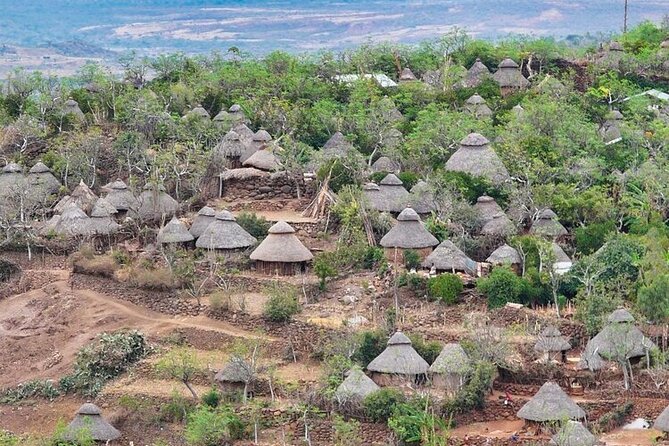
You begin with a welcome at Jinka, also called Baco, Airport. From there, it is about 130 kilometers to Turmi, roughly two hours by the stated schedule. The rest of the day introduces you to the Hamar area, with a village visit planned for the late afternoon.
This timing makes sense. The heat is usually less harsh later in the day, and a village visit gives you a first look at Hamar daily life after the airport transfer. You may also attend an Evangadi dance ceremony or, if the timing is right, a Hamar bull-jumping ceremony. Both are listed as optional, so do not assume either event will happen during your dates.
Market days are Monday, Tuesday, Thursday, and Saturday. Depending on the route and timing, your guide may take you to a market in Jinka, Kako, Keyafer, Alduba, or Turmi. Markets are often a better place to see ordinary buying and selling than a formal cultural stop, but the exact market depends on the day.
You spend the night at Paradise Lodge Turmi. The first day is listed at about six hours, though actual travel time can change with road conditions and village arrangements.
Day 2: Painted faces among the Karo
The second day takes you west from Turmi for about 65 kilometers to meet the Karo, or Kara, people near the Omo River. The drive is listed at roughly one hour each way, leaving time for the cultural visit and a return to Turmi for lunch.
The Karo are one of the smallest ethnic groups in the Omo Valley and are especially known for body and face painting. You may have your own face or body painted in a Karo style. This is one of the tour’s most memorable hands-on details, though it is worth treating the painting as a cultural practice rather than a costume opportunity.
The day may also include another market visit if the calendar fits. Optional Hamar ceremonies can appear again in the schedule. That gives you flexibility, but it also means the program is not a fixed series of guaranteed performances.
You return to Paradise Lodge Turmi for a second night. The day is listed at about seven hours. It is a fairly full outing, but less punishing than the longer transfer days later in the trip.
Day 3: Crossing the Omo River to the Dassanech
After breakfast, you leave around 8:30 a.m. for Omo Rate, a town near the Kenyan border. The drive is about 72 kilometers and is listed at roughly one hour. At the immigration post, your guide handles the border-area procedure before you continue toward a Dassanech village.
The crossing is one of the tour’s most distinctive moments. You travel across the Omo River in a dugout canoe, then walk about 10 minutes to reach the village. This is not a grand boat cruise. It is a simple local crossing, and that is precisely why it feels connected to the place.
The Dassanech visit gives you another view of life along the river. After returning to Turmi for lunch, you continue to Jinka for the night. The full day is listed at about seven hours, and the transfer adds to the sense that this tour covers serious ground.
You stay at Eco-Omo Lodge Jinka, in rooms from the newer building. That detail matters because accommodation standards can vary in remote parts of southern Ethiopia. If room quality is important to you, ask the company to confirm the exact room type.
A few more trips from Addis Ababa worth a look
- 6 Days Lalibela, Omo Valley and Harar
★ 5.0 · 15 reviews - 6-Day Omo Valley Cultural Private Tour
★ 5.0 · 6 reviews - 6 days Omo valley cultural Tour
★ 5.0 · 3 reviews - 6 days 5 nights Addis Abeba sightseeing & Lalibela Rock-Hewn Churches
★ 5.0 · 3 reviews
Day 4: Mursi country, Mago National Park, and Konso

Day four is one of the longest and most demanding. You drive about 50 kilometers through Mago National Park to meet the Mursi, then return to Jinka before continuing another 150 kilometers to Konso.
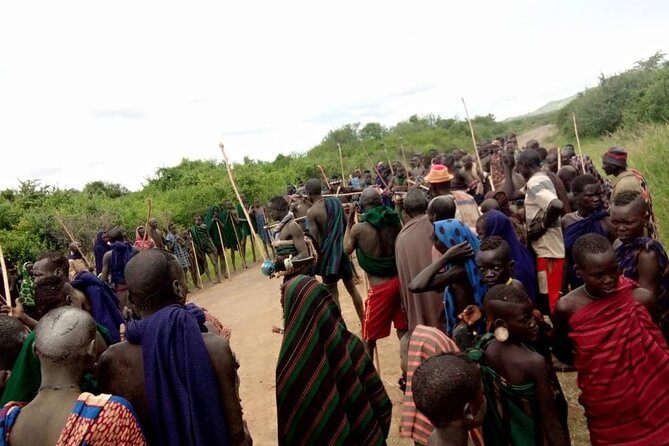
The Mursi are widely known for the lip plates worn by some women. Your visit is built around meeting Mursi people and learning about their way of life. The subject can attract shallow curiosity, so your guide’s handling matters. Look beyond the most photographed feature and pay attention to clothing, adornment, work, and the setting of the village.
The drive through Mago National Park adds a wilderness element, although the schedule does not promise wildlife sightings. You should think of the park mainly as part of the route to the Mursi community, not as a dedicated safari.
The second transfer, from Jinka to Konso, is long. You end the day with a visit to a Konso village and spend the night at Kanta Lodge Konso. With about eight hours listed, this is the day most likely to test your patience and energy. It is also the day when the route’s broad cultural range becomes clear.
Day 5: Dorze villages and the false banana harvest
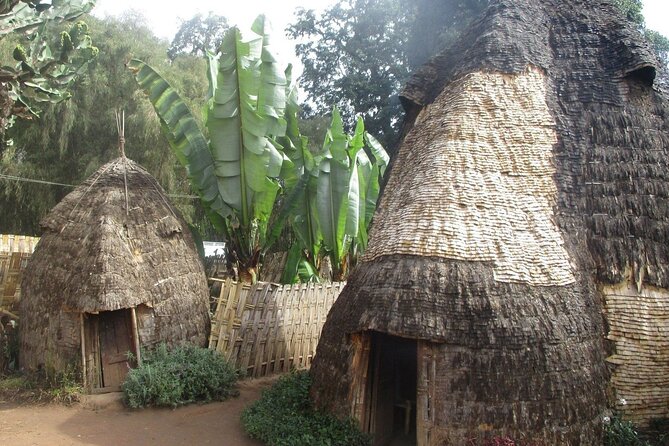
From Konso, you continue about 130 kilometers toward the Dorze area near Arba Minch. The Dorze live on Guge Mountain at an altitude of about 2,400 meters, making this a noticeable change from the hotter lowland areas around Turmi and the Omo River.
Dorze culture is strongly associated with handicrafts, including weaving and pottery. The visit also includes the preparation of kocho, a local food made from the false banana plant, known as enset. Watching how a staple food is prepared gives you a more useful understanding of local life than a quick photo stop.
The schedule lists about five hours for the day and says you go to Arba Minch Airport for an afternoon flight to Addis Ababa. However, the following day also begins in Arba Minch and includes Lake Chamo before another flight to Addis Ababa. Those two descriptions do not fit neatly together.
Ask the operator to confirm if day five is the actual return date, if day six is an alternative ending, or if the trip is intended to include an extra night in Arba Minch. Do not purchase domestic flights until this is clear.
Day 6: Lake Chamo and the Arba Minch finish
The final day begins with pickup from your hotel around 8 a.m. You go to Lake Chamo by boat for several hours, with time to see crocodiles, visit a fish market, and spend time on the lake. The program then returns to Arba Minch for a city walk before lunch and an airport transfer scheduled around 1:30 p.m.
Lake Chamo gives the itinerary a welcome change of pace after several days of road travel and village visits. The boat outing is not described as a full-day wildlife expedition, but it does offer a chance to see crocodiles and observe the fish trade.
The stated end is a flight from Arba Minch to Addis Ababa. Domestic flights are not included in the tour price, so you need to budget for them separately. Again, confirm the flight day and hotel arrangement, because the day five and day six descriptions appear to represent overlapping versions of the ending.
What $899 includes, and what it does not
At $899 per person, the price is reasonable for a private-style, multi-day route that includes ground transport, local guiding, accommodation, entrance fees, taxes, and most meals. You receive breakfast on five days, lunch on six days, and dinner on five days.
The package also includes an air-conditioned vehicle. That is valuable on long drives, especially in southern Ethiopia where road travel can be tiring. A maximum group size of 15 keeps the cost below a fully private trip, but it is still small enough to be more manageable than a large coach.
The important extra cost is the domestic flight. Drinks are also excluded. Because the itinerary involves flights into and out of the region, ask for the exact airfare estimate before deciding if the total fits your budget.
The tour starts at Bole Addis Ababa International Airport at 9 a.m. and ends back at the meeting point. The supplied schedule also refers to pickup at Jinka Airport, so confirm how your arrival in Jinka connects with the advertised Addis Ababa starting point. This may be a flight arrangement handled separately, but the details should be written clearly before departure.
Comfort, pace, and group size
You should be comfortable with long drives, changing roads, early starts, and a packed schedule. Days run from about five to eight hours, and several include more than one major transfer.
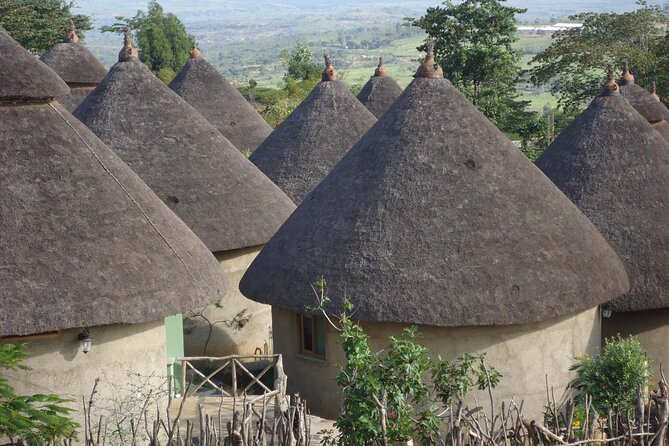
The accommodation includes Paradise Lodge Turmi, Eco-Omo Lodge Jinka, and Kanta Lodge Konso. The program gives the specific room note for the newer building at Eco-Omo Lodge, but it does not provide detailed room facilities for every property. If you need a particular standard, ask for confirmation.
Most travelers can participate, according to the supplied tour information. Still, the canoe crossing, village walks, road hours, and altitude change at Guge Mountain mean you should discuss any personal mobility concerns with the operator before booking.
The maximum group size is 15. That is a useful middle ground: large enough to keep the price under control, but small enough for questions and easier movement at village visits.
How the guides affect the experience
The company’s strongest personal names are Mickey, Abey, and Robel. Mickey is described as the tour manager and is praised for clear English, quick communication, arranging short-notice trips, and adjusting plans to suit time and budget. Abey is named as a guide, while Robel is also identified as a highly valued driver and companion on an Omo Valley trip.
Those details matter because this is not a trip where you can simply follow road signs and make your own arrangements. Local coordination affects market timing, village access, ceremonies, airport transfers, and border-area visits.
When you book, ask who will be your main guide and driver. Also ask how optional ceremonies are arranged and what happens if a market or ceremony is not taking place. A good answer will tell you more about the actual operating style than a polished itinerary will.
Who should book this Omo Valley tour?
I would choose this trip if you want a broad introduction to southern Ethiopia in a short period and you are willing to trade comfort and free time for cultural range. It suits an adventurous first-time visitor who wants a guide, an organized vehicle, and a route that would be difficult to arrange alone.
It is also a good fit if you care about local food, markets, village visits, and meeting several communities rather than spending six days in one base. The Karo painting, Dassanech canoe crossing, Dorze kocho preparation, and Lake Chamo boat trip give the itinerary variety.
I would hesitate if you dislike long drives, want a slow holiday, or expect every ceremony to run on a fixed timetable. I would also wait until the company clarifies the day five and day six flight details.
The tour has free cancellation up to 24 hours before the start time for a full refund. Changes or cancellations inside that 24-hour window are not accepted or refunded.
Should you book it?
Book this six-day Omo Valley tour if your priority is seeing a lot of southern Ethiopia with local support in a short window. The route reaches six cultural groups, includes several genuinely unusual activities, and gives you the practical help that remote travel requires.
Before booking, get three points confirmed in writing: the domestic flight schedule, the exact starting connection from Addis Ababa to Jinka, and which guide will accompany you. If those details are settled, the $899 package offers a strong base value for a demanding but memorable trip.
FAQ
Where does the tour start?
The tour lists Bole Addis Ababa International Airport in Addis Ababa as the starting point, with a 9 a.m. start time.
Where does the tour end?
The activity ends back at the stated meeting point. The itinerary also describes a flight from Arba Minch to Addis Ababa, so confirm the exact return arrangement before booking flights.
Is airport pickup available?
Yes. Pickup is offered, and the itinerary includes a welcome at Jinka Airport as well as airport transfers during the trip.
Are domestic flights included in the $899 price?
No. Domestic flights are not included. You should budget for those separately and confirm the required flight schedule with the operator.
Which days have tribal markets?
Market visits may be possible on Monday, Tuesday, Thursday, and Saturday. Possible market locations include Jinka, Kako, Keyafer, Alduba, and Turmi.
What accommodations are named?
The tour lists Paradise Lodge Turmi, Eco-Omo Lodge Jinka, and Kanta Lodge Konso. The Jinka stay is specified as a room in the newer building at Eco-Omo Lodge.
How many people can join the tour?
The maximum group size is 15 people.
What is included in the price?
The price includes an air-conditioned vehicle, local guide, accommodation, entrance fees listed in the program, government taxes, airport or departure tax, breakfast on five days, lunch on six days, and dinner on five days. Drinks and domestic flights are excluded.
Just added out of Addis Ababa
- Yod Abyssinia Cultural Night: Dinner, Music, and Dance★ 5.0 · 7 reviews
- Locally crafted beer and wine tasting and nightlife in Addis tour★ 5.0 · 6 reviews
- Stunning Views Wonchi Crater Lake a Private Day Trip★ 5.0 · 3 reviews
- Two days Lake Wenchi and Menagesha Forest★ 5.0 · 3 reviews
- Tribes of the Ethiopian Omo Valley – 9 Day Tour★ 5.0 · 5 reviews
- Addis Ababa City Tours Full-Day Tours★ 5.0 · 5 reviews
- 3-Day Cultural Tour in South Omo Valley★ 5.0 · 4 reviews
- Day Trip to Tiya UNESCO Site & Melka Kunture Archaeological Site★ 4.5 · 3 reviews
Omo Valley Tribal Tours, compared.
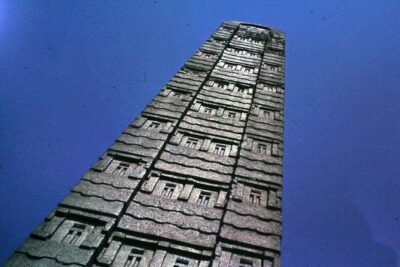
Lalibela, Axum, Danakil and Omo Valley 8 DAYS
Read our review →
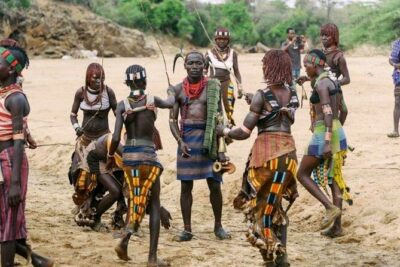
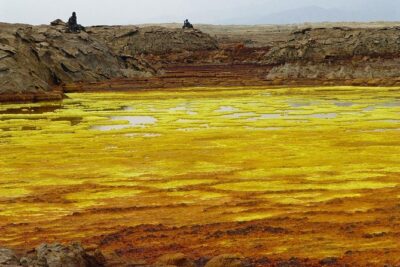


9 Days Tours To Danakil Depression, Simen MNP, Lalibela With Omo Valley Tribes
Read our review →
5 Day Private tour to the Omo Valley Tribes and Adventure Tour
Read our review →
8 Days Lalibela,Danakil Depression and Omo Vally Tours
Read our review →Browse the lists this tour appears in