
Reviewed · OMO VALLEY TRIBAL TOURS
5 Days Omo Valley Tours
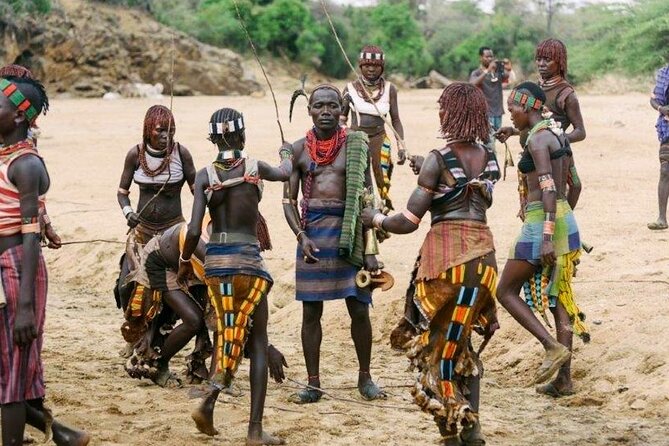
The most remarkable part of this five-day Omo Valley tour is the range of communities packed into one demanding southern journey. You’ll see Dorze beehive houses, Konso terraces, Karo body painting, Mursi lip plates, and Hamer ceremonies, with local village visits rather than a quick drive-by.
I like the strong cultural focus and the chance to reach places that are difficult to arrange alone. I also like the small maximum group of 15, the included road transport and meals, and the helpful pre-trip contact reported with guides such as Abey and Mickey. The main drawback is the long road travel, with rough and tiring days, and the domestic flights from Addis are not included in the $750 price.
Key points at a glance
- Eight distinct communities in five days: Meet the Dorze, Konso, Arbore, Hamer, Karo, Dassanech, Ari, and Mursi peoples.
- Bull jumping is possible, not guaranteed: The Hamer ceremony depends on local timing, so you should not book this trip solely for that event.
- Markets add everyday life: Depending on the day, you may visit markets in Turmi, Dimeka, Keyafer, Aldubba, or other towns.
- The road journey is substantial: Several days involve drives of 75 to 200 kilometers, often over slow roads.
- Domestic flights cost extra: The tour begins with a flight from Addis Ababa to Arba Minch and ends with a return flight, but those tickets are separate.
- Meals and accommodation are included: Four lunches, four dinners, five breakfasts, lodging, guide service, vehicle, and entrance fees are part of the listed price.
Why this Omo Valley trip is so different
Southern Ethiopia is not a place you visit for one famous monument. The appeal is the steady change in language, dress, architecture, farming, craft, and ceremony as you move from one community to the next.
That variety is the reason to choose this tour. In five days, you’ll meet groups with very different customs and see how communities have adapted to dry conditions, highland terrain, river valleys, and remote roads.
The cultural encounters need to be approached with care. Photographs, village visits, and ceremonies are part of the experience, but the people you meet are not stage performers. Your guide matters here. A good guide explains what you are seeing, helps with introductions, and keeps the visit respectful and clear.
Previous departures have used guides named Abey and Mickey, with Robel also mentioned in connection with tour support. Ask for the name of your guide before departure if that matters to you. The operator is Danakil Depression Tours, and the maximum group size is 15 people, which should make vehicle days easier than a large coach tour.
Other trips south from Addis Ababa:
- 6 Days Omo Valley Tribes Tours From Addis Ababa
★ 5.0 · 33 reviews - 3 Days Omo Valley Tour
★ 5.0 · 24 reviews - 6 Days Lalibela, Omo Valley and Harar
★ 5.0 · 15 reviews
Day 1: Arba Minch and the Dorze highlands
Your trip begins with a transfer from your Addis Ababa hotel to Bole International Airport, followed by an internal flight south to Arba Minch. The flight saves a huge amount of road time and gets you quickly into the southern region.
After meeting your driver in Arba Minch, you head toward the Guge Mountains to visit a Dorze village. This first stop gives you a useful introduction to southern Ethiopian culture before the longer drives begin.
The Dorze are especially known for cotton weaving and tall, beehive-shaped houses made from local organic materials. You can look inside the distinctive homes, watch weaving, and hear about daily life and local customs.
The houses are one of the most memorable visual details of the trip. Their shape is not just decorative. It reflects local building methods and the use of available plant materials. The weaving visit also gives you a closer look at a working skill rather than a simple scenic stop.
The schedule lists accommodation at Paradise Lodge, with Turmi also appearing beside the Day 1 information. Since Arba Minch and Turmi are separate parts of the route, confirm the first night’s lodging and exact transfer plan before you go. That small check could prevent confusion after the flight.
Day 2: Konso terraces, museum time, and the road to Turmi
Day 2 is one of the longest days on the road. You drive about 90 kilometers to Konso, visit a village and the Konso museum, then continue roughly 200 kilometers toward Turmi.
Konso is one of the strongest cultural and historical stops on the route. The area is known for carefully built terraces on its hillsides, woven textiles, and carved wooden markers connected with graves. The terraces show how local farming has been organized across difficult slopes over generations.
The museum adds context that a village walk alone cannot provide. It helps explain local customs, objects, and the meaning of the carved totems. If you enjoy seeing how architecture and agriculture fit together, Konso may be one of the most rewarding parts of the trip.
The long drive afterward is the tradeoff. A distance that looks manageable on a map can consume much of the day because roads in the south may be slow. You’ll want water, sun protection, a small bag of essentials, and patience.
On the way to Turmi, you visit the Arbore community. This breaks up the road journey and gives you another chance to see different dress, traditions, and village life before reaching Hamer country.
You stay overnight at Buska Lodge, according to the supplied schedule. The tour includes accommodation, but the specific standard of every property is not described, so ask for current lodge details if comfort is a major factor in your decision.
Day 3: Karo painting and Hamer country
Day 3 focuses on two of the Omo Valley’s best-known cultural experiences. After breakfast, you drive about 62 kilometers west from Turmi to Korcho village, home of the Karo community.
The Karo are known for elaborate face and body painting. These designs are among the most recognizable visual traditions in the region, but the visit is more meaningful when your guide explains the setting and significance rather than treating the painted designs as a photo backdrop.
A traditional coffee ceremony with a Karo family is included in the day’s plan. Coffee is central to Ethiopian social life, and a family visit gives you time to sit, observe, and ask questions through your guide.
You return to Turmi for lunch, then the afternoon depends on the calendar. Hamer markets may be available in Turmi on Monday or Thursday, or in Dimeka on Saturday. Markets are useful because they show ordinary trade and social life, not only formal village visits.
Later, around 5:30 p.m., you visit a Hamer traditional village and take part in another coffee ceremony inside a Hamer house. This timing is practical because the late afternoon light can make the visit more comfortable than the hotter middle of the day.
The Hamer are famous for a coming-of-age bull-jumping ceremony. You may see one if the event happens during your visit, but it is not scheduled as a guaranteed performance. One person specifically missed the ceremony because none took place during the visit, while another happened to attend one in Turmi. Plan for the wider Hamer experience, not just the ceremony.
A few more trips from Addis Ababa worth a look
- 5 DAYS Lalibela, Axum, Tigray churches and Danakil
★ 5.0 · 34 reviews - Danakil Depression and Lalibela 5 Days Tours
★ 5.0 · 28 reviews - 5 Days North Ethiopia Tours
★ 5.0 · 23 reviews - 5 DAYS Axum, Lalibela, Tigray churches and Danakil
★ 4.5 · 22 reviews
Day 4: Crossing the Omo River to meet the Dassanech
Day 4 begins with a drive of about 75 kilometers south to meet the Dassanech community near the Omo River. The river crossing is one of the day’s unusual features. You cross in a traditional dugout wooden canoe, then walk about 10 minutes to reach the village.
The visit includes time with a Dassanech family and a look inside a family house. This kind of stop can help you understand how homes, household goods, and family life work in a remote setting.
The canoe crossing also means this is not a polished, high-comfort excursion. Conditions may feel basic, and the exact experience can vary with water levels and local arrangements. Follow your guide’s instructions and keep cameras and phones secure during the crossing.
After returning to Turmi for lunch, you continue about 130 kilometers to Jinka. Along the way, you may stop at a market in Turmi, Dimeka, Aldubba, or Keyafer, depending on the day.
The listed market days include Monday, Tuesday, Thursday, and Saturday. This gives the route some flexibility, but it also means the exact market stop cannot be promised until your dates are known.
Before reaching your lodge, you visit an Ari village. The Ari are known for green village settings and farming traditions. After several days of dry roads and open country, this stop adds another visual change to the route.
The day lasts about seven hours, though the actual pace depends on roads, village visits, river conditions, and market timing. This is a good example of why you should think of the tour as an overland cultural journey, not a series of short excursions.
Day 5: Mago National Park and the Mursi community
The final full outing takes you from Jinka into Mago National Park to visit a Mursi village. The Mursi are widely known for the lip plates worn by some women, a tradition that has become one of Ethiopia’s most recognizable cultural images.
The lip plates are only one part of the visit. Your guide should help place the tradition in its local setting and explain that customs are not simply curiosities for a camera. You’ll have the chance to observe village life and meet people in their own community.
The park visit also gives the final day a different setting from the markets and villages around Turmi. The route combines protected-area scenery with a cultural stop, then returns you to Jinka for your flight connection.
In the afternoon, you transfer to the airport and fly back to Addis Ababa. If timing allows, the plan includes final souvenir shopping. The evening may include a meal at a traditional restaurant with folkloric dancing before an airport transfer for your flight home.
That final timing deserves a practical warning. Domestic flight schedules, road conditions, and airport transfers can change the amount of free time in Addis. If you have an international flight that night, confirm the connection carefully and leave enough margin.
What the $750 price really covers
At $750 per person, the tour includes a substantial amount of ground support. You receive an air-conditioned vehicle, an English-speaking guide, accommodation, government taxes, listed entrance fees, four lunches, four dinners, and five breakfasts.
The main extra cost is the domestic flight between Addis Ababa and Arba Minch, including the return flight from the south. Because those flights are essential to the route, ask for the current airfare before comparing the total cost with other Omo Valley options.
The value is strongest if you want a planned route with a private vehicle, meals, lodging, and introductions already arranged. Organizing all of those parts independently in five days would take time, especially with long road transfers and remote communities.
The price is less attractive if you want a slow trip focused on one or two groups. This schedule covers a lot of ground and gives you variety, but it leaves limited time for lingering in each place.
Who will enjoy this trip most
I’d choose this tour if you want a concentrated first look at southern Ethiopia and prefer having transport and local arrangements handled for you. It suits people who are comfortable with early starts, long drives, basic conditions, and a full schedule.
Families have used the route, including a family with very young children, but the road distances still deserve serious thought. Five days of driving, village visits, and changing accommodation can be tiring for small children.
Photographers may find plenty to work with, from Dorze houses and Konso terraces to Karo body painting and Hamer ceremonies. Photography should be handled respectfully, with your guide helping you understand when and how to ask.
This is not the right choice if you need a relaxed resort pace, guaranteed ceremonies, or complete control over every hour. The route depends on local events, market days, roads, and flight timing.
Practical details before you book
Pickup is offered, and the stated meeting point is Edna Mall on Cameroon Street in Addis Ababa. The published start time is 9:00 a.m., but the first day also involves an airport transfer and domestic flight, so confirm the exact pickup time directly.
You receive booking confirmation at the time of purchase. Most people can participate, but the tour involves long drives, walking through villages, a short walk after the canoe crossing, and changing conditions.
The group limit is 15. That is small enough for a more personal vehicle experience, though the exact feel depends on how many people book your departure.
Cancellation is free up to 24 hours before the start time for a full refund. Changes made within 24 hours are not accepted, and a minimum group size applies. If the operator cancels because that minimum is not reached, you are offered another date or experience, or a full refund.
Should you book the five-day Omo Valley tour?
Book it if your priority is variety. In a single southern circuit, you’ll see eight communities, several markets, traditional coffee ceremonies, the Omo River, Mago National Park, and the chance of a Hamer bull-jumping ceremony.
Go in with realistic expectations. This is a busy, road-heavy trip, and the most famous events are not guaranteed. The domestic flights cost extra, some schedule details should be confirmed, and the days can be tiring.
For a first visit to the Omo Valley, the tour offers a practical way to reach a difficult region without arranging every vehicle, lodge, guide, meal, and village visit yourself. I would book it for the cultural range and the logistics, not for a single photograph or ceremony.
FAQ
Where does the Omo Valley tour begin?
The stated meeting point is Edna Mall, XQWP+RMV, Cameroon Street, Addis Ababa, Ethiopia. Pickup is offered.
How long does the experience last?
The tour lasts approximately five days, with four nights of accommodation indicated by the meal and lodging schedule.
Is the domestic flight from Addis Ababa included?
No. The domestic flights between Addis Ababa, Arba Minch, and the return destination are not included in the listed price.
What communities will I visit?
The route includes the Dorze, Konso, Arbore, Hamer, Karo, Dassanech, Ari, and Mursi communities.
Is the Hamer bull-jumping ceremony guaranteed?
No. The ceremony may be available during the visit, but it depends on local timing and may not take place on your dates.
Which markets might I visit?
Depending on the day, you may visit markets in Turmi, Dimeka, Keyafer, Aldubba, or other towns along the route. Listed market days include Monday, Tuesday, Thursday, and Saturday.
Are meals included?
Yes. The tour includes five breakfasts, four lunches, and four dinners.
Is accommodation included?
Yes. Accommodation is included. Buska Lodge is listed for the night in Turmi, while the Day 1 lodging information should be confirmed because the schedule contains mixed location details.
How large is the group?
The maximum group size is 15 people.
What is the cancellation policy?
You can cancel up to 24 hours before the experience start time for a full refund. Cancellations or changes made less than 24 hours before the start time are not accepted.
Just added out of Addis Ababa
- Yod Abyssinia Cultural Night: Dinner, Music, and Dance★ 5.0 · 7 reviews
- Locally crafted beer and wine tasting and nightlife in Addis tour★ 5.0 · 6 reviews
- Stunning Views Wonchi Crater Lake a Private Day Trip★ 5.0 · 3 reviews
- Two days Lake Wenchi and Menagesha Forest★ 5.0 · 3 reviews
- Tribes of the Ethiopian Omo Valley – 9 Day Tour★ 5.0 · 5 reviews
- Addis Ababa City Tours Full-Day Tours★ 5.0 · 5 reviews
- 3-Day Cultural Tour in South Omo Valley★ 5.0 · 4 reviews
- Day Trip to Tiya UNESCO Site & Melka Kunture Archaeological Site★ 4.5 · 3 reviews
Omo Valley Tribal Tours, compared.
Lalibela, Axum, Danakil and Omo Valley 8 DAYS
Read our review →


9 Days Tours To Danakil Depression, Simen MNP, Lalibela With Omo Valley Tribes
Read our review →
5 Day Private tour to the Omo Valley Tribes and Adventure Tour
Read our review →

8 Days Lalibela,Danakil Depression and Omo Vally Tours
Read our review →Browse the lists this tour appears in