
Reviewed · ROCK-HEWN CHURCH TOURS
12 Days SIMIEN MOUNTAIN-LALIBELA-DANAKIL-TIGRAY CHURCHES
Ethiopia packs an astonishing amount into these 12 days: medieval churches, high mountain trails, ancient kingdoms, and volcanic desert. You move from the cool escarpments of the Simien Mountains to the heat of the Danakil Depression, then finish among the rock churches of Tigray and the museums of Addis Ababa.
I like the way the tour combines famous sights with harder-to-reach places, especially Erta Ale and Abuna Yemata Guh. Included domestic flights, entrance fees, accommodation, and a maximum group size of 10 also remove much of the planning work. The tradeoff is pace: long drives, rough roads, hot camps, and several strenuous walks make this a serious active trip rather than a gentle sightseeing holiday.
Key points to know before booking
- Three Ethiopian Airlines flights save time on Ethiopia’s long internal routes.
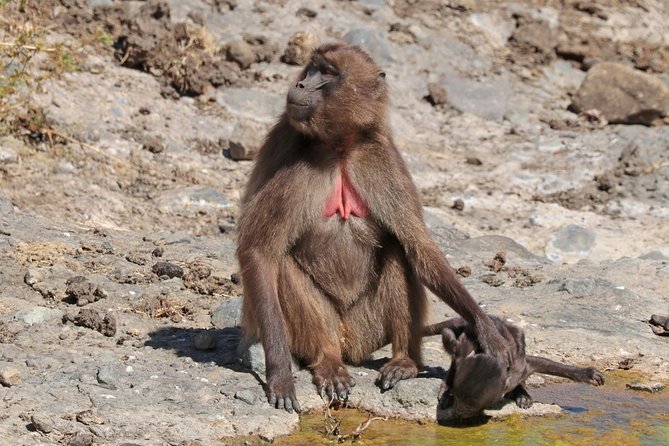
- Gelada baboons and high escarpment views make the Simien Mountains the hiking highlight.
- Lalibela, Aksum, and Tigray churches give you three very different views of Ethiopian Christianity.
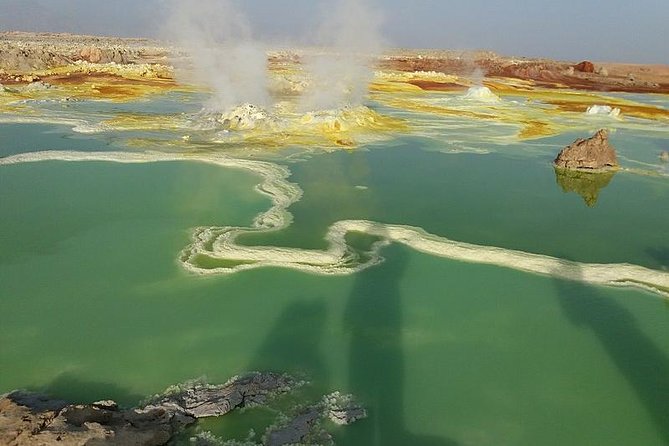
- Erta Ale and Dallol bring heat, salt, lava, camels, and volcanic color into the same journey.
- A group limit of 10 allows more personal attention from local guides and drivers.
- The physical demands are real, with steep climbs, narrow ledges, long road days, and basic desert camping.
Why this 12-day route is such a bold introduction to Ethiopia
I see this trip as a greatest-hits route with a rugged edge. It covers northern Ethiopia’s main cultural centers, but it also reaches places where comfort takes second place to access.
You begin with Gondar and its royal castles, hike for several days in the Simien Mountains, then fly to Lalibela. From there, the route shifts into long overland travel toward the Danakil Depression, followed by Tigray’s cliff churches and Aksum’s ancient monuments. The final day returns you to Addis Ababa for a short city visit.
That range is the main value. You are not seeing one type of Ethiopia repeatedly. In less than two weeks, you encounter imperial architecture, village life, Orthodox churches, highland wildlife, salt mining, volcanic craters, and archaeological sites.
The price is $1,641.03 per person. At roughly $137 per day, the cost is reasonable for what is included: three domestic flights, accommodation, most meals, transfers, professional English-speaking local staff, entrance fees, and full board in the Simien and Danakil sections. A self-planned trip could cost less in some places, but arranging vehicles, permits, desert logistics, park scouts, and several flights would take time and carry more risk.
You should still read the inclusions carefully. The package provides 11 breakfasts, six lunches, and four dinners, not every meal for all 12 days. Items not specifically listed are your responsibility.
More cliff churches reached from Addis Ababa:
- 5 DAYS Lalibela, Axum, Tigray churches and Danakil
★ 5.0 · 34 reviews - 5 DAYS Axum, Lalibela, Tigray churches and Danakil
★ 4.5 · 22 reviews - Ethiopia Tigray Tours: Guided tour of Tigray rock hewn churches
★ 5.0 · 36 reviews
Gondar begins with castles and painted ceilings
Your first flight takes you from Addis Ababa to Gondar, where a pickup from the airport leads into an afternoon city tour.
The main stop is Fasil Ghebbi, the former royal compound. Its stone castles give Gondar a distinctive character. The complex dates largely from the 17th century, when Ethiopian rulers built a royal center with palaces and related structures. Two hours is enough for a useful first look, though anyone who enjoys architecture may want more time to study the details.
Debre Birhan Selassie Church provides a very different experience. The outside is restrained, with stone walls, arched doors, and a thatched roof. Inside, the ceiling frescos are the reason to come. Faces and repeated angel figures create a striking interior, and the church’s survival matters because many of Gondar’s other churches were destroyed.
This first day is relatively gentle, but remember that you are beginning after a flight and an airport transfer. The schedule is efficient rather than leisurely.
Simien Mountains bring the best walking days

The road from Gondar to Debark is paved and takes about two hours over roughly 100 kilometers. At the park headquarters, your team arranges permits and picks up a scout. That park scout is an important part of the experience, since hiking in the protected area involves local oversight as well as route guidance.
The first walk is an easy introduction along the northern edge of the escarpment. You get broad views toward the foothills and plains of northern Ethiopia, with a good chance of seeing gelada baboons. These shaggy, grass-eating primates are one of the Simien’s most memorable sights, and the open mountain setting gives you a better chance to watch them than a quick roadside stop would.
The following days become more demanding. The route follows the northern escarpment and drops toward the Kaba Valley before climbing again toward Gich Abyss. At a cliff, you look across the gorge toward the Simien foothills, with the Jinbar River plunging about 500 meters as a waterfall.
Lunch near the Jinbar River breaks up the walking day. Afterward, the trail crosses barley fields and reaches Gich village, where a traditional coffee ceremony offers a useful change of pace. You get a closer view of rural farm life instead of moving only between formal attractions.
The published plan repeats much of the same wording for Days 3 and 4, so I would confirm the exact walking route, camp arrangements, and daily distances before departure. The stated walking times are about seven hours on one day and five hours on the next. That is manageable for a reasonably fit person, but it is not casual strolling.
The Simien section also has a major altitude and weather consideration. The schedule provides views and hiking, but it does not promise a specific elevation, trail condition, or temperature. Bring layers, sturdy walking shoes, water protection, and patience for changing conditions.
Lalibela turns churchgoing into archaeology
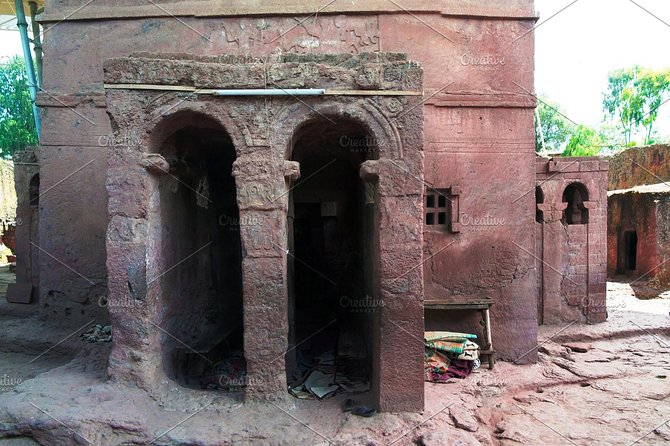
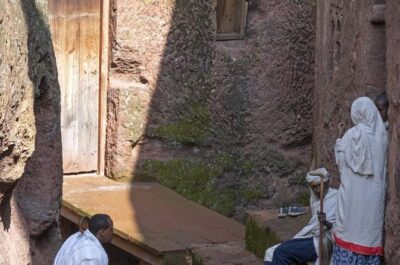
After the mountains, you fly to Lalibela and drive about 23 kilometers into town. The visit covers the Northern Group and Western Group of rock-hewn churches, including Bet Medhane Alem, Bete Maryam, Bete Golgotha, the Selassie Chapel, the Tomb of Adam, and Bete Giyorgis.
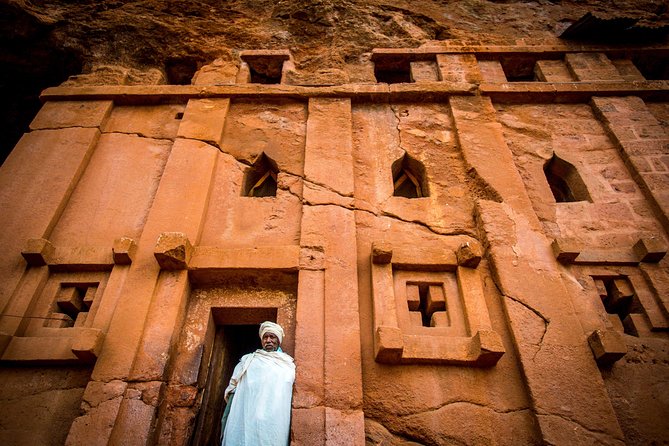
These are not churches built from stone blocks and placed on a foundation. They were cut down into the rock, creating courtyards, trenches, passageways, and monolithic structures. That design makes the visit physical as well as visual. You walk between excavated spaces, enter dark interiors, and move through a sacred setting that still serves as a place of worship.
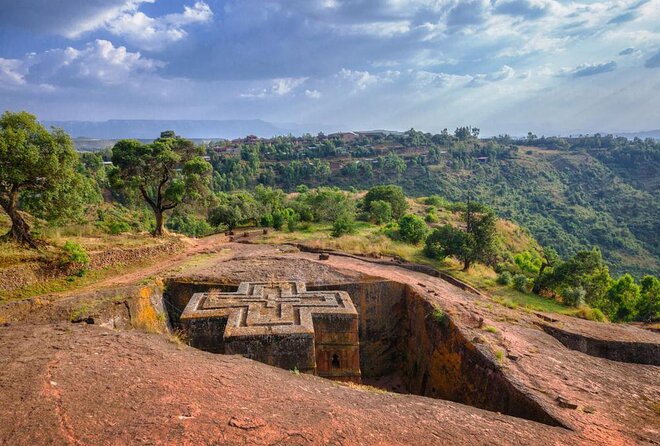
Bet Medhane Alem is linked with the Lalibela Cross and is described as possibly the largest monolithic church in the world. Bete Maryam is often regarded as one of the oldest churches in the complex. Bete Golgotha is associated with King Lalibela and contains notable religious art.
Bete Giyorgis is the image most people associate with Lalibela. Its cross-shaped form is cut into a deep, open pit, and the approach reveals the building gradually rather than all at once. Six hours allows a substantial visit, but the route can feel full after the preceding mountain walks.
Wear shoes that work on uneven stone and expect a religious site rather than a museum. Dress respectfully and follow the guide’s instructions about where photography is appropriate.
Other church trips from Addis Ababa:
- Danakil Depression and Lalibela 5 Days Tours
★ 5.0 · 28 reviews - 6 Days Lalibela, Omo Valley and Harar
★ 5.0 · 15 reviews - Lalibela 3 Days/ 2 Nights Tour package
★ 5.0 · 13 reviews - 9 Days Tours To Danakil Depression, Simen MNP, Lalibela With Omo Valley Tribes
★ 5.0 · 11 reviews
Mekele and the long road to the Danakil Depression
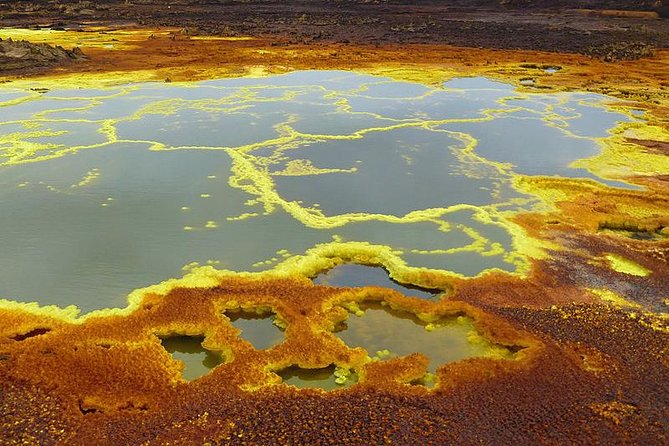
Day 6 is largely a transfer day, with an eight-hour drive to Mekele. This is one of the least glamorous parts of the route, but it connects the highland churches with the Afar region’s volcanic sites.
The next morning, the road becomes much rougher. The drive from the Danakil side toward Dodom covers about 80 kilometers and may take six hours. The route crosses solidified lava, rock, sand, and occasional palm-lined oases. This is not a scenic highway ride. It is a remote desert transfer in vehicles suited to difficult ground, and the slow pace is part of the price of reaching Erta Ale.
You reach the Dodom camping site, about 17 kilometers from the volcano. Dinner is scheduled around 5 p.m., followed by a short trek of about 30 minutes toward Erta Ale. Camels carry camping materials, light mattresses, mats, water, and some food to the volcano rim.
The description of the camp suggests basic conditions. Do not expect a hotel room or a polished campsite. Expect heat, dust, limited comforts, and a memorable night in an exposed volcanic setting. Ask in advance about sleeping arrangements, water amounts, and what equipment you should bring.
Erta Ale and the salt country of Afar
The next morning begins with time to walk around pits and craters near Erta Ale. The main pit is described as about 200 meters deep and 350 meters across, with a smaller southern pit about 65 meters wide and 100 meters deep.
The volcano is the sort of place where conditions matter. The plan may change with weather, road access, or local safety decisions. The schedule also requires an early start and a return to Askoma for breakfast before continuing.
Later, the route may include Lake Afdera, also known as Lake Giulietti, a saltwater lake more than 100 meters below sea level. This visit is optional and may not be available in summer. The salt flats and low basin provide a sharp contrast with the green highlands and mountain churches visited earlier.
The following day focuses on salt mining. You see salt broken from the ground, cut into rectangular pieces, and loaded onto camels. The route continues to Dallol and Lake Assal, both associated with extreme heat, low elevation, volcanic activity, and colorful mineral formations.
Camel caravans are not available in July, August, and early September, so seasonal timing affects what you see. The plan also notes that camel caravans may not operate during those months. If that sight is important to you, ask about the expected dates before paying.
The Danakil portion is the tour’s most demanding section. You need to be comfortable with heat, rough driving, basic camping, and a schedule that starts early to avoid the worst conditions. This is not the place for a relaxed resort-style holiday.
Tigray’s churches require a head for heights
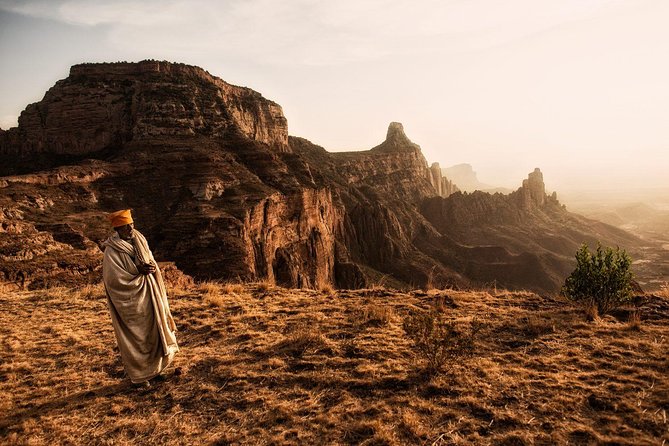
After returning toward Mekele, the route reaches the Gheralta area. The most challenging church visit is Abuna Yemata Guh.
The approach involves about an hour of walking, followed by a steep ascent up sandstone. The route uses footholds and handholds worn into the rock, then continues along narrow ledges with sheer drops. The church entrance includes a ledge about one meter wide with a drop of roughly 200 meters on one side.
That description should guide your decision. This is not suitable for anyone uncomfortable with heights, exposed rock, or strenuous climbing. The tour says a moderate level of fitness is required, but Abuna Yemata Guh demands more than ordinary city walking. If you have concerns, ask the operator directly about alternatives before booking.
Maryam Korkor is also mentioned as an impressive church, with a large high ceiling. The Tigray churches are valuable because their settings are inseparable from the visit. You are not simply entering a building. You are climbing toward sanctuaries placed high in cliffs and rock formations.
The following morning includes another trek around Tigray’s rock churches before the drive to Aksum. The walking is shorter at about four hours, but this comes after the demanding Gheralta day.
Aksum connects monuments, kings, and sacred tradition
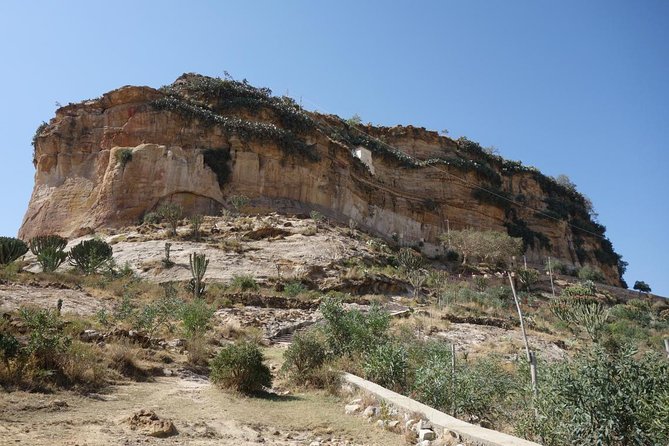
After lunch in Aksum, the route visits the Northern Stelae Field. The tall stone obelisks date to the 4th century and point to the power and skill of the ancient Aksumite kingdom.
The visit also includes Dungur, commonly linked with the Queen of Sheba’s Palace, along with the tombs associated with King Kaleb and King Gebre Meskel. The sites are spread across the city, so the vehicle transfers help keep the day practical.
St. Mary’s of Zion Cathedral is another major stop. Ethiopian tradition holds that the Ark of the Covenant is kept there, and the church is linked with the country’s emperors. You do not need to treat every tradition as proven fact to appreciate the importance of the site. It remains one of Ethiopia’s most powerful religious destinations.
Aksum gives the tour a slower cultural counterpoint after the heat and physical effort of Danakil and Gheralta. The six-hour visit is full, but it creates a useful bridge between archaeology, faith, and national identity.
Addis Ababa finishes with Lucy and a high city view
On the final day, a morning flight from Mekele returns you to Addis Ababa. The city program begins at Mount Entoto, the former capital area above Addis Ababa.
From the eucalyptus-covered mountain, you look down over the city and get cleaner air than in the busy center. The stop lasts about an hour and 10 minutes, making it a useful way to orient yourself before visiting museums and markets.
The National Museum of Ethiopia is the day’s most important indoor stop. Its collection includes archaeological, historical, and cultural material, but the displays are not consistently well lit or labelled. I would give priority to the basement paleontology section, home of Lucy, the famous early human fossil discovered in Ethiopia in 1974.
The schedule lists the National Museum twice, once for 90 minutes and again for an hour. Treat that as a planning detail to clarify, not as two separate museum visits. The program then continues through Shiro Meda, known for traditional clothing, and Merkato, described as the largest market in Africa.
The Addis day is short for a capital city, but it gives you a final look at Ethiopia beyond its ancient sites. The starting time for the overall experience is 6 a.m., so confirm the exact pickup time for your first day and the final flight schedule.
Guides, group size, and organization
A maximum of 10 people is one of the strongest practical features. A small group makes airport pickups, park walks, church visits, and vehicle transfers easier to manage. It also gives you a better chance to ask questions without being lost in a large bus group.
Local English-speaking staff guide the different sections, with drivers and regional guides handling the route. Names associated with the company’s trip planning and guiding include Meseret, Simoneh, and Aklilu, but your assigned guide may differ. Confirm the names and roles shortly before departure.
Past arrangements have included local guides for each destination, friendly professional drivers, and responsive planning through WhatsApp. At the same time, one critical account raised concerns about outsourced guides and cost-cutting. That makes a pre-trip confirmation worthwhile: ask who will guide each region, what vehicle is used for Danakil, and how schedule changes are handled.
Who should book this Ethiopia adventure?
I would recommend it to an active first-time visitor who wants the major northern sights without arranging every flight, permit, driver, and desert transfer alone.
It suits you if you enjoy:
- Long days with several major stops
- Mountain walking and uneven ground
- Ancient churches and archaeological sites
- Remote places where comfort is basic
- Heat, rough roads, and early starts
- A small organized group rather than independent logistics
I would hesitate if you want slow mornings, polished hotels throughout, easy walks, or plenty of free time. The route is ambitious, and the transition from cool highlands to the Danakil heat can be physically tiring.
The tour requires moderate fitness, but Abuna Yemata Guh deserves special attention. The steep rock climb and narrow ledges may not suit every person who can manage a normal hiking day.
Should you book the 12-day tour?
Book it if your priority is variety and access. For about $1,641 per person, the included flights, guides, park permits, entrance fees, accommodation, transport, and selected meals create solid value, especially when the route includes remote destinations such as Erta Ale, Dallol, and the Tigray cliff churches.
Before booking, confirm the repeated Simien day description, the exact accommodation in the desert, the meals not covered, the optional Lake Afdera visit, and the expected camel-caravan season. If you accept rough travel and physical challenges, this is an unusually full view of northern Ethiopia in a compact schedule. If you prefer comfort and a slower rhythm, choose a shorter route focused on Gondar, Lalibela, and Aksum.
FAQ
How long is the tour?
The tour lasts approximately 12 days and begins from Addis Ababa.
What is the maximum group size?
The group is limited to a maximum of 10 travelers.
Are domestic flights included?
Yes. Three domestic flights with Ethiopian Airlines are included.
Are meals included?
Accommodation with breakfast is included outside the Simien Mountains and Danakil Depression. The package includes 11 breakfasts, six lunches, and four dinners, while Danakil and Simien are listed as full board.
What level of fitness is required?
A moderate level of physical fitness is required. The route includes mountain hikes, long walking days, rough desert roads, and the steep, exposed climb to Abuna Yemata Guh.
What is the cancellation policy?
You can receive a full refund if you cancel at least six full days before the start time. A cancellation two to six days before the start time receives a 50% refund, while cancellations less than two full days before the start time are nonrefundable.
Other desert expeditions from Addis Ababa
- 3 Day Danakil Depression Ertale and Dallol Tours
★ 5.0 · 44 reviews - 2-Night 3-Day Danakil Depression Tour without Flights
★ 4.8 · 31 reviews - 5 Days Lalibela-Danakil Tour
★ 4.5 · 11 reviews - 8 Days Lalibela,Danakil Depression and Omo Vally Tours
★ 5.0 · 10 reviews
More trekking from Addis Ababa
- Simien Mountains Trekking Adventure
★ 5.0 · 8 reviews - 3 Days Trekking Simien Mountains Tours
★ 5.0 · 6 reviews - Northern Ethiopia & Trekking Simien Mountains , 10 Days
★ 4.5 · 5 reviews - 5 Day Addis,Bahir Dar,Gondar,Simien Mountains and Lalibela Tours
★ 5.0 · 4 reviews
Just added out of Addis Ababa
- Yod Abyssinia Cultural Night: Dinner, Music, and Dance★ 5.0 · 7 reviews
- Locally crafted beer and wine tasting and nightlife in Addis tour★ 5.0 · 6 reviews
- Stunning Views Wonchi Crater Lake a Private Day Trip★ 5.0 · 3 reviews
- Two days Lake Wenchi and Menagesha Forest★ 5.0 · 3 reviews
- Tribes of the Ethiopian Omo Valley – 9 Day Tour★ 5.0 · 5 reviews
- Addis Ababa City Tours Full-Day Tours★ 5.0 · 5 reviews
- 3-Day Cultural Tour in South Omo Valley★ 5.0 · 4 reviews
- Day Trip to Tiya UNESCO Site & Melka Kunture Archaeological Site★ 4.5 · 3 reviews
Rock-Hewn Church Tours, compared.
Tour 11 monolithic rock churches & museum in Lalibela & cave church with mummies
Read our review →
Ethiopia Tigray Tours: Guided tour of Tigray rock hewn churches
Read our review →
5 DAYS Lalibela, Axum, Tigray churches and Danakil
Read our review →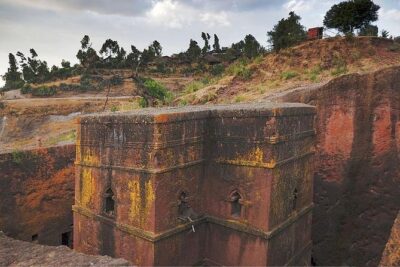
6 Days tour Package (Simien Mountains, Lalibela, and Danakil Depression)
Read our review →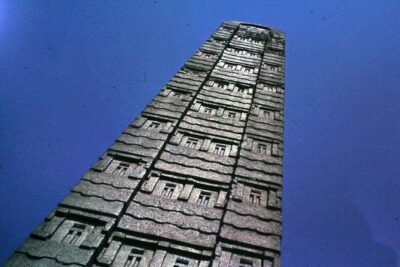
Lalibela, Axum, Danakil and Omo Valley 8 DAYS
Read our review →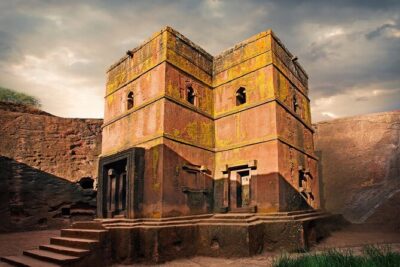
Browse the lists this tour appears in