

Reviewed · OMO VALLEY TRIBAL TOURS
5 days Omo valley
The striking part of this southern Ethiopia trip is the range of communities you meet in only a few days. Dorze weaving country, Hamer villages, Karo body art, Dassenech life beside the Omo River, and busy market days all appear on one fast-moving route. The experience is strongest when you treat people as hosts, not photo subjects, and let your guide explain what you are seeing.
I like the small maximum group of 13, which should make village visits easier to manage than a large coach tour. I also like that the package includes flights, private transport, four nights of lodging, village fees, market admissions, and an English-speaking guide. The main caution is the schedule: the published route describes touring through Day 4, although the trip is sold as five days. Confirm the fifth day, the flight arrangements, and the timing of the Mursi visit before booking.
Key points to know before you book
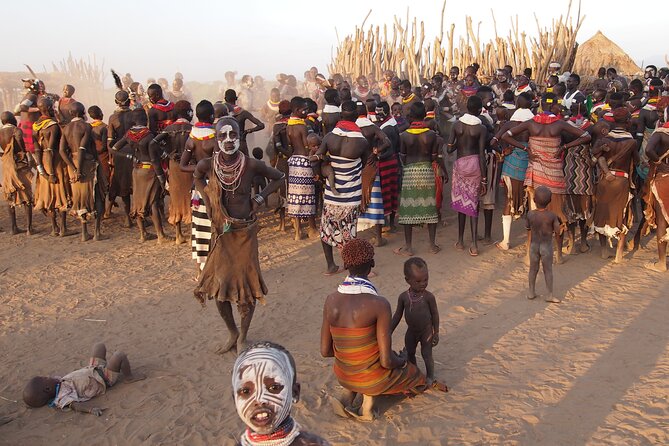
- Dorze village begins the cultural story: You reach the mountains above Arbaminch for a look at Dorze life and local traditions.
- Markets are tied to exact weekdays: Keyafer is listed for Thursdays, and Dimeka for Saturdays, so dates matter.
- The route covers several distinct communities: Karo, Nyangatom, Hamer, Dassenech, Ari, Konso, and Dorze are all included in the stated admissions.
- Lake Chamo adds a change of pace: The boat safari breaks up the long road sections with time on the water.
- Private transport is a real advantage: You are not tied to a large bus, and the group limit is 13 people.
- Ask about the fifth day: The written schedule ends with Day 4, while Mursi admission is included without a clear stop in the daily outline.
Why the Omo Valley route is worth your time

The Omo Valley is not a single attraction with one viewpoint. It is a large southern region where different communities have their own clothing, painting, ceremonies, farming patterns, and market traditions. This tour gives you a quick but broad introduction rather than keeping you in one place.
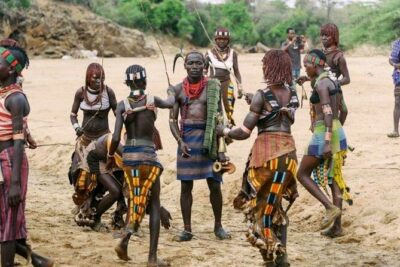
You will see colorful body decoration made with local materials, bright clothing, unusual ornaments, and painted faces. These details are not just costumes for visitors. They are part of how people present themselves within their communities. Your guide’s role matters here. A good explanation can turn a quick village visit into a useful lesson about daily life, rather than a parade of photographs.
The schedule is ambitious. Roads, village visits, markets, and long drives all compete for time. That is the trade-off for covering so much ground in five days. If you want a slow stay in one community, this is not the right format. If you want to see several parts of southern Ethiopia from Addis Ababa, the route offers a practical introduction.
Other trips south from Addis Ababa:
- 6 Days Omo Valley Tribes Tours From Addis Ababa
★ 5.0 · 33 reviews - 3 Days Omo Valley Tour
★ 5.0 · 24 reviews - 5 Days Omo Valley Tours
★ 5.0 · 15 reviews
Day 1: Arbaminch and the Dorze highlands
The trip begins with a flight to Arbaminch, followed by a cultural visit to a Dorze village in the mountains above the town. This is a smart opening because it gets you out of the capital quickly and introduces a community whose setting differs from the hotter Omo Valley stops that follow.
Dorze culture is presented through the village itself and through the guide’s explanations. You can expect to learn about local life, housing, customs, and the way people use the surrounding area. The mountain setting also gives this first day a visual change from Addis Ababa.
The flight saves valuable road time, but the day still has a transfer and a village visit. Ask for the expected flight schedule and arrival timing. That helps you understand how much time you will have in the village rather than assuming the whole day is available for sightseeing.
This is also your first chance to see how the company handles cultural visits. Be polite about photography, follow your guide’s advice, and remember that a village is a home and workplace, not a museum. The more carefully you approach the visit, the more useful the exchange can be.
Day 2: Lake Chamo, Konso, and the road to Turmi
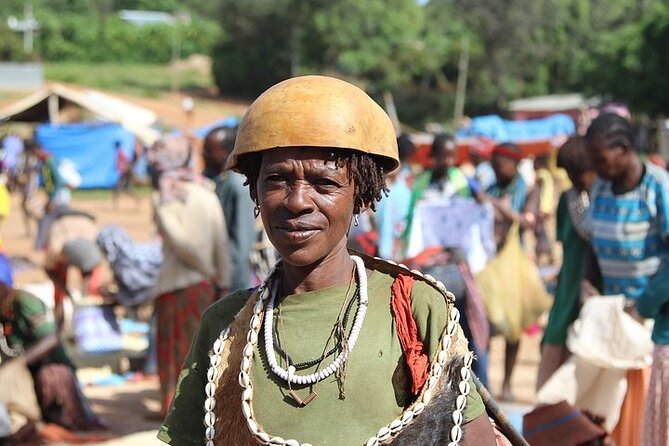
Day 2 starts with a boat safari on Lake Chamo. It offers a calmer morning after the flight and road work of Day 1. The supplied information does not specify the wildlife or exact boat duration, so keep your expectations open and ask your guide what conditions are like on the day.
After the lake, you continue toward Turmi, with a visit to a Konso village along the way. Konso is important on this route because it gives you another cultural setting before the more remote village stops farther south. The trip is not simply a sequence of similarly dressed groups. Each community adds a different view of life in the region.
The market schedule is crucial. Keyafer market is listed for Thursdays, while Dimeka market is listed for Saturdays. If your dates line up, these markets can be among the most useful stops because you see people from different areas gathering to buy, sell, and socialize. If your travel days do not match, do not expect the same market experience on another day.
The drive to Turmi is a major part of this day. Private, air-conditioned transport will make the road sections more comfortable, but it does not make them short. Use the journey as part of the experience, and ask the operator for a realistic driving plan before departure.
Day 3: Karo, Nyangatom, and Hamer communities
Day 3 focuses on three of the trip’s most distinctive cultural encounters. The first stop is a Karo village, known in the tour description for skin scarification and ornamental decoration. These are personal and cultural practices, so the right attitude is respectful curiosity, not shock or mockery.
You then continue to a Nyangatom village. The route gives you a chance to compare two communities in the same broad region without treating them as interchangeable. Listen for the differences your guide points out, and ask questions about daily life rather than limiting the visit to clothing and appearance.
The afternoon is reserved for a Hamer village. Hamer culture is often associated with striking adornment and carefully arranged hair and clothing, but the value of the stop depends on how much context you receive. The schedule does not promise a ceremony, dance, or special event, so do not book this trip expecting one particular performance.
This day may be the most visually memorable, but it can also feel hurried. Three communities in one day means short visits and more driving. If you prefer long conversations and unplanned time, ask if the route can be adjusted. The company offers private transport, but the information does not promise a fully customized schedule.
A few more trips from Addis Ababa worth a look
- 5 DAYS Lalibela, Axum, Tigray churches and Danakil
★ 5.0 · 34 reviews - Danakil Depression and Lalibela 5 Days Tours
★ 5.0 · 28 reviews - 5 Days North Ethiopia Tours
★ 5.0 · 23 reviews - 5 DAYS Axum, Lalibela, Tigray churches and Danakil
★ 4.5 · 22 reviews
Day 4: Dassenech by the Omo River, then Jinka
The journey reaches Omorate, a town beside the Omo River, for a visit to a Dassenech village. The river is not just scenery here. It helps explain why settlement and movement in this area developed as they did. Your guide can connect the setting with local life and the community’s relationship to its surroundings.
You return to Turmi before driving onward to Jinka. This is a demanding day, with a village visit followed by a substantial transfer. The air-conditioned vehicle and private arrangement are especially useful here. You can stop to ask questions and manage the pace more easily than you could on a large group departure.
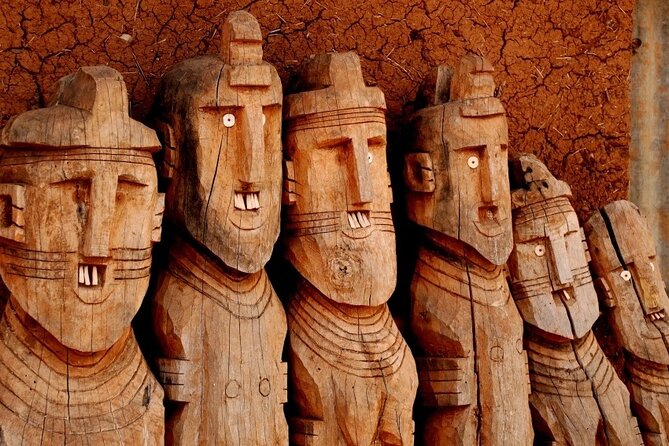
In Jinka, the route includes an Ari village and the South Omo Ethnography Museum. The museum is a welcome addition because it gives you a wider frame for the communities visited on the road. After several quick encounters, a museum visit can help you organize what you have seen instead of leaving the trip as a blur of faces and colors.
The listed admissions also include a Mursi village, but the daily schedule does not clearly place that visit. This is the most important point to clarify. Ask the operator exactly when Mursi is visited, whether it replaces another stop, and how it fits into the fifth day.
The missing fifth day needs a clear answer
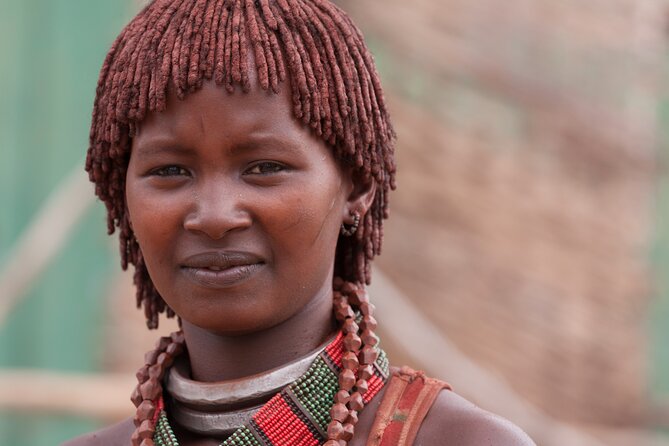
The experience is advertised as five days, yet the supplied schedule names Day 1 through Day 4. That may simply mean the fifth day is reserved for departure, a return flight, or an omitted final visit. Still, you should not leave this vague when arranging flights, airport transfers, or accommodation after the tour.
The package includes four nights of lodging, which supports a five-day trip, but the daily program should still be confirmed in writing. Ask three direct questions:
- What happens on Day 5?
- When is the return flight or final transfer?
- Where and when is the Mursi village visit?
This is not a reason to reject the tour. It is a reason to make sure the schedule matches your plans. Clear answers will also help you judge how much time you will really have in each village and market.
What the $830 price covers
At $830 per person, the price is easier to assess because many major costs are included. You receive private transportation, an air-conditioned vehicle, four nights of accommodation, an English-speaking driver guide, a professional guide, listed admission fees, and the flight to Arbaminch described in the schedule.
The included village and market fees matter. You do not have to keep calculating separate admission charges for Dorze, Konso, Karo, Nyangatom, Hamer, Dassenech, Ari, Mursi, Dimeka, and Keyafer. All taxes are also included.
The value depends on your group size and final schedule. A maximum of 13 people is small enough to keep the vehicle and village visits manageable, while private transport gives you more control than a standard coach. Group discounts may improve the price for people booking together.
The price does not include anything outside the inclusion list. Food, drinks, personal purchases, tips, and other unlisted costs should be confirmed before you go. The phrase all which are not included is broad, so ask for a practical list of exclusions rather than guessing.
Guides, service, and the human side of the trip
The company’s service is one of its strongest selling points. Henok, also spelled Enock in the supplied feedback, is described as passionate about Addis Ababa and willing to answer detailed questions. Yenew is identified as the company director and is praised for professional communication and careful organization. Ach is also named in connection with a southern Ethiopia trip.
Those names do not guarantee who will lead your departure, so ask which guide and driver are assigned to your dates. Still, they give you useful points of contact when discussing the itinerary. A guide who can explain roads, communities, and customs will make a big difference on a fast route like this.
The company has also handled longer personalized trips and small French-speaking groups. That suggests some ability to work with different party sizes and expectations, though this five-day product specifically promises an English-speaking guide. Confirm language needs before paying.
The most meaningful part of the service is not just politeness. It is whether the guide sets a respectful tone at village visits, explains photography rules, and gives you time to ask questions. You should expect a practical tour, not a lecture or a staged show.
Who should book this Omo Valley trip?
I would recommend it to you if you have limited time in Ethiopia and want a broad introduction to the south. It suits people who value private transport, included admissions, a small group, and a guide who can handle a busy schedule.
It also works for a group of friends or relatives. Group discounts may lower the per-person cost, and the private vehicle gives your party a shared travel arrangement. The mix of villages, markets, museum time, a lake safari, and mountain scenery keeps the route varied.
I would be more cautious if you want a slow, flexible trip. The schedule covers a lot of ground, and the long drives are unavoidable. You should also think carefully about the ethics of village photography and direct contact. Come prepared to ask permission and accept no as an answer.
Practical details before you go
Pickup is offered, and confirmation is provided at booking. The experience is near public transportation, allows service animals, and is described as suitable for most people. No special physical requirement is stated, but the long road days and repeated vehicle transfers are worth considering.
The maximum group size is 13. The trip requires good weather and a minimum number of participants. If poor weather or low numbers cause cancellation, you are offered another date, another experience, or a full refund.
You can cancel for a full refund up to 24 hours before the start time. Changes or cancellations inside that period are not accepted or refunded under the stated policy. The cut-off follows local time.
Should you book it?
Book this trip if you want to see many sides of southern Ethiopia in a short period and value having transport, lodging, admissions, and a guide arranged together. The Dorze, Konso, Karo, Nyangatom, Hamer, Dassenech, Ari, and possible Mursi visits create a broad cultural route, while Lake Chamo and the markets keep it from feeling like one long sequence of village stops.
Before booking, get the fifth-day schedule in writing and confirm the Mursi visit, market dates, flight details, food arrangements, and assigned guide. If those answers are clear, the $830 price offers solid practical value for a compact private trip. If you want long stays and an unhurried pace, choose a longer southern Ethiopia program instead.
FAQ
Where does the tour begin?
The tour is based in Addis Ababa, Ethiopia, and pickup is offered.
How long does the experience last?
It is advertised as approximately five days and includes four nights of accommodation.
Does the tour include a flight?
Yes. The stated route begins with a flight from Addis Ababa to Arbaminch.
What is the maximum group size?
The tour has a maximum of 13 travelers.
Is private transportation included?
Yes. Private transportation and an air-conditioned vehicle are included.
Is accommodation included?
Yes. Hotel accommodation and four nights of lodging are included.
Is an English-speaking guide provided?
Yes. An English-speaking driver guide and a professional guide are included.
Which markets are included?
The stated admissions include Dimeka market and Keyafer market. Keyafer is listed for Thursdays, and Dimeka for Saturdays.
Which villages are included?
The listed admissions include Dassenech, Hamer, Dorze, Konso, Karo, Nyangatom, Mursi, and Ari villages.
What is the cancellation policy?
You can cancel at least 24 hours before the local start time for a full refund. Poor weather or failure to meet the minimum number of participants may also lead to an alternative date or a full refund.
Just added out of Addis Ababa
- Yod Abyssinia Cultural Night: Dinner, Music, and Dance★ 5.0 · 7 reviews
- Locally crafted beer and wine tasting and nightlife in Addis tour★ 5.0 · 6 reviews
- Stunning Views Wonchi Crater Lake a Private Day Trip★ 5.0 · 3 reviews
- Two days Lake Wenchi and Menagesha Forest★ 5.0 · 3 reviews
- Tribes of the Ethiopian Omo Valley – 9 Day Tour★ 5.0 · 5 reviews
- Addis Ababa City Tours Full-Day Tours★ 5.0 · 5 reviews
- 3-Day Cultural Tour in South Omo Valley★ 5.0 · 4 reviews
- Day Trip to Tiya UNESCO Site & Melka Kunture Archaeological Site★ 4.5 · 3 reviews
Omo Valley Tribal Tours, compared.
Lalibela, Axum, Danakil and Omo Valley 8 DAYS
Read our review →


9 Days Tours To Danakil Depression, Simen MNP, Lalibela With Omo Valley Tribes
Read our review →
5 Day Private tour to the Omo Valley Tribes and Adventure Tour
Read our review →
8 Days Lalibela,Danakil Depression and Omo Vally Tours
Read our review →Browse the lists this tour appears in