
Reviewed · ROCK-HEWN CHURCH TOURS
Rock Hewn Churches of Adadi Maryam, Tiya Stele & Melka Kunture
Adadi Maryam is the kind of place that makes a day outside Addis Ababa worthwhile. Cut from living rock and believed to date from the 12th century, this monolithic church gives you a close look at Ethiopia’s Christian tradition without requiring the longer journey to northern Ethiopia. At Tiya, carved stones raise a different set of questions: their symbols are striking, but their original meaning remains uncertain.
I like the three very different historic sites packed into one outing, and I like the practical setup: hotel pickup, a car with a professional driver, an English-speaking guide, lunch, coffee, water, and entrance fees. The small maximum group of 15 should also make it easier to hear explanations and ask questions. The main drawback is the road. Earlier visitors describe parts of the route as dusty and bumpy, so comfortable shoes and a bit of patience will help.
Key points to know
- Adadi Maryam is a 12th-century monolithic church, carved from rock and altered by both human damage and natural forces.
- Tiya offers a rare look at decorated megaliths, with carved symbols whose meaning remains mysterious.
- Melka Kunture adds a much older chapter, covering Palaeolithic archaeology in the upper Awash Valley.
- Pickup begins at 7:00 am, with collection available from Bole Airport in Addis Ababa.
- Lunch, Ethiopian coffee, bottled water, and entrance fees are included, which improves the value of the $95 price.
- The route is best for a full day outside the city, but the dusty, uneven road means moderate physical fitness is advised.
Three layers of Ethiopia’s past in one day
This excursion gives you a useful sweep through Ethiopian history. Adadi Maryam represents medieval Christian architecture. Tiya takes you into the era of monumental stone markers and symbolic carving. Melka Kunture reaches much farther back, to the Palaeolithic period.
That range is the tour’s greatest strength. You are not spending the whole day looking at similar buildings or museum displays. Each stop asks you to think about a different part of the country’s past, and the guide helps connect the sites into a larger story.
The day lasts about 6 to 7 hours. You spend about an hour at each main stop, with the remaining time used for driving, lunch, and short pauses along the way. It is an efficient choice if your time in Addis Ababa is limited, including a short stopover.
Other prehistory sites reached from Addis Ababa:
- Day trip to Adadi Mariyam and Melka kunture
★ 4.5 · 20 reviews - Day Tours to Tiya Stele and Cave Churches of Adadi Maryam
★ 5.0 · 13 reviews - Day-Trip Church of Adadi Mariam from Addis Ababa
★ 5.0 · 11 reviews
Leaving Addis Ababa at 7:00 am
The tour starts at 7:00 am, with pickup listed at Bole Airport and pickup offered for hotels. Starting early matters here. You have three sites to cover, and a later departure would leave less room for explanations or an unhurried lunch.
Transport is by car with a professional driver. Previous departures have included guide Shasha and driver Sisik, while the company also uses other guide and driver teams. You should receive your assigned names with your booking or pickup details.
The vehicle handles the practical side of the day, which is useful because the route is not simply a quick city transfer. The road toward Adadi Maryam and the other sites can be dusty and bumpy. I would wear closed, comfortable shoes and bring any personal items you need for several hours away from the city.
The group limit is 15 people. That is not a private tour, but it is small enough to keep the day more personal than a large coach outing. A guide can usually answer questions more easily in a group of this size, and you are less likely to lose time gathering a crowd at each stop.
Adadi Maryam and its rock-cut design
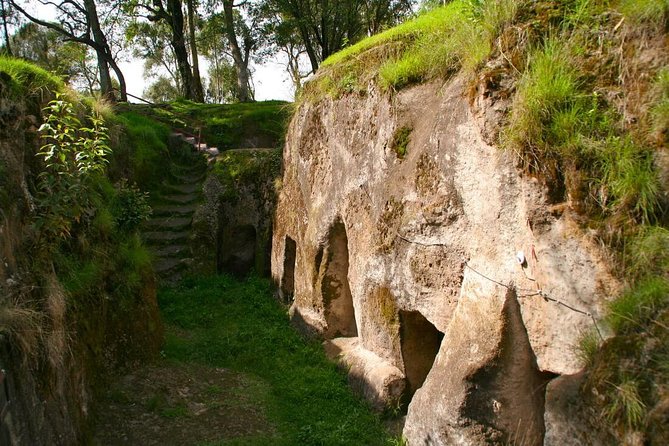
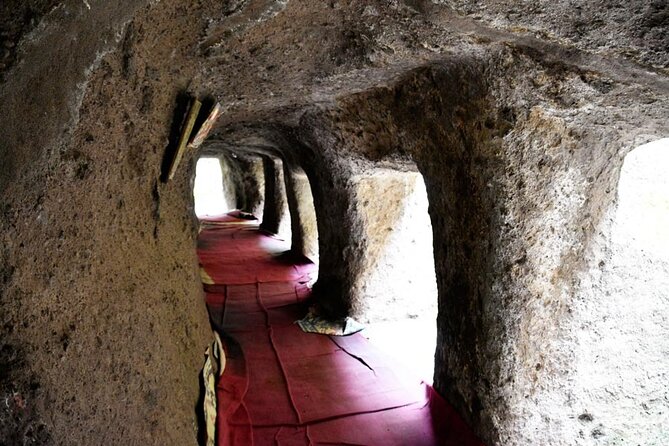
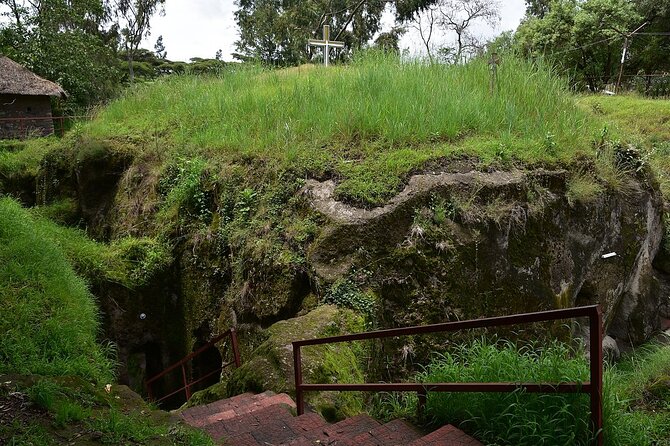
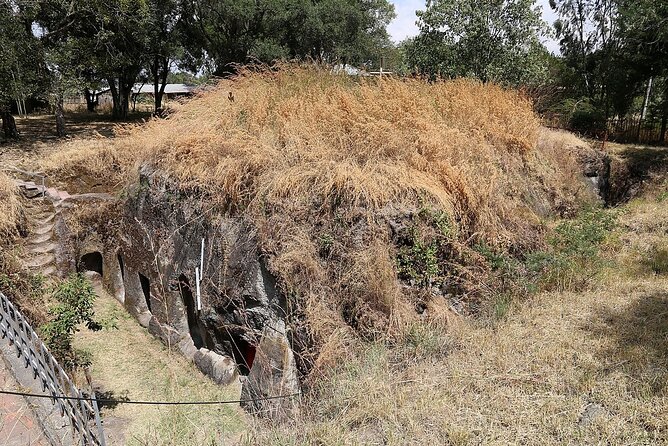
The first major stop is Adadi Maryam, about 66 kilometers southwest of Addis Ababa. It is a monolithic church, meaning the building was cut from a single mass of rock rather than assembled from separate blocks.
The church is believed to have been built in the 12th century. That date places it in the medieval period of Ethiopian Christianity, when churches carved directly into rock formed an important part of religious architecture. The site is often discussed alongside Ethiopia’s better-known rock-hewn churches, but Adadi Maryam gives you a different setting and a more compact visit.
You have about an hour here, with admission included. Use that time to look beyond the basic shape of the church. Notice how the building is formed from the surrounding stone, and ask the guide how its religious use, design, and later damage fit together.
Adadi Maryam has suffered from both human damage and natural causes. That is worth keeping in mind before you arrive. You are seeing an important historic place, but not a perfectly preserved monument. Some visitors may find the signs of age frustrating. I see them as part of the site’s story, provided you arrive with realistic expectations.
The church is the most visually memorable stop for many people, but it is not a polished modern attraction. Conditions can be simple, and the outdoor setting adds to the sense that this is a working historic place rather than a carefully staged exhibit.
Tiya’s carved stones and unanswered symbols
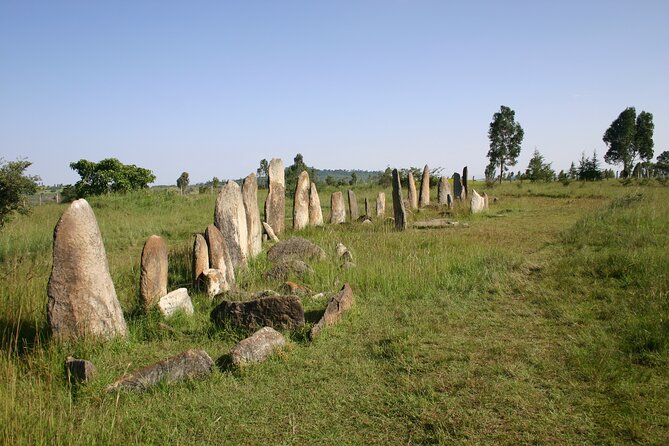
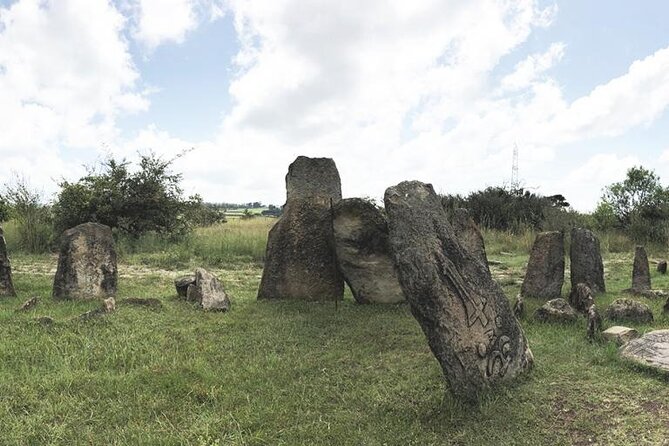
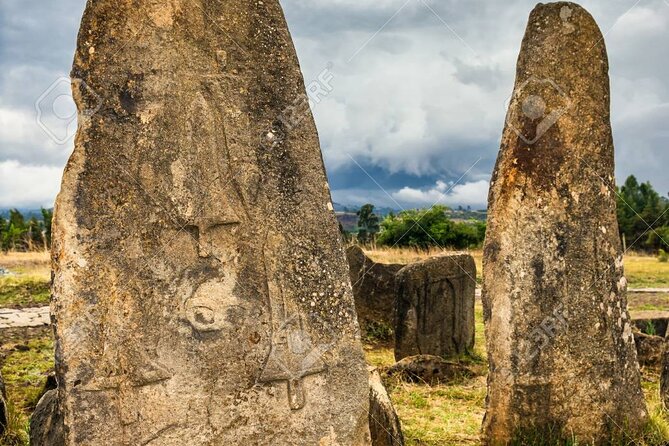
Tiya shifts the focus from religious architecture to archaeology. The site lies in the Gurage Zone south of Addis Ababa and is known for its collection of megaliths, or large standing stones.
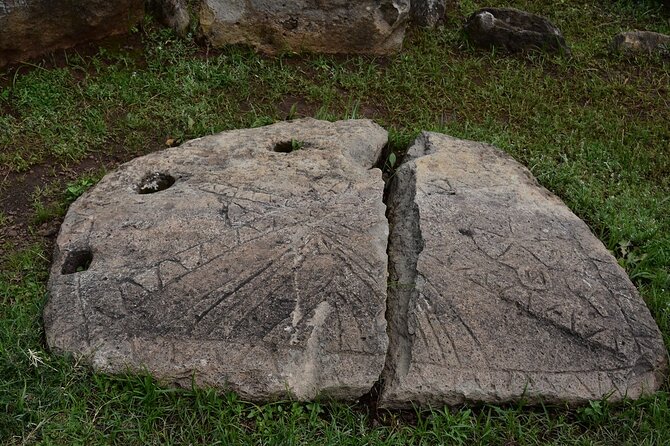
Many of the stones carry carved symbols. Their designs are the reason Tiya feels so intriguing. You can see the marks clearly, but the meaning behind them is not fully explained by the stones themselves. A good guide is especially useful here because the site rewards questions and careful observation more than a quick photo stop.
You spend about an hour at Tiya, and admission is free. That helps the value of the overall tour, since the $95 price also includes the vehicle, guide, lunch, coffee, water, and the paid admissions at the other stops.
Tiya is a UNESCO-designated archaeological site, which gives you an important sense of its cultural weight. Still, it is not the sort of place where every detail has a simple answer. I would avoid expecting a neatly packaged story about every symbol. The mystery is part of the appeal, and the guide’s role is to provide context without pretending that every question has been settled.
This is also a good stop for anyone who enjoys archaeology more than grand buildings. The stones are quiet and spare. You will not find the visual scale of a major cathedral, but you will find a site that leaves you thinking about the people who placed and decorated them.
Other church trips from Addis Ababa:
- 12 Days SIMIEN MOUNTAIN-LALIBELA-DANAKIL-TIGRAY CHURCHES
★ 5.0 · 45 reviews - 5 DAYS Lalibela, Axum, Tigray churches and Danakil
★ 5.0 · 34 reviews - Danakil Depression and Lalibela 5 Days Tours
★ 5.0 · 28 reviews - 5 DAYS Axum, Lalibela, Tigray churches and Danakil
★ 4.5 · 22 reviews
Melka Kunture reaches back to the Palaeolithic era
Melka Kunture adds the oldest chapter to the day. This Palaeolithic site lies in the upper Awash Valley, an area formed by valleys and inner terraces that resisted erosion.
The site became a World Heritage Site in 2024. That recent designation gives Melka Kunture particular interest, especially if you want to understand Ethiopia’s importance in the study of early human history.
The visit lasts about an hour, with admission included. Your guide can help explain why the physical shape of the area matters to archaeology. The inner terraces preserved evidence that might otherwise have been lost to erosion, giving researchers a way to study very early periods.
Melka Kunture may feel less immediately dramatic than Adadi Maryam. Its importance is tied to what has been found and preserved there, not only to a single striking structure. If you prefer sites with a clear architectural focal point, this may be the least instantly impressive stop. If you enjoy archaeology and the scale of human time, it may be the most rewarding.
Together, Tiya and Melka Kunture prevent the day from becoming only a church tour. You see Ethiopia’s past as a long sequence, from early human activity to stone monuments and medieval Christian worship.
Lunch, Ethiopian coffee, and what is included
Lunch featuring Ethiopian food is included. That is a practical benefit, since the schedule takes you outside Addis Ababa for most of the day and leaves little room to arrange a separate meal.
Ethiopian coffee and a bottle of water are also provided. Coffee is not just a drink in Ethiopia, so this small touch fits the cultural focus of the outing. It also gives you a welcome pause between visits.
The $95 price is easier to justify because several costs are bundled together:
- A car with a professional driver
- An English-speaking professional guide
- Entrance fees for Adadi Maryam and Melka Kunture
- Ethiopian lunch
- Ethiopian coffee
- Bottled water
- Pickup and drop-off service
Tiya has no admission charge, but the included transport and guiding are still important. On your own, you would need to organize the route between three sites, deal with the road conditions, and arrange meals. For a solo visitor or anyone with only one free day, the package offers solid convenience.
You should budget separately for dinner, alcoholic drinks, personal expenses, and video or photography fees. Gratitude for the guide and driver is also not included, so carry some money if you wish to offer a tip.
The road, walking, and clothing advice
The road is the one practical issue I would take seriously. Earlier departures have found sections dusty and bumpy. That does not cancel out the value of the sites, but it means you should not expect a smooth luxury excursion.
Moderate physical fitness is advised. The supplied information does not give exact walking distances or describe every surface, so you should be ready for some standing and walking at historic outdoor sites. Comfortable shoes are the safest choice.
The stated dress code is formal. At a religious site such as Adadi Maryam, conservative clothing is the sensible approach. Dress respectfully, avoid clothing that may be unsuitable for a church visit, and bring something that keeps you comfortable during the drive and outdoor stops.
Service animals are allowed, and the tour is near public transportation. The main meeting point is listed as Bole Airport in Addis Ababa, with a 7:00 am start. Since hotel pickup is offered, confirm your exact pickup location and time when booking.
How the guide affects the day
The quality of this excursion depends heavily on the guide. The sites are important, but their meaning is not always obvious from looking at them alone.
An English-speaking guide can explain how Adadi Maryam differs from other Ethiopian rock-hewn churches, set Tiya’s stones in an archaeological context, and show why Melka Kunture matters even when the site looks more restrained. I would ask questions rather than simply follow the group from one stop to the next.
Earlier trips have been led by Shasha, and earlier driving has included Sisik. Those names are useful if you are trying to understand the style of the operation, but they do not guarantee who will lead your departure. The strongest praise has focused on punctual pickup, safe driving, helpful service, and a friendly attitude.
That practical side matters. A reliable pickup at the start of a tightly scheduled day can make the difference between seeing all three sites and feeling rushed. Safe driving also matters on a route where the road may be dusty and uneven.
Who should book this day trip?
I would choose this outing if you want to get beyond Addis Ababa without committing to a long multi-day journey. It fits a first visit, a short stopover, or a spare day between larger parts of an Ethiopia itinerary.
It is especially well suited to you if you like:
- Religious architecture
- Archaeology and early human history
- Guided cultural visits
- Small-group touring
- Historic places that are not overly commercialized
- A planned day with transport and meals handled for you
You may want a different plan if you dislike bumpy roads, prefer a relaxed pace with one main sight, or want a private vehicle with complete control over timing. The 6 to 7 hour schedule is efficient, but it is still a full day with three stops.
The tour can also work well for families or mixed-interest groups because the subjects change throughout the day. One person may prefer the church, another the stone markers, and another the Palaeolithic site. Just keep the moderate fitness requirement and formal dress code in mind.
Cancellation and booking details
You can cancel at least 24 hours before the local start time for a full refund. Cancellations made within 24 hours are not refunded, and changes within that period are not accepted.
Confirmation is provided at booking. Since pickup is part of the service, check the exact meeting details carefully, especially if you are using Bole Airport or arranging collection from a hotel.
My verdict on Adadi Maryam, Tiya, and Melka Kunture
I would book this tour if I had one open day in Addis Ababa and wanted a meaningful mix of culture, archaeology, and countryside rather than another city-only outing.
The strongest reason to go is the variety. Adadi Maryam gives you a rock-hewn church, Tiya presents mysterious carved megaliths, and Melka Kunture reaches into Ethiopia’s earliest human past. Add lunch, coffee, water, entrance fees, a guide, and transport, and the $95 price is reasonable for the amount covered.
The main caution is the road and the pace. Wear comfortable shoes, dress respectfully, and expect dust and bumps. If you can accept that, this is a useful, well-planned way to see three important sites in a single day.
FAQ
Where does the tour start?
The listed meeting point is Bole Airport in Addis Ababa, Ethiopia.
What time does the tour begin?
The tour starts at 7:00 am.
How long does the experience last?
The full excursion takes approximately 6 to 7 hours.
Is hotel pickup available?
Yes. Pickup and drop-off are offered, and the tour information also lists Bole Airport as a starting point.
How many people can join the tour?
The maximum group size is 15 people.
Is lunch included?
Yes. Lunch featuring Ethiopian food is included in the tour price.
Are coffee and water provided?
Yes. Ethiopian coffee and one bottle of water are included.
Are entrance fees included?
Entrance fees are included for Adadi Maryam and Melka Kunture. Admission to Tiya is free.
Is an English-speaking guide provided?
Yes. An English-speaking professional guide is included, along with a professional driver.
Can I cancel for a full refund?
Yes, if you cancel at least 24 hours before the experience start time. Cancellations made less than 24 hours before the start time are not refunded.
Just added out of Addis Ababa
- Yod Abyssinia Cultural Night: Dinner, Music, and Dance★ 5.0 · 7 reviews
- Locally crafted beer and wine tasting and nightlife in Addis tour★ 5.0 · 6 reviews
- Stunning Views Wonchi Crater Lake a Private Day Trip★ 5.0 · 3 reviews
- Tribes of the Ethiopian Omo Valley – 9 Day Tour★ 5.0 · 5 reviews
- Addis Ababa City Tours Full-Day Tours★ 5.0 · 5 reviews
- Two days Lake Wenchi and Menagesha Forest★ 5.0 · 3 reviews
- 3-Day Cultural Tour in South Omo Valley★ 5.0 · 4 reviews
- Day Trip to Tiya UNESCO Site & Melka Kunture Archaeological Site★ 4.5 · 3 reviews
Rock-Hewn Church Tours, compared.

12 Days SIMIEN MOUNTAIN-LALIBELA-DANAKIL-TIGRAY CHURCHES
Read our review →
Tour 11 monolithic rock churches & museum in Lalibela & cave church with mummies
Read our review →
Ethiopia Tigray Tours: Guided tour of Tigray rock hewn churches
Read our review →
5 DAYS Lalibela, Axum, Tigray churches and Danakil
Read our review →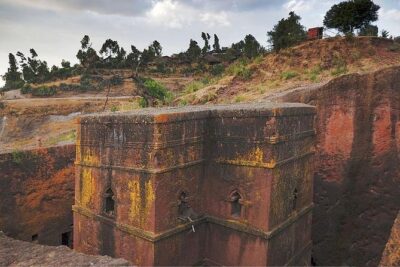
6 Days tour Package (Simien Mountains, Lalibela, and Danakil Depression)
Read our review →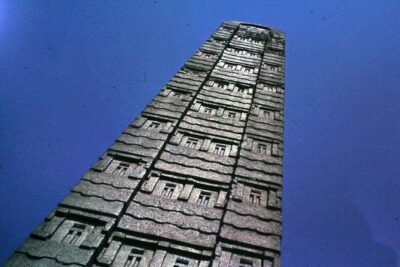
Lalibela, Axum, Danakil and Omo Valley 8 DAYS
Read our review →Browse the lists this tour appears in