
Reviewed · MARKETS
Go wheretheLocalsgo, Eatwhat thelocalseat!open Market&More Tours
Addis Ababa makes the most sense when you eat your way through it. This private tour links the National Museum and Lucy with local food, coffee, open-air markets, and the Lion of Judah, giving you a useful first look at the capital in four to seven hours.
I like the flexible pickup and the chance to try both fasting-style vegetarian food and spicy chicken stew. I also like the stop at Tomoca Coffee, operating since 1953, where you can taste Ethiopian coffee or buy ground beans. The main drawback is that the day can feel rushed, especially if you want serious time at the museum and Mercato.
Key points to know before booking

- Lucy gives the tour a strong starting point: The National Museum connects Ethiopia to the story of human evolution and includes the famous 3.2-million-year-old fossil.
- The food suits mixed appetites: You can try vegetables, lentils, chickpeas, cabbage, potatoes, beans, injera, and doro wat, with vegetarian, vegan, and meat options included.
- Mercato changes on Sundays: The main market is closed that day, so the tour uses Shiro Meda instead, a good place for Ethiopian textiles and small gifts.
- Tomoca is more than a coffee break: You get a short taste of Addis coffee culture in one of the city’s oldest coffee shops, with coffee available to take home.
- The private format helps with pacing: You can request pickup and move at your own speed, within the tour’s four to seven-hour window.
- A short layover can work: One guest used the tour for a three-hour stopover with guide Yonas, eating vegetarian injera and visiting Tomoca.
Start with Lucy at the National Museum
The National Museum of Ethiopia is the tour’s most important cultural stop. You get about an hour here, with admission included, and the focus begins with Lucy, the famous Australopithecus afarensis fossil dated to roughly 3.2 million years ago.
Lucy matters because Ethiopia is central to the study of early human development. Seeing the fossil gives the rest of your Addis visit a useful frame. You are not just passing through a capital city. You are standing in a country that has helped shape what scientists know about human origins.
The museum also covers Ethiopia’s historical development. You can see material related to the Aksumite Empire, the Ethiopian Orthodox Church, and more recent periods of Ethiopian history. That range is valuable, though one hour is not enough for a slow, detailed museum visit.
The art displays include old paintings and sculptures alongside contemporary work. Another section presents clothing, tools, and household objects from different Ethiopian regions. I would treat this as an introduction rather than a complete survey. If you are especially interested in archaeology, art, or Ethiopian history, you may want to return on your own with more time.
The museum is closed on Mondays, so check your date before booking. That simple detail can decide whether the opening stop works at all.
A few more trips from Addis Ababa worth a look
- Ethiopian Culinary Tour – Market, Food, Coffee Ceremony & more
★ 5.0 · 65 reviews - Addis Ababa +Mount Entoto View Point,Museums Palace Market Tours
★ 5.0 · 42 reviews - Market Tour and Cooking Class with a Coffee Ceremony at a Home in Addis Ababa
★ 5.0 · 32 reviews
Eat Ethiopian food at Yobez Traditional Restaurant

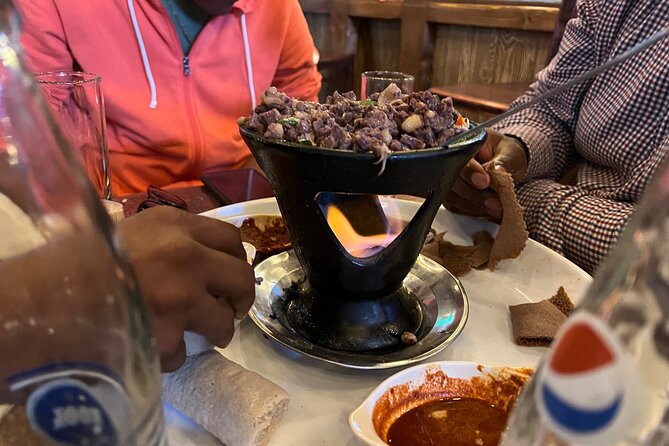
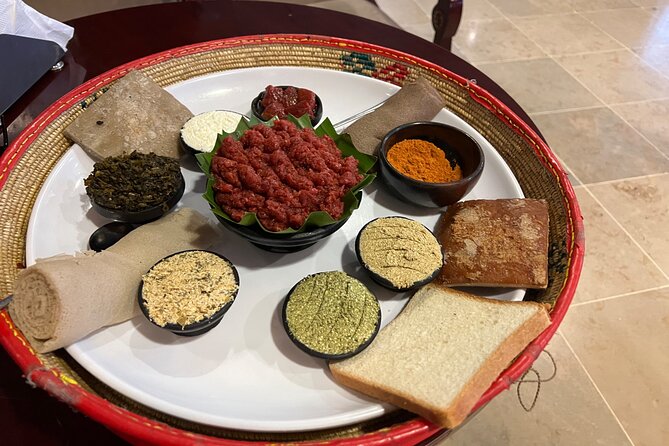
Food is the heart of this outing. At Yobez Traditional Restaurant, you can expect a broad tasting of Ethiopian dishes, with options for vegetarians, vegans, and meat eaters.
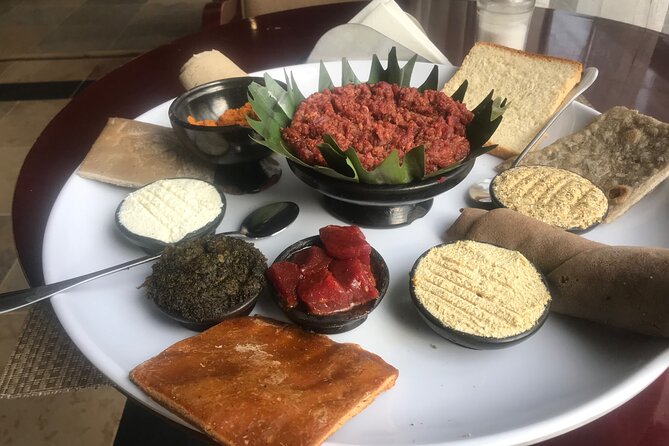
The vegetarian side reflects Ethiopia’s fasting food traditions. Expect dishes built around cabbage, potatoes, beans, lentils, chickpeas, and other vegetables, usually served with injera. Injera is the soft, slightly sour flatbread used both as a plate and as a utensil. Tear off a piece, scoop up the food, and do not worry about using a knife and fork.
The meat option centers on doro wat, a famous Ethiopian chicken stew. It is made with berbere spices, onions, local butter, garlic, ginger, and other seasonings, and it is served with a hard-boiled egg. The flavor can be hot and full, so tell your guide if you need a gentler portion.
I like that the food setup does not force the whole group into one style of meal. One person can eat a plate of fasting dishes while another tries chicken stew. The tour also includes organic fruit juices and a traditional coffee tasting, so the meal is more than a single restaurant stop.
The description refers to food from three restaurants, but the named food stops are Yobez and Tomoca, along with the market and juice tastings. If visiting several restaurants is important to you, confirm the exact food schedule when you book. The tour is best understood as a guided food route rather than a fixed restaurant crawl with a long meal at each address.
Walk through Mercato, Addis Ababa’s enormous market district
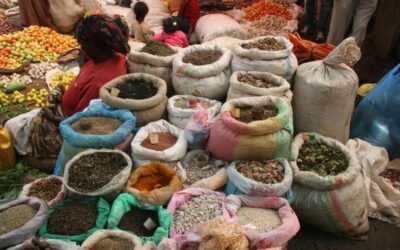
Mercato is the main shopping and walking section of the day. You have about two hours to explore its open-air stalls with your guide, looking for local coffee, jewelry, leather goods, and other products.
This is not a polished shopping center. It is a maze of stalls and small shops, and the appeal comes from seeing how local trade works in a huge city market. A guide helps you get more from the visit, especially if you want to understand what you are buying rather than simply browse.
The route also includes well-known parts of central Addis Ababa such as Piazza, the Stadium area, Zebra Gallery, and leather shops. These short city stops help connect the market to the wider city. You may find coffee, clothing, leather items, jewelry, and souvenirs, depending on the shops visited that day.
Keep your expectations practical. Two hours is enough for an introduction and some shopping, but not enough to cover every corner of Mercato. If you dislike crowded commercial areas or prefer quiet museums, this may be the least comfortable part of the tour. If you want to see ordinary city commerce and shop with local guidance, it is one of the most useful sections.
The tour description also mentions lunch at a local restaurant described as the first and oldest restaurant in East Africa, followed by a coffee ceremony. The precise restaurant sequence may vary, so ask your guide how much time will be spent eating versus walking and shopping.
Sunday changes the market plan

Mercato is closed on Sundays. On that day, the tour switches to Shiro Meda Market.
Shiro Meda is near the US Embassy and is known for Ethiopian textiles, especially handwoven cotton clothing. You can look for wedding dresses, scarves, tablecloths, bed covers, T-shirts, necklaces, earrings, and other small gifts.
This replacement is shorter, about 45 minutes, and it offers a different kind of shopping. Mercato is the better choice if you want a large city market and a wide mix of goods. Shiro Meda is more focused on textiles and wearable items, making it a practical stop if you want something distinctly Ethiopian to take home.
The Sunday arrangement is not a problem, but it changes the character of the tour. Book this experience on a Sunday if textiles appeal to you. If Mercato is your main reason for booking, choose another day.
Same starting point, a very different trip:
- Full Day Tour of Addis Ababa with Hotel Pickup and Drop-off
★ 5.0 · 430 reviews - Taste of Ethiopia
★ 5.0 · 406 reviews - Day Trip From Addis Ababa See Historical Monastery,Stunning Nature,Animals,Birds
★ 5.0 · 303 reviews - Addis Ababa: Debre Libanos, Blue Nile Gorge, and Cave Tour
★ 4.5 · 256 reviews
Taste coffee at Tomoca in Piazza
Tomoca Coffee receives only about 15 minutes, yet it is one of the most specific and memorable stops. The shop has operated in the Piazza area since 1953 and is presented as Ethiopia’s oldest coffee shop.
You can try strong black coffee, coffee with milk, or a macchiato. You can also buy roasted coffee or a bag of ground coffee to take home. This is a useful stop for anyone who wants a taste of Ethiopia’s coffee culture without committing to a long café visit.
The time is short, so think of Tomoca as a tasting and orientation stop, not a relaxed afternoon coffee. If you want to linger, browse the beans, or sit quietly, ask whether the schedule allows extra time.
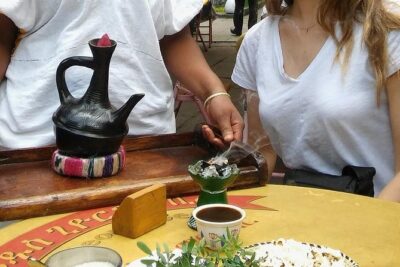
A traditional coffee ceremony is also included in the broader food experience. The exact setting and length may vary, but the combination of a ceremony and Tomoca gives you two ways to understand coffee in Addis: one tied to hospitality and ritual, the other tied to an established city café.
One guest used this tour during a long Addis layover and specifically enjoyed vegetarian injera and coffee at the original Tomoca. That makes the experience particularly useful for a short stop between flights, provided your pickup and return timing is carefully arranged.
See the Lion of Judah and central Addis
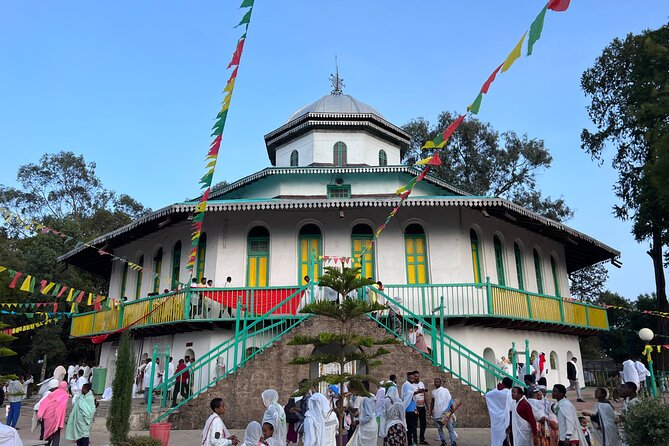
The Lion of Judah is a brief 15-minute stop. The symbol is linked to the biblical tribe of Judah, Jesus Christ, and the Ethiopian monarchy, especially Emperor Haile Selassie.
You will not spend long here, but the stop adds political and religious context to the day. It also gives you a quick landmark tied to Ethiopia’s modern royal identity. On a tightly timed tour, short stops like this work well because they add context without requiring a long museum visit.
Do not expect a major guided site visit. This is a quick look and explanation, best treated as part of the city drive rather than a full attraction.
How the private format affects the day
The tour is private, with a maximum of eight people, and includes an air-conditioned vehicle, a professional driver-guide, and Wi-Fi onboard. Pickup is offered, and the route can begin from a meeting point, hotel, or airport arrangement depending on what you request.
That flexibility is valuable in Addis Ababa, especially if you have a limited schedule. You can ask for airport pickup, and the short-layover example shows how the tour can be adapted to a stopover. Still, do not assume every four-hour tour can include every stop at a leisurely pace. The listed duration ranges from four to seven hours, and traffic, shopping, meals, and your own pace will affect the timing.
A private guide also makes food questions easier. You can explain dietary needs, ask what a dish contains, and slow down at a market if you find something worth buying. The tour specifically includes vegetarian, vegan, and non-vegetarian dishes, so it is a good match for mixed groups.
The guide’s name is not guaranteed, but Yonas led the short layover outing described in the tour material. If you want him specifically, request him when booking rather than assuming he will be assigned.
Is $71.25 a fair price?
At $71.25 per person, the price is reasonable if you want several pieces of Addis Ababa handled in one outing. The fee includes the vehicle, guide, Wi-Fi, National Museum admission, food tastings, traditional coffee, fruit juices, and a walking tour of the open-air market.
You are paying for convenience as much as for admission. A private vehicle links sites that are spread across the city, and the guide takes care of the route and restaurant arrangements. That matters if you have only one day in Addis Ababa or are making a long airport stop.
The value is weaker if you want a slow museum visit, a long meal, or hours of independent shopping. The route covers a lot, but it does so in compact sections. I would book it for variety and local orientation, not for deep time at one attraction.
Tips for the driver-guide are not included. Plan to bring Ethiopian birr or another suitable way to handle small purchases and tips, though the tour information does not specify a required tipping amount.
Who should book this Addis Ababa food tour?
I would choose this tour if you are visiting Addis Ababa for the first time and want a broad introduction without managing transport yourself. It also fits a short stay, a stopover, or a first day when you want help with the city’s layout.
It works especially well for:
- People who want both history and food in one day
- Vegetarians, vegans, and meat eaters traveling together
- Coffee fans who want Tomoca and a traditional ceremony
- Shoppers looking for coffee, leather, jewelry, or Ethiopian textiles
- Small groups that prefer a private vehicle and adjustable pacing
- Anyone who wants a guided market visit rather than shopping alone
I would hesitate if your main goal is a long, quiet museum experience or a single extended food tour. The museum time is limited, and the market route can feel full when combined with several food and sightseeing stops.
Free cancellation is available if you cancel at least 24 hours before the local start time. Changes or cancellations inside that window are not refunded, and the experience requires a minimum number of bookings to operate.
FAQ
How long does the Addis Ababa tour last?
The tour lasts approximately four to seven hours, depending on the route, traffic, meal timing, and your pace.
What is the price?
The listed price is $71.25 per person.
Is hotel or airport pickup available?
Pickup is offered. You can request pickup rather than using the meeting point, and the tour information refers to airport and hotel travel arrangements.
Is the tour private?
Yes. The experience is private, with a maximum of eight participants.
What food is included?
The tour includes Ethiopian national dishes with vegetarian, vegan, and non-vegetarian choices, along with traditional coffee tasting and organic fruit juices.
Can vegetarians join?
Yes. Vegetarian dishes include foods such as cabbage, potatoes, beans, lentils, and chickpeas, generally served with injera.
Is meat available?
Yes. The food selection includes doro wat, a spicy Ethiopian chicken stew made with berbere, onions, butter, garlic, ginger, and hard-boiled eggs.
What happens if I take the tour on Sunday?
Mercato is closed on Sundays, so the tour visits Shiro Meda Market instead. Shiro Meda is known for Ethiopian textiles, clothing, scarves, tablecloths, jewelry, and small gifts.
Is the National Museum open every day?
No. The National Museum is closed on Mondays. The tour includes museum admission when it is open.
What is the cancellation policy?
You receive a full refund if you cancel at least 24 hours before the experience start time. Cancellations or changes made less than 24 hours before the start time are not refunded or accepted.
Should you book it?
Book this experience if you want one practical introduction to Addis Ababa that combines Lucy, Ethiopian food, coffee, markets, and major city landmarks. The private vehicle and flexible pickup make it especially useful for a first visit or a long layover.
Choose another tour if you want to spend most of the day at the National Museum, shop at Mercato for several hours, or sit through a long formal coffee ceremony. For a compact, food-led look at the capital, though, the combination is well judged. Just avoid Monday for the museum, avoid Sunday if Mercato is essential, and confirm the exact restaurant schedule before you set out.
Just added out of Addis Ababa
- Yod Abyssinia Cultural Night: Dinner, Music, and Dance★ 5.0 · 7 reviews
- Locally crafted beer and wine tasting and nightlife in Addis tour★ 5.0 · 6 reviews
- Stunning Views Wonchi Crater Lake a Private Day Trip★ 5.0 · 3 reviews
- Tribes of the Ethiopian Omo Valley – 9 Day Tour★ 5.0 · 5 reviews
- Addis Ababa City Tours Full-Day Tours★ 5.0 · 5 reviews
- Two days Lake Wenchi and Menagesha Forest★ 5.0 · 3 reviews
- 3-Day Cultural Tour in South Omo Valley★ 5.0 · 4 reviews
- Day Trip to Tiya UNESCO Site & Melka Kunture Archaeological Site★ 4.5 · 3 reviews
Markets, compared.
Ethiopian Culinary Tour – Market, Food, Coffee Ceremony & more
Read our review →
Market Tour and Cooking Class with a Coffee Ceremony at a Home in Addis Ababa
Read our review →
Browse the lists this tour appears in