

Reviewed · HISTORICAL TOURS
Experience a Cultural and Historical Journey through Addis Ababa
The most revealing part of this Addis Ababa tour may be the jump from Lucy’s fossil to Mercato’s busy streets. In a single morning and afternoon, you move from the origins of humanity to imperial history, religious life, political memory, coffee culture, and everyday commerce.
I like the mix of major sights and local rituals, especially the Ethiopian lunch and stop at Tomoca Coffee. I also like that guide Eyob is known for explaining not only Addis Ababa, but Ethiopia’s geography, current affairs, people, and history. The main consideration is pace: six stops in roughly five to six hours means you will see a lot, but some visits will be fairly brief.
Key points to know before booking
- Lucy anchors the morning: The National Museum gives you a clear introduction to Ethiopia’s place in human history.
- Eyob brings broad context: His guiding covers Addis Ababa, Ethiopian history, geography, development, and present-day life.
- A private vehicle keeps the day flexible: Only your group takes part, with pickup offered and an air-conditioned vehicle included.
- Lunch and coffee are part of the experience: You get more than sightseeing, with Ethiopian food and a traditional coffee stop.
- Mercato adds real city energy: This is the place to see commerce on a huge scale, though it can feel intense and crowded.
- The schedule favors highlights: You will cover six stops, but the tour is better for a strong first look than for long museum visits.
Why this tour works as a first look at Addis Ababa
Addis Ababa can feel hard to read at first. The city is large, spread across high ground, and full of layers that are not always obvious from a car window. This tour gives you a useful framework: human origins at the museum, the imperial period at Holy Trinity Cathedral and Entoto, public memory at Tiglachin, and daily life at Mercato and Tomoca.
You start at 8:30 am, which gives the day a sensible shape. The earlier museum and cathedral visits provide quiet historical footing before the later market stop. Since the tour lasts about five to six hours, it suits you if you have a limited stay in the capital, a long stopover, or want a guided orientation before exploring alone.
The private format matters. You are not tied to the interests or pace of a large group, and the air-conditioned vehicle helps connect sites that are spread across the city. The description does not promise a set pickup location, so confirm the pickup details when booking.
At $100 per person, the value depends partly on group size. For a private group, the price includes transport, a professional guide, lunch, coffee or tea, admission fees, and taxes. That is a reasonable package for someone who wants one organized day instead of arranging each site and meal separately. A solo visitor may find it less budget-friendly than public transport, while two or more people can get better value from the private setup.
More history around Addis Ababa:
- Day Trip From Addis Ababa See Historical Monastery,Stunning Nature,Animals,Birds
★ 5.0 · 303 reviews - Hidden Treasures of Addis Ababa – Food, Culture and History Tour
★ 5.0 · 57 reviews - Addis Ababa – Half Day Cultural Experience
★ 4.5 · 23 reviews
National Museum: meet Lucy before meeting the city
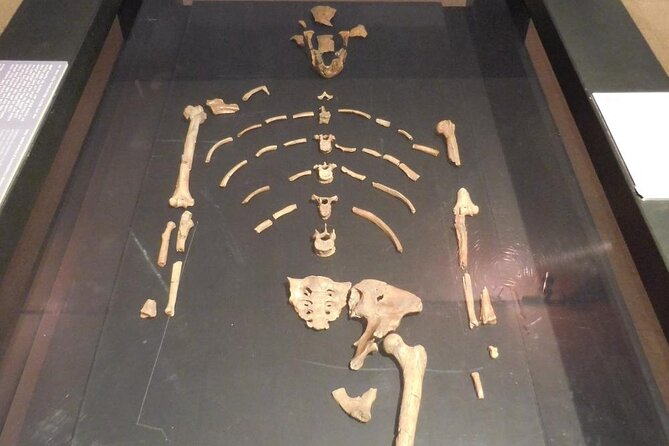
The National Museum of Ethiopia is the intellectual center of the tour. Its most famous resident is Lucy, also called Dinkinesh, a name translated in the description as thou art wonderful. The fossil belongs to Australopithecus afarensis and is dated at about 3.5 million years old.
The point is not simply to look at an old skeleton. Lucy changed ideas about human development because the evidence showed that an early human ancestor walked upright much earlier than many people had believed. The museum also holds archaeological objects from pre-Axumite civilization, giving you a wider view than one famous fossil alone.
You have about an hour here, and admission is included. That is enough for the principal exhibits with a guide, but not enough for a slow study of every display. I would pay close attention to Eyob’s explanation, then ask questions while the details are fresh. His broad knowledge of Ethiopia is one of the strongest reasons to choose a guided visit rather than simply entering the museum on your own.
The museum is also a good early stop because it gives later places more meaning. After seeing evidence of Ethiopia’s ancient past, the cathedral, imperial sites, and modern city feel less like disconnected photo stops.
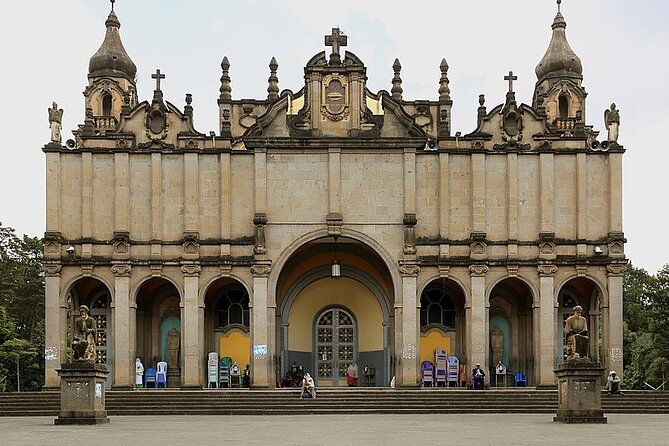
Holy Trinity Cathedral and the memory of Haile Selassie
Holy Trinity Cathedral is one of Ethiopia’s most important churches. Its grounds include the mausoleum of Emperor Haile Selassie and his wife, making this stop important for anyone interested in the imperial period and Ethiopia’s modern political story.
You have about an hour here. The visit may also coincide with religious ceremonies, according to the tour details. That can make the stop more immediate than a simple architectural visit, but it also means you should follow local customs and remain respectful if worship is taking place.
The cathedral is not presented only as a building to photograph. It links religion, monarchy, national identity, and the memory of a major Ethiopian ruler. Your guide can help explain those connections, which are not always clear to a first-time visitor.
The exact experience can vary with the timing of services and local conditions. If attending a ceremony is important to you, treat it as a possibility rather than a guarantee. The admission fee is included.
Mount Entoto: eucalyptus air and a wide city view
From the cathedral, the vehicle climbs toward Mount Entoto, once the permanent camp of Emperor Menelik II. The drive changes the feel of the day. You leave the dense city behind and pass through areas covered with eucalyptus trees, with a marked drop in altitude along the route.
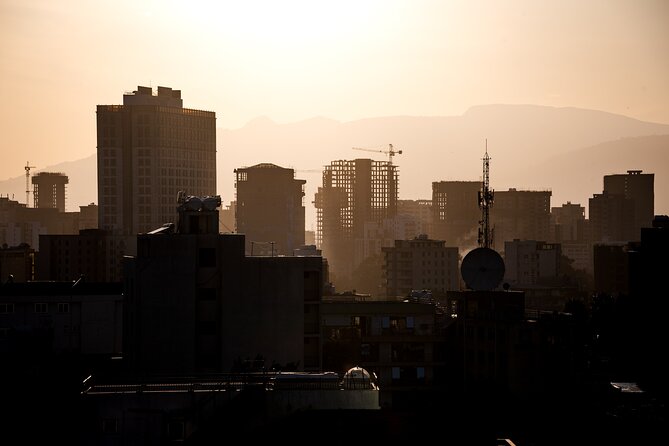
The stop lasts about 30 minutes, so expect a short viewpoint visit rather than a mountain outing. From the top, you can see Addis Ababa and the surrounding countryside. This is one of the best places on the schedule to understand how the capital spreads across high ground.
The view also gives you a pause between indoor historical sites and the market later in the day. Bring a light layer if you are sensitive to cool air, but do not expect a long walk or strenuous activity from the information provided.
Mount Entoto is useful because it supplies physical context. Once you see the city from above, the distances between its districts make more sense, and you gain a better sense of why driving is practical on a half-day city tour.
Same starting point, a very different trip:
- Full Day Tour of Addis Ababa with Hotel Pickup and Drop-off
★ 5.0 · 430 reviews - Taste of Ethiopia
★ 5.0 · 406 reviews - Addis Ababa: Debre Libanos, Blue Nile Gorge, and Cave Tour
★ 4.5 · 256 reviews - Addis Ababa Guided City Tour With Airport & Hotel Pick Up
★ 5.0 · 237 reviews
Lunch and an Ethiopian coffee ceremony

Food is part of the tour rather than an afterthought. Lunch is included, and the experience also includes coffee or tea. The description specifically highlights an Ethiopian lunch and a coffee ceremony, two cultural elements that help break up the sightseeing.
The meal gives you a chance to ask questions and talk with your guide outside the formal setting of a museum or church. If you have dietary concerns, confirm them before the tour, since no specific menu is provided. Alcoholic drinks are not included.
Coffee is especially important in Ethiopia, where serving it is a social custom as well as a way to enjoy the drink. The later stop at Tomoca adds a historic setting to that part of the day. Taken together, lunch and coffee make the tour feel less like a checklist of monuments.
Mercato: the city at full volume
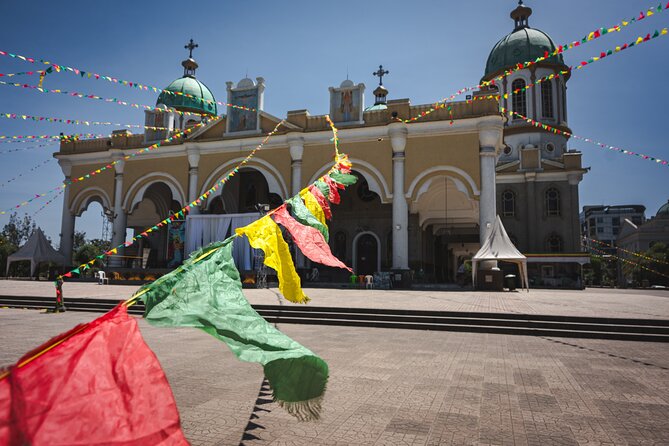
After lunch, you visit Mercato for about an hour and a half. It is described as Africa’s largest open-air market, with almost every kind of commodity on sale. That scale is the attraction. You are not just seeing a market building, but a major center of trade where Addis Ababa’s daily economy is on display.
Mercato is likely to be the most intense part of the itinerary. The pace is quick, the setting can feel crowded, and the range of goods can be overwhelming. Stay close to your guide and keep your personal belongings secure. The tour provides a guide, but it does not promise a dedicated shopping list or extended time with individual vendors.
That said, this is precisely why Mercato earns its place. Museums explain the country’s past, while the market shows how people buy, sell, work, and move through the capital today. You may find the contrast striking after the quiet formality of the cathedral and the museum.
If shopping is your main goal, an entire market visit would give you more time. If you want to see Mercato as one part of a larger introduction to Addis Ababa, the 90-minute stop is a useful compromise.
Tiglachin Memorial and Ethiopia’s political past

The Tiglachin Memorial is a shorter stop, lasting about 30 minutes. It honors Ethiopian and Cuban soldiers involved in the Ogaden War and was built under Mengistu Haile Mariam on Churchill Avenue.
This is a politically charged site, and it adds a perspective that the museum and cathedral do not provide. Ethiopia’s twentieth-century story includes imperial rule, military government, regional conflict, and changing alliances. The memorial gives your guide a chance to explain that part of the country’s past in a public setting.
You will not have a long time here, so the quality of the explanation matters more than the length of the visit. If political history interests you, ask Eyob to place the memorial within the wider story of modern Ethiopia. His background in current affairs and national history is particularly useful at this stop.
Tomoca Coffee, with a possible Leghar extension

The final listed stop is Tomoca Coffee, where you spend about 30 minutes. Established in 1953, Tomoca is described as Ethiopia’s first pioneer in roasting highland coffee beans from Kaffa, widely associated with the birthplace of coffee.
This is a small, focused stop. You can enjoy a brewed cup and watch local life around a historic coffee business. It provides a fitting end to the tour because coffee is not just a souvenir here. It is part of the country’s identity and social routine.
The description also mentions the option to extend the visit to Leghar Train Station, Addis Ababa’s oldest station. The wording does not specify how much extra time this takes or whether there is an additional charge, so ask before booking if the station is a priority.
Tomoca is also where you can slow down and process the day. After Lucy, the cathedral, the mountain, the market, and the memorial, a coffee stop gives the schedule a calm finish.
What the guide and transport add
The strongest praise for this experience centers on Eyob. He is described as friendly, flexible, and able to explain Addis Ababa as well as Ethiopia more broadly. That includes history, geography, development, people, and current affairs. Those subjects are useful because the tour crosses many periods and neighborhoods in a short time.
The private arrangement lets you ask for more context at the stops that matter most to you. One person may want more time with Lucy, while another may care more about Haile Selassie, Mercato, or the Mengistu period. A flexible guide can help shape the conversation even when the basic route remains fixed.
The air-conditioned vehicle is another practical advantage. Addis Ababa’s sites are not all close together, and driving uphill to Entoto and onward to the market would be tiring without organized transport. Pickup is offered, and mobile ticketing is available.
The tour is described as suitable for most people and located near public transportation. Still, some stops involve walking, standing, and moving through a large market. If you have mobility needs, ask for specific details before booking, since the provided information does not describe accessibility features.
Who should book this Addis Ababa tour?
I would choose this experience if you have one day or less in Addis Ababa and want the main cultural, historical, and city-life highlights in one organized outing. It also suits solo visitors who want a private guide and a clear introduction before making their own plans.
It is a good fit if you value explanation as much as sightseeing. Eyob’s reported strengths in history, geography, current affairs, and travel advice can help you understand what you are seeing rather than simply collect photographs.
I would hesitate if you prefer slow museum visits, long shopping sessions, or a relaxed schedule. Six stops in five to six hours is efficient, but it is not leisurely. Mercato alone could fill much of a day, and the National Museum deserves more than a quick glance if anthropology is your main interest.
Free cancellation is available if you cancel at least 24 hours before the local start time. Changes or cancellations within 24 hours are not refunded, so keep that deadline in mind when your plans are uncertain.
Should you book it?
Book this tour if you want a compact, private introduction to Addis Ababa with lunch, coffee, transport, and a guide who can connect ancient history to modern life. The mix of Lucy, Holy Trinity Cathedral, Entoto, Mercato, Tiglachin, and Tomoca is unusually broad for a half-day outing.
Skip it if you want to explore one subject in depth or keep your day unstructured. For most first-time visitors with limited time, the $100 price is easier to justify because it covers the major practical pieces and gives you Eyob’s local context. The best choice is to book it early in your stay, then use what you learn to decide where you want to return.
FAQ
How long does the Addis Ababa tour last?
The experience lasts approximately five to six hours and starts at 8:30 am.
What places are included?
The route includes the National Museum of Ethiopia, Holy Trinity Cathedral, Mount Entoto, Mercato Market, Tiglachin Memorial, and Tomoca Coffee.
Is Lucy included in the museum visit?
Yes. The National Museum visit includes admission, and the museum displays the famous Lucy fossil, also known as Dinkinesh.
Is lunch included?
Yes. Lunch is included in the tour price, along with coffee and/or tea.
Is transportation provided?
Yes. The experience includes an air-conditioned vehicle, and pickup is offered.
Is this a private tour?
Yes. Only your group participates in this private activity.
What is the cancellation policy?
You receive a full refund if you cancel at least 24 hours before the local start time. Cancellations or changes made within 24 hours are not accepted for a refund.
Just added out of Addis Ababa
- Yod Abyssinia Cultural Night: Dinner, Music, and Dance★ 5.0 · 7 reviews
- Locally crafted beer and wine tasting and nightlife in Addis tour★ 5.0 · 6 reviews
- Stunning Views Wonchi Crater Lake a Private Day Trip★ 5.0 · 3 reviews
- Addis Ababa City Tours Full-Day Tours★ 5.0 · 5 reviews
- Two days Lake Wenchi and Menagesha Forest★ 5.0 · 3 reviews
- Tribes of the Ethiopian Omo Valley – 9 Day Tour★ 5.0 · 5 reviews
- 3-Day Cultural Tour in South Omo Valley★ 5.0 · 4 reviews
- Day Trip to Tiya UNESCO Site & Melka Kunture Archaeological Site★ 4.5 · 3 reviews
Historical Tours, compared.

Day Trip From Addis Ababa See Historical Monastery,Stunning Nature,Animals,Birds
Read our review →
Hidden Treasures of Addis Ababa – Food, Culture and History Tour
Read our review →
“Addis Uncovered: Culture, Views & Everyday Vibes
Read our review →
DAY TRIP TO THE UNESCO HERITAGE SITE TIYA & Melka Kunture
Read our review →
Historical tours – in five days, Addis Ababa, Axum, Laliebla and Gonder
Read our review →
city tour of Addis Ababa ( history ,culture , food and more)
Read our review →
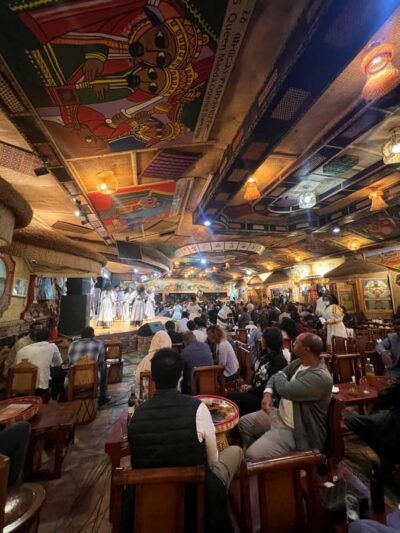
Yod Abyssinia Cultural Night: Dinner, Music, and Dance
Read our review →Browse the lists this tour appears in