

Reviewed · CITY TOURS
Addis Ababa City Tour
Addis Ababa is easiest to understand when you connect its museums, churches, markets, and monuments into one story. This private tour does exactly that, moving from the cool heights of Entoto to Lucy’s ancient bones, the lanes of Mercato, and the city’s memorials to independence and national pride.
I especially like the local point of view offered by Fitsum, a guide born and raised in Addis with a BA in History and a master’s degree in Indigenous Knowledge. I also like the practical design for a long airport layover, with pickup at Bole and a private air-conditioned vehicle. The main consideration is time: the full route is too much for a very short visit, and traffic can make the schedule tight.
Key points to know before booking

- Fitsum brings academic training and local experience, with history and Indigenous Knowledge shaping the way he explains each stop.
- Entoto gives you a broad view of Addis Ababa, plus cooler mountain air and eucalyptus-covered hillsides.
- Lucy is the star of the National Museum, but the museum also covers Ethiopia’s archaeological, royal, religious, and artistic past.
- Mercato offers the most everyday view of the city, though its narrow lanes and constant activity may feel intense.
- Coffee, food, and conversation are part of the experience, with coffee or tea and bottled water included, but lunch is extra.
- The route is private and flexible, lasting about one to six hours, with airport pickup and return to the meeting point.
A city tour built around Ethiopia’s national story
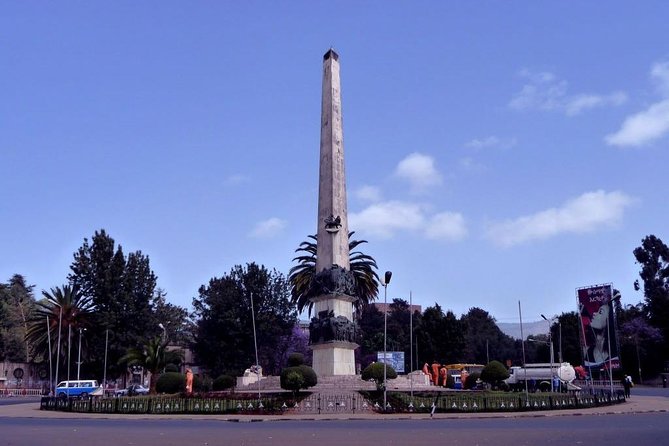
This is not simply a drive past Addis Ababa landmarks. The route links Ethiopia’s major themes: ancient human origins, Orthodox Christianity, imperial rule, resistance to Italy, the experience of occupation, and modern city life.
That broad range is the tour’s greatest strength. You are not left with one narrow picture of Addis. Instead, you see a capital shaped by highland geography, royal power, religious tradition, commerce, and the country’s long defense of its independence.
Fitsum’s background matters here. His BA in History and master’s degree in Indigenous Knowledge give him useful tools for explaining both major events and everyday cultural practices. His style, based on the experience described by past customers, is conversational rather than stiff. He has also been praised for making complicated history easy to follow, arranging breaks well, helping with photographs, and paying close attention to solo travelers.
Since this is a private activity, only your group takes part. That makes it easier to spend more time at a museum, shorten a stop, or focus on the subjects that interest you most. The published duration ranges from one to six hours, so confirm the length you want when booking.
Other city tours in Addis Ababa:
- Addis Ababa Guided City Tour With Airport & Hotel Pick Up
★ 5.0 · 237 reviews - Full-Day Private City Tour of Addis Ababa
★ 5.0 · 147 reviews - Addis Ababa Authentic Private City Tour
★ 5.0 · 134 reviews
Entoto Viewpoint: begin above the city
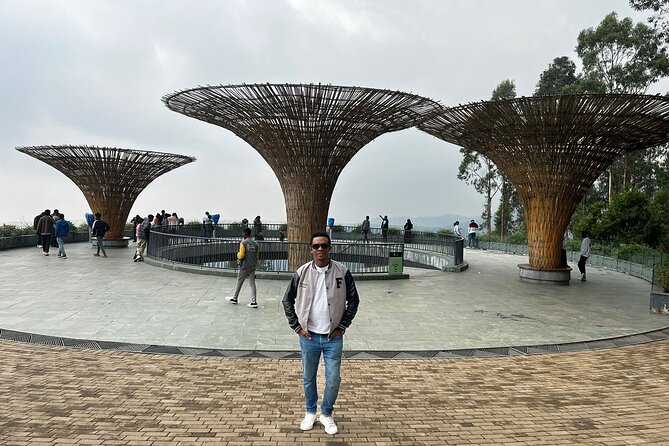
Entoto Viewpoint is a strong opening because it gives you a sense of Addis Ababa’s size and setting before you move through its streets. From the mountain, you can look across the city, the surrounding hills, and the broad sweep of highland scenery.
The air is cooler here than in the city center, and the eucalyptus trees give the area a calm feel. The viewpoint is useful for orientation: after seeing Addis from above, you can better understand how its neighborhoods spread across uneven ground.
There is one important qualification. The city’s eucalyptus cover has changed, and some of the iconic trees have been cut because of concerns about their heavy water use. So you should not expect every photograph of Entoto to match current conditions.
Entoto also adds variety to a museum-heavy day. If you are visiting Addis during a layover, even a short stop here can make the city feel like a real place rather than just an airport connection. Bring a light layer if you are sensitive to cool mountain weather.
The Ethnological Museum inside a former palace
The Ethnological Museum occupies the former palace of Emperor Haile Selassie, giving the building historical weight before you even reach the displays. The museum presents customs and material culture from different Ethiopian communities, including clothing, tools, crafts, music, and art.
This stop helps you see Ethiopia as a country of many peoples and traditions. Rather than treating national culture as one uniform thing, the exhibits point to differences in dress, work, belief, and artistic expression.
The museum also includes sections on the Battle of Adwa, Pan-Africanism, and Ethiopia’s place in Africa’s wider struggle against colonial rule. Those displays fit well with later stops at the Victory Monument and Menelik II’s statue. With the right explanation, the museum becomes a useful foundation for understanding why independence matters so strongly in Ethiopia.
The scheduled visit is about 1 hour and 30 minutes, and admission is included. That is enough time for a meaningful visit, though you may need to keep moving if you want to complete the entire city route. If palace interiors, art, and cultural objects interest you more than monuments, this is one of the stops worth protecting in your schedule.
The National Museum and the famous Lucy exhibit
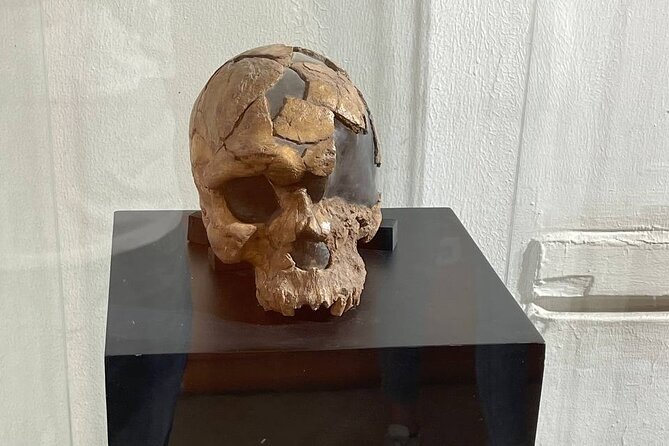
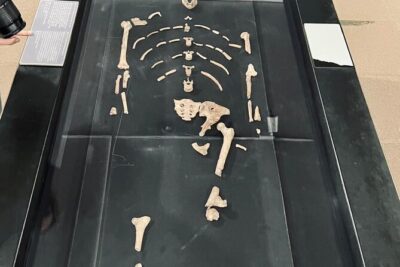
The National Museum of Ethiopia is the essential stop for anyone interested in human origins. Its most famous object is Lucy, the 3.2-million-year-old remains of Australopithecus afarensis. Seeing Lucy here gives Ethiopia a direct connection to one of the most important chapters in the human story.
The museum covers much more than prehistoric archaeology. You can also find ancient religious icons, royal objects, Ethiopian art, and material from later periods. That range makes the museum a useful counterpoint to the Ethnological Museum. The first focuses more on communities and cultural traditions, while the National Museum places Ethiopia within the long story of human development and civilization.
Plan for about 1 hour and 30 minutes, with admission included. If Lucy is your main reason for visiting, tell Fitsum early so he can help keep the stop focused. If you want to inspect every section, you may prefer a longer version of the tour and fewer additional monuments.
Same starting point, a very different trip:
- Full Day Tour of Addis Ababa with Hotel Pickup and Drop-off
★ 5.0 · 430 reviews - Taste of Ethiopia
★ 5.0 · 406 reviews - Day Trip From Addis Ababa See Historical Monastery,Stunning Nature,Animals,Birds
★ 5.0 · 303 reviews - Addis Ababa: Debre Libanos, Blue Nile Gorge, and Cave Tour
★ 4.5 · 256 reviews
St. George Church and Ethiopia’s Orthodox tradition
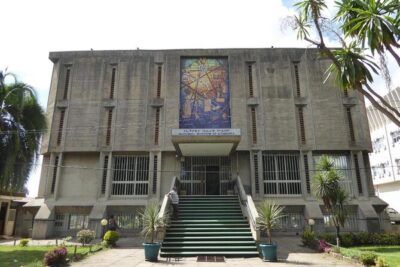
St. George Church brings religious and royal history into the route. Its circular design, mosaics, and painted scenes make it visually different from the museums, while the church’s story connects directly to Ethiopia’s national identity.
Inside, you can see the well-known image of St. George defeating the dragon. Paintings also show historical subjects, including the Battle of Adwa. The church was the site of Emperor Haile Selassie’s coronation in 1930, which adds a royal layer to an already important religious place.
The planned visit lasts about 30 minutes, with admission included. That is a short stop, so you should think of it as an introduction rather than a detailed study of Ethiopian Orthodox Christianity. Dress and behavior should be respectful at any active religious site, and your guide can help explain what you are seeing.
Mercato: the most immediate view of daily Addis
Mercato is the stop where the city feels most active and practical. It is described as Africa’s largest open-air market, stretching across a large area with separate sections for food, clothing, electronics, household goods, crafts, and more.
You may pass through narrow lanes lined with vendors selling produce, spices, household items, and recycled goods. The market also shows how materials are reused. Items that might be discarded elsewhere can be adapted for construction, tools, or household use.
Mercato is worth visiting because it connects Addis Ababa to ordinary commerce. The museums explain the country’s past; Mercato shows how people shop, work, bargain, and move goods today.
Allow about one hour. You should stay close to your guide and keep your belongings secure in any crowded market. The setting can be tiring if you prefer quiet sightseeing, but that is also the point. This is not a polished attraction designed for quick photographs. It is a working market, and its energy can be the most memorable part of the day.
Food and coffee in Piassa

The restaurant stop in Piassa gives the tour a welcome pause. Lunch is not included, but you can order Ethiopian food and use the time to ask questions or review what you have seen.
Look for staples such as injera, doro wat, and kitfo. Injera is the sourdough flatbread used with many Ethiopian dishes. Doro wat is a spicy chicken stew, while kitfo is minced beef that may be served raw, depending on your choice.
Coffee is another important part of the experience. A traditional Ethiopian coffee ceremony includes roasting, grinding, and brewing the beans, with guests sharing the drink and enjoying its aroma. Coffee or tea is included in the tour, but the restaurant meal itself is not, so bring that extra cost into your planning.
The planned restaurant stop is about 30 minutes. That is enough for a brief taste, but not a long, leisurely meal. If food and coffee are a priority, ask about allowing more time and understand that doing so may mean dropping one of the shorter monument stops.
Monuments that explain independence and memory
Several brief stops add political and historical context to the day.
The Lion of Judah represents Ethiopia’s imperial tradition and the monarchy’s claimed link to King Solomon and the Queen of Sheba. Its association with Emperor Haile Selassie makes it a useful companion to the palace and church visits.
Yekatit 12 Martyrs Square recalls the massacre of Ethiopians after an attempted assassination of the Italian viceroy on February 19, 1937. The memorial gives you a place to consider the human cost of occupation, rather than seeing the Italian period only through military victories and monuments.
The Victory Monument honors Ethiopia’s success against Italy, especially the Battle of Adwa in 1896. Adwa matters far beyond Ethiopia because the victory showed that an African nation could successfully defend its sovereignty against a European invading power.
The Menelik II Equestrian Statue honors the emperor who led Ethiopia during the Adwa period. The monument presents him on horseback, linking leadership, military strength, and national independence.
These stops are generally brief, but they work best when your guide explains the connections. On your own, a statue can be easy to pass without much thought. With context, the monuments become a sequence: imperial identity, suffering under occupation, victory, and the leader associated with that victory.
How the tour works for a layover
The meeting point is Bole Addis Ababa International Airport, and the activity returns there. That makes the tour especially useful if you have a long connection and want to see the city without arranging separate transport.
The air-conditioned vehicle, bottled water, guide, entry fees, coffee or tea, and taxes are included. Lunch and alcoholic drinks are not included, and there is no restroom on board.
Traffic is the key variable. A one to six hour range gives the provider room to shape the outing, but you should not assume that every listed stop will receive equal time during a short booking. For a brief layover, prioritize Entoto, the National Museum, Mercato, or a smaller group of monuments rather than trying to force in everything.
The tour is private, and most people can participate. Service animals are allowed, and the meeting point is near public transportation. Confirmation is received at booking. Free cancellation is available until 24 hours before the start time; cancellations or changes made within 24 hours are not accepted for a refund.
Is $70 a fair price?
At $70 per person, the value depends on how many hours you book and how many people share the cost. For a private city tour with an air-conditioned vehicle, guide, transportation from the airport, museum admission, taxes, water, and coffee or tea, the price is reasonable if you use several hours.
The value is strongest for a solo visitor or small group that wants one person to handle the route and explain the history. It is also useful during a layover, when saving time and avoiding separate taxi arrangements has real worth.
For a very short one-hour outing, the price feels less attractive because traffic and pickup time consume part of the experience. Group discounts may improve the cost for larger parties. Ask for the exact duration and planned stops before booking so you know what your $70 covers.
Who will enjoy this Addis Ababa tour?
I would recommend it most strongly if you:
- Have a long layover at Bole Airport.
- Want history explained in plain language.
- Care about museums, monuments, religion, and national identity.
- Prefer a private tour over a fixed group schedule.
- Want to visit Mercato with a local guide.
- Are traveling alone and value help with transport and orientation.
- Want to combine food, coffee, and sightseeing in one outing.
You may want a shorter or more focused plan if you dislike crowded markets, have limited time, or prefer spending a full morning in one museum. The route covers a lot, and that breadth is both its appeal and its limitation.
Should you book it?
Book this Addis Ababa tour if you want a well-connected introduction rather than a checklist of isolated sights. Fitsum’s local background, academic training, friendly manner, and ability to adjust the day are the main reasons to choose it.
For a layover, ask for a realistic route based on your available hours. For a full city day, protect time for Entoto, both museums, Mercato, and a meal, then add the monuments as your schedule allows. At $70, it is a sensible choice for private transport, entry fees, and a guide who can turn Addis Ababa’s complicated past into a story you can follow.
FAQ
Where does the Addis Ababa City Tour begin?
The tour begins at Bole Addis Ababa International Airport in Addis Ababa, Ethiopia.
Where does the tour end?
The activity ends back at the meeting point.
How long does the tour last?
The approximate duration ranges from one to six hours.
Is this a private tour?
Yes. Only your group participates in the activity.
Is airport pickup offered?
Yes. Pickup is offered from the stated meeting point at Bole Addis Ababa International Airport.
Are museum and attraction admission fees included?
Yes. All fees and taxes are included, and the listed museum, church, and market stops include admission where applicable.
Is lunch included?
No. Lunch is not included. Alcoholic beverages are also excluded.
What happens if I cancel?
You can receive a full refund if you cancel at least 24 hours before the experience start time. Cancellations or changes made less than 24 hours before the start time are not accepted for a refund.
Just added out of Addis Ababa
- Yod Abyssinia Cultural Night: Dinner, Music, and Dance★ 5.0 · 7 reviews
- Locally crafted beer and wine tasting and nightlife in Addis tour★ 5.0 · 6 reviews
- Stunning Views Wonchi Crater Lake a Private Day Trip★ 5.0 · 3 reviews
- Two days Lake Wenchi and Menagesha Forest★ 5.0 · 3 reviews
- Tribes of the Ethiopian Omo Valley – 9 Day Tour★ 5.0 · 5 reviews
- Addis Ababa City Tours Full-Day Tours★ 5.0 · 5 reviews
- 3-Day Cultural Tour in South Omo Valley★ 5.0 · 4 reviews
- Day Trip to Tiya UNESCO Site & Melka Kunture Archaeological Site★ 4.5 · 3 reviews
City Tours, compared.
Addis Ababa Guided City Tour With Airport & Hotel Pick Up
Read our review →

Authentic Addis Ababa City Tour with a Local Guide
Read our review →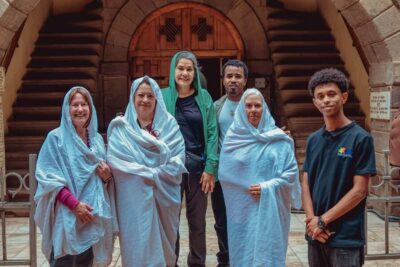

Addis Ababa City Tours Full Day With Hotel Pickup And Drop Off.
Read our review →Browse the lists this tour appears in