
Reviewed · DANAKIL DEPRESSION TOURS
2 Days Dallol Trip
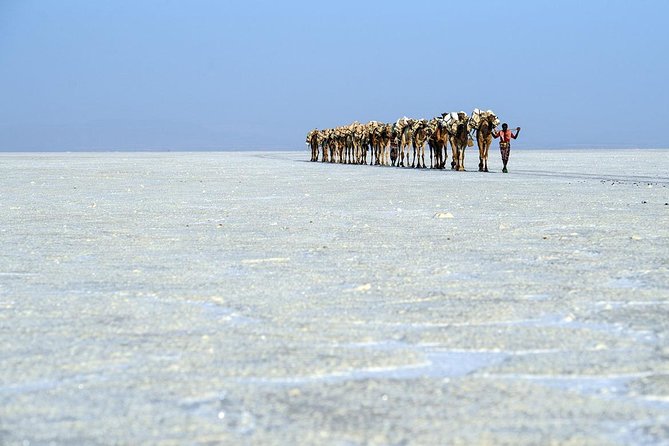
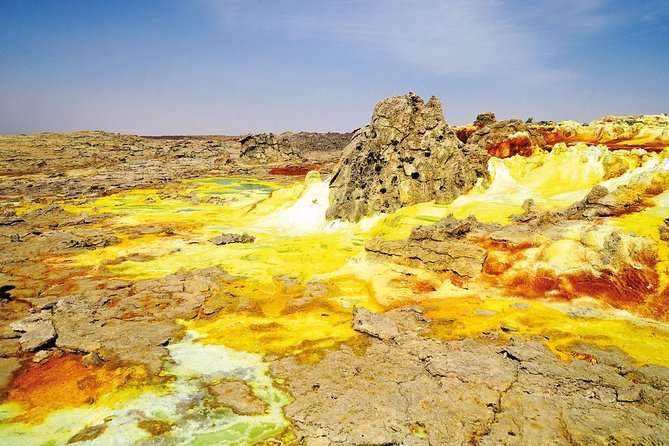
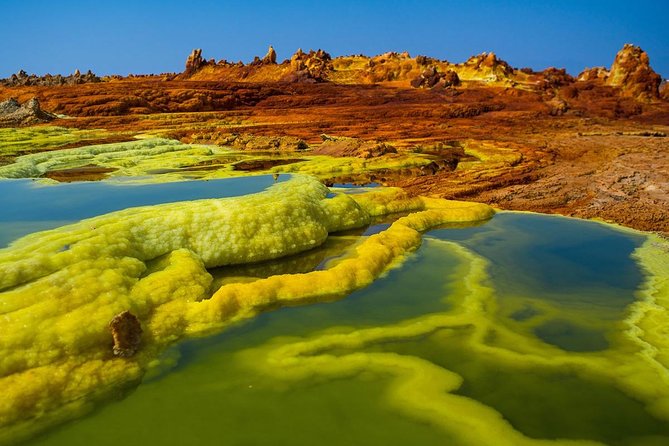
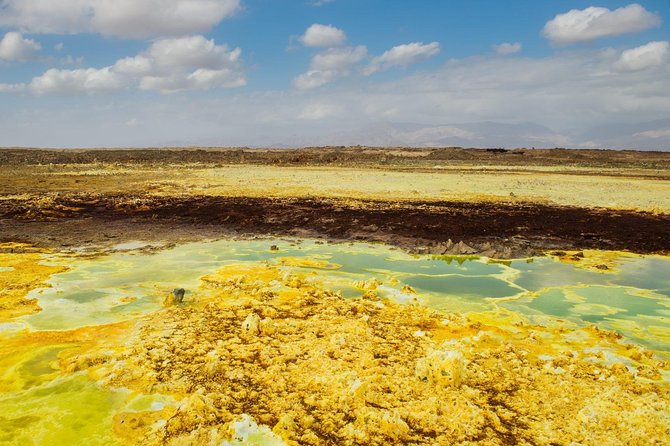
Dallol looks less like Earth than a science-fiction set. Acidic springs stain the ground yellow, green, orange, and white, while salt flats stretch below sea level and camel caravans cross the heat. This two-day Danakil trip gives you a close look at one of Ethiopia’s strangest natural areas without arranging transport, camping gear, security, and meals on your own.
I like the direct access to Dallol and Lake Assal, plus the chance to see salt cut by hand and loaded onto camels. I also like that water, food, a local guide, camping equipment, scouts, and police service are included. The main drawback is the physical strain: long drives, hot desert conditions, basic camping, and walks that call for moderate fitness.
Key points to know before booking
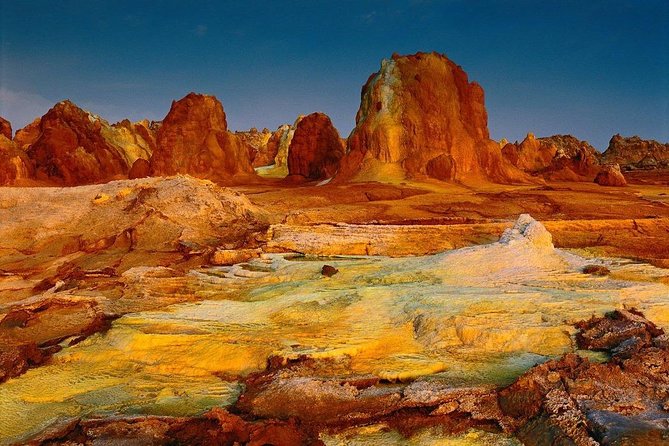
- Dallol sits about 116 meters below sea level, with acidic hydrothermal springs and startling mineral colors.
- Salt work is part of the route, including blocks cut from the ground and loaded onto camel caravans.
- Hamad Ela is the overnight base, a small settlement with about 500 residents.
- The trip runs for roughly eight hours each day, with long road sections across the Danakil Depression.
- The $307.70 price covers the practical basics, including transport, meals, water, camping equipment, permits and taxes, guides, scouts, and police service.
- The group is capped at 15 people, and pickup is offered, with a stated 9:00 am start.
Why Dallol is worth the hard journey
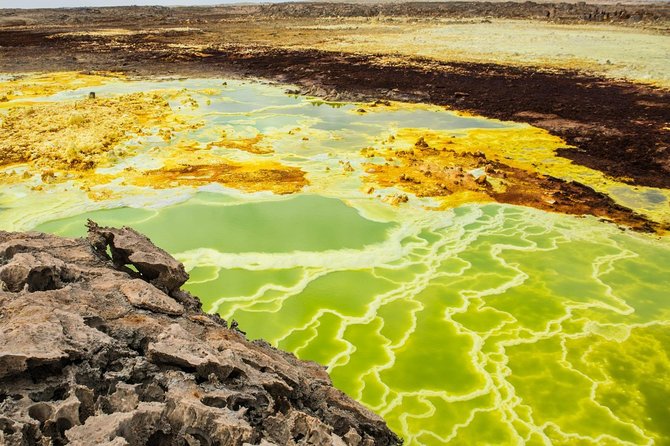
I find Dallol compelling because it is not simply a pretty viewpoint. It is an active hydrothermal area where mineral-rich fluids reach the surface, leaving sharp patterns and intense colors across the ground. The scene can look almost painted, but the colors come from real geological and chemical activity.
The acidic water is one reason you need to take the setting seriously. Dallol is not a place for wandering wherever you like or touching every bright pool. You are there to look, listen to your guide, and follow the route carefully.
The Danakil Depression also gives the trip a human side. Salt is still broken from the ground, cut into rectangular pieces, and carried away by camels. You are not only seeing unusual geology. You are watching a working desert economy linked to one of the region’s oldest forms of transport.
The route passes through country that lies below sea level, including points more than 100 meters below it. That low, open desert helps explain the extreme heat and spare appearance of the area. I would book this for the contrast: brilliant mineral colors beside broad salt country, then slow camel lines moving toward the highlands.
Other desert expeditions from Ethiopia:
- 3 Days Danakil Depression Tour
★ 4.5 · 135 reviews - 3 Days Danakil Depression Tours Via Semera
★ 5.0 · 47 reviews - 12 Days SIMIEN MOUNTAIN-LALIBELA-DANAKIL-TIGRAY CHURCHES
★ 5.0 · 45 reviews
Day one: driving into Hamad Ela
The experience begins in Mekele at 9:00 am, with pickup offered. The first day is mainly about reaching the Danakil Depression, so you should expect the road time to be a major part of the day. The listed duration is about eight hours, and the route description gives three to four hours for one drive section before reaching the desert camp area.
The route passes through Berhale, a small town where camel caravans stop before continuing toward the northern highlands. This is an important point on the journey because it connects the hard salt country with the communities beyond it.
As you move farther into the Danakil, you may see long lines of camels carrying salt. Some caravans are heading toward the mining areas, while others are leaving with salt already loaded. The slow pace of the animals is part of the view, but it also shows how much work goes into moving goods across this difficult terrain.
The first day description identifies Erta Ale as a stop and presents this part of the Danakil as the beginning of the region. It does not give a separate lava-lake visit or a detailed climb, so you should not book this particular two-day plan expecting a full Erta Ale volcano trek. The confirmed focus here is the drive through the depression and the overnight stay at Hamad Ela.
Hamad Ela is described as a better-established village with a population of about 500 people. That does not mean a resort base. You are camping in a remote settlement, with camping equipment supplied as part of the trip. Think practical shelter and basic conditions rather than private rooms or hotel comfort.
Dinner is included. A campfire at Afdera Lake is also associated with the trip experience, and one account specifically points to soup at dinner and time by the fire. Since the exact evening setup can depend on the route and conditions, treat this as a possible feature rather than the main reason to book.
The first day may be the least visually dramatic for some people because much of it is spent in the vehicle. I would use the time to watch the changing ground, ask your guide about the salt trade, and save energy for the next morning. The combination of heat and rough roads can make an eight-hour day feel longer than the clock suggests.
Day two: Dallol’s mineral colors and acidic springs
The second day starts with a drive to Ragad, also called Asebo, where local salt workers break salt from the ground. You can expect to see the basic stages of the process: separating pieces from the earth, cutting them into rectangular blocks, and loading them onto camels.
This is one of the strongest parts of the trip for anyone who wants more than scenery. The work is direct and physical. Salt does not simply appear as a finished product in a shop. Here, you see the labor, the animals, and the route that carries the material out of the depression.
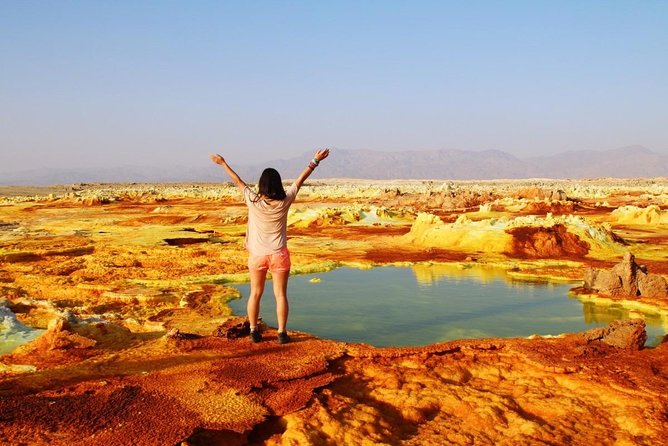
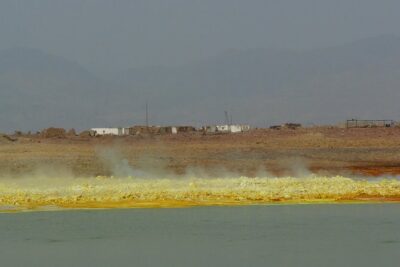
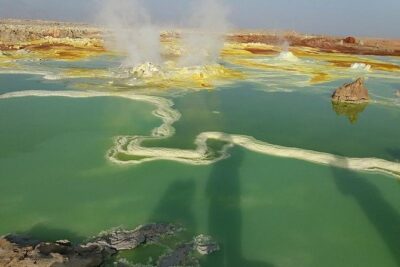
From Ragad, the route continues toward Dallol. The area is famous for mineral patterns formed by volcanic and hydrothermal activity. The ground may show several colors close together, with salts and fluids creating shapes that look almost unreal.
Dallol is listed at 116 meters below sea level, making it one of the lowest places in the world. That fact matters because the setting is not just visually unusual. You are standing in a very low, hot desert basin where hydrothermal fluids discharge through the surface.
The acidic springs are the feature that gives Dallol its edge. Their unusual chemistry produces the bright colors, but it also means you should keep a sensible distance and follow local instructions. I would wear sturdy shoes and avoid treating the area like a casual picnic spot. The tour includes a local guide, which is useful here because the most important part of the visit is knowing what you are seeing and where to walk.
The route also includes Lake Assal and time around camel caravans. The lake adds another kind of desert scenery, with broad salt country and a strong sense of emptiness. The camel route gives the visit movement and human scale. A salt block in the distance is one thing. A line of camels carrying that salt across the same region makes the whole system easier to understand.
The itinerary also describes walking with Afar people. This is one reason the local guide matters. You are not visiting a sealed attraction with signs and barriers. You are moving through a living region where local communities, salt workers, drivers, scouts, and caravan handlers all shape the experience.
After the Dallol and Lake Assal visits, you return to Hamad Ela and continue to Mekele. Again, the second day is listed at about eight hours. You should expect the return journey to take a large part of the day, so keep your schedule in Mekele flexible.
What the $307.70 price actually covers
At $307.70 per person, this is not a cheap day trip. It is also not just an entry ticket to a viewpoint. The price bundles the parts of a remote desert journey that are difficult to arrange separately.
Included items are:
- Air-conditioned vehicle
- Local guide service
- Scout and police service
- Camping equipment
- Dinner and breakfast
- Two lunches
- Bottled water
- All fees and taxes
That package gives the price practical value. You are paying for the long transport from Mekele, food in a remote area, water, an overnight camp, local support, and security arrangements. If you tried to organize each part on your own, the apparent saving could disappear quickly.
The air-conditioned vehicle is especially important on a route with long road sections and intense heat. It will not turn the Danakil into a soft adventure, but it makes the driving portion more manageable.
Alcoholic drinks are not included, and services outside the inclusion list are also excluded. That is easy to overlook, so budget for any extras and do not assume the price covers personal purchases.
The group limit is 15 people. That is large enough to keep the cost down, but small enough to remain more manageable than a big coach group. A group of that size can still affect how quickly you move at photo stops and how much personal attention you receive, so I would ask about the expected group size when booking if that matters to you.
A few more trips from Ethiopia worth a look
- 2 Days Private Tour in Addis Ababa Ethiopia
★ 5.0 · 36 reviews - 2 Days Wildlife Safari to Awash National Park
★ 4.5 · 21 reviews - 2 Days 1 night tour to Lalibela Rock-hewn churches
★ 5.0 · 12 reviews - Two Days Tigray Churches Trip
★ 5.0 · 10 reviews
Heat, camping, and the fitness question
The trip requires moderate physical fitness. The supplied details do not give a precise walking distance, trail grade, or camping arrangement, so I would not assume a strenuous hike or a comfortable night. What is clear is that you will spend long periods in a hot, remote area, walk around salt and spring sites, and sleep at Hamad Ela rather than in a conventional hotel.
The physical challenge comes from the whole package:
- Long drives on a remote route
- High heat and exposed desert conditions
- Walking around salt and hydrothermal sites
- Basic camping
- Two full days with early desert activity and a return drive
Drink the supplied water steadily rather than waiting until you feel thirsty. Wear shoes that can handle rough ground, bring sun protection, and choose light clothing that still protects you from the sun. Since the tour provides bottled water, you do not need to solve the basic supply problem yourself, but you should still treat hydration as a daily priority.
The word camping matters here. If you need a hotel bed, private bathroom, and air conditioning at night, this is the wrong style of trip. If you can accept basic conditions for access to an extraordinary place, the overnight stop makes the route possible and keeps the second day focused on Dallol.
The guides, drivers, and safety support
No individual guide names are provided, so I cannot tell you which guide will lead your departure. The service includes a local guide, drivers, scouts, and police support. Those roles are valuable in the Danakil because the route is remote and the conditions are demanding.
The strongest practical value may come from local knowledge. A guide can help you understand salt cutting, camel movements, Afar life, and the difference between the various mineral areas. The driver handles the long transfers, while scout and police support add another layer of organization to a journey far from ordinary services.
The available comments give the operation high marks for professional drivers, helpful guides, and organized service. I would take that as a positive sign, while still remembering that a two-day desert journey depends on roads, weather, local conditions, and group pace. Good organization reduces problems. It cannot remove the basic difficulty of the region.
Who should book this two-day route?
I would choose this trip if you want the main Danakil sights in a short window from Mekele. It suits you if bright mineral colors, salt production, camel caravans, and remote desert travel matter more than comfort.
It is also a good match if you prefer an arranged route. Transport, meals, water, camping gear, guides, and security support are already included, so you do not need to build the trip piece by piece.
I would hesitate if you dislike heat, long vehicle journeys, basic camping, or uncertain pacing. The listed duration is two days, but each day runs about eight hours, and the experience is not a gentle sightseeing loop.
The tour has received a top overall rating across four submitted comments, with particular praise for the drivers, guides, organization, dinner soup, campfire setting, and the otherworldly quality of Dallol. Those points line up with what the trip is designed to do well: make a difficult place reachable while giving you both natural and cultural sights.
Booking, timing, and cancellation
Confirmation is provided at booking, and the activity accepts mobile tickets. Pickup is offered, with a stated start time of 9:00 am, so you should confirm the exact pickup point and departure details before the day begins.
The tour is booked, on average, 51 days ahead. That suggests planning early is sensible, especially if your schedule in Ethiopia is tight or you need a particular departure date.
Free cancellation is available if you cancel at least 24 hours before the local start time. Cancellations made within 24 hours are not refunded, and changes in that final 24-hour period are not accepted. I would keep your Mekele plans settled before that cut-off.
Should you book the 2 Days Dallol Trip?
Book it if you want a compact, organized route into one of Ethiopia’s most unusual regions and you are ready for heat, rough travel, and simple camping. The best reasons are specific: Dallol’s acidic mineral colors, the salt workers at Ragad, camel caravans, Lake Assal, and the chance to see how the Afar region is used as well as how it looks.
Skip it if you need comfort, a slow pace, or a detailed Erta Ale volcano climb. This plan places its emphasis on Dallol, salt, lakes, caravans, and the Danakil route. At $307.70, the value is strongest when you count the vehicle, meals, water, equipment, guides, and security support together. For a short, demanding visit to a truly strange corner of Ethiopia, that is a fair package.
FAQ
How long is the Dallol trip?
The experience lasts approximately two days. Each day is listed at about eight hours, including driving and sightseeing.
Where does the tour start?
The tour starts from Mekele, Ethiopia. Pickup is offered, and the stated start time is 9:00 am.
What is included in the price?
The price includes dinner, breakfast, two lunches, bottled water, an air-conditioned vehicle, camping equipment, all fees and taxes, local guide service, scout service, and police service.
Is camping included?
Yes. Camping equipment is included, and the overnight stop is at Hamad Ela.
How many people can join the tour?
The maximum group size is 15 people.
What places are visited?
The route includes Hamad Ela, Ragad or Asebo, Dallol, Lake Assal, salt-mining areas, and camel caravan routes. The itinerary also identifies Erta Ale as a stop.
How low is Dallol?
Dallol is described as approximately 116 meters below sea level.
Do I need to be physically fit?
Yes. The activity states that participants should have a moderate level of physical fitness. The trip includes long drives, hot conditions, basic camping, and walking around the sites.
Can I cancel for a full refund?
Yes, if you cancel at least 24 hours before the experience start time. Cancellations made less than 24 hours before the start time are not refunded.
Just added out of Ethiopia
- 2 days Tigray Church★ 5.0 · 3 reviews
- 3 days tour Danakil Depression (Dallol & Erta Ale)★ 4.0 · 5 reviews
- Yod Abyssinia Cultural Night: Dinner, Music, and Dance★ 5.0 · 7 reviews
- The Rock-Hewn Churches of Lalibela: 3 Days / 2 Nights★ 5.0 · 6 reviews
- Trekking in Ethiopia’s Lalibela Wollo Highland 4 Days / 3 Nights★ 5.0 · 6 reviews
- Lasta Mountains: Highland Eco Trekking Tour in Lalibela★ 5.0 · 4 reviews
- Lalibela churches Guided Tour★ 5.0 · 6 reviews
- Lalibela Backpacker tours★ 5.0 · 6 reviews
Danakil Depression Tours, compared.
12 Days SIMIEN MOUNTAIN-LALIBELA-DANAKIL-TIGRAY CHURCHES
Read our review →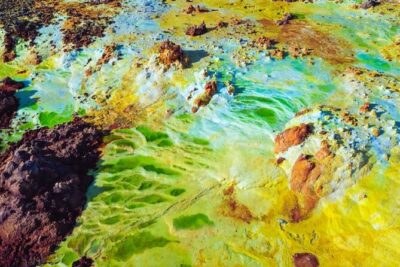
3 Day Danakil Depression Ertale and Dallol Tours
Read our review →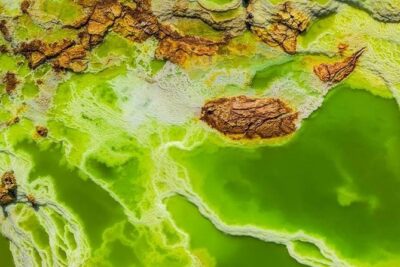
5 DAYS Lalibela, Axum, Tigray churches and Danakil
Read our review →
6 Days tour Package (Simien Mountains, Lalibela, and Danakil Depression)
Read our review →
2-Night 3-Day Danakil Depression Tour without Flights
Read our review →
Lalibela, Axum, Danakil and Omo Valley 8 DAYS
Read our review →Browse the lists this tour appears in