
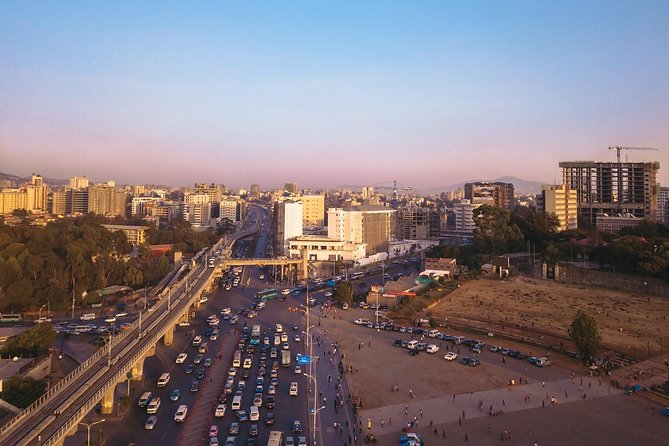
Reviewed · TOURS IN ADDIS ABABA
North Ethiopia Tours 12 Days From Addis Ababa
Northern Ethiopia gives you an unusually broad introduction to the country in 12 days. You move from the Blue Nile gorge and Lake Tana to Gondar’s royal compounds, the Simien Mountains, Axum’s ancient monuments, Tigray’s churches, and Lalibela’s famous rock-cut sanctuaries. The journey is by road, so the trip is as much about seeing rural Ethiopia between stops as it is about checking off major sights.
I like the range of places packed into one route, and I like the small-group limit of eight people. That makes a long drive easier to manage and gives you a better chance to ask questions. The guides and drivers have included people such as Joseph, Yosef, Sisay, and Bruk, while Aman or Amanuel has handled trip arrangements and stayed in contact.
The main drawback is the amount of time spent in the vehicle. Several days involve five to ten hours of driving, and lunch is included on eight days rather than all 12. Flights are not included, so you should compare the full cost before booking.
Key points at a glance
- Blue Nile gorge and Lake Tana: Begin with one of Ethiopia’s great river views, then cruise to Ura Kidane Mihret monastery.
- Gondar and Simien: Combine royal castles and church paintings with high mountain scenery in two very different settings.
- Axum and Tigray: See stelae, royal tombs, ancient inscriptions, and old churches with remarkable stonework.
- Lalibela’s carved churches: Spend a full sightseeing day among 11 monolithic and semi-monolithic churches.
- Mostly overland travel: The route offers village and countryside views, but long driving days require patience.
- Small-group format: A maximum of eight people keeps the experience more personal than a large coach tour.
What the 12-day route really offers
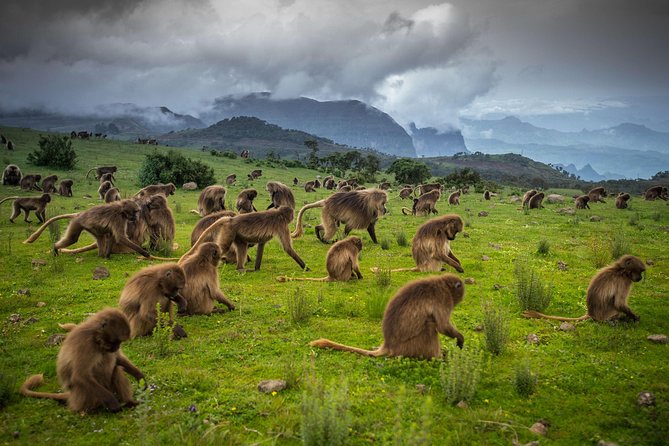
This is a north Ethiopia history and culture tour with a strong road-trip character. You will not simply fly between famous sites. You will watch the country change outside the window, from central highlands to broad gorges, dry northern country, mountain passes, and farming areas.
The price is $2,288 per person. That is a serious outlay, but it covers a private-style overland program with an air-conditioned vehicle, accommodation listed in several towns, guiding, sightseeing, and lunch on eight days. It does not cover flights. For a fair comparison, ask what other companies include for hotels, park visits, boat trips, meals, and airport transfers.
The 6:00 am start matters. Early departures help you cover the distances, but this is not a slow holiday with late breakfasts. You should be comfortable with a moderate level of physical activity, uneven ground at historic sites, and repeated days on the road.
Other tours people book out of Addis Ababa:
- Full Day Tour of Addis Ababa with Hotel Pickup and Drop-off
★ 5.0 · 430 reviews - Taste of Ethiopia
★ 5.0 · 406 reviews - Day Trip From Addis Ababa See Historical Monastery,Stunning Nature,Animals,Birds
★ 5.0 · 303 reviews
Day 1: Addis Ababa to Bahir Dar through the Blue Nile gorge
The opening drive covers about 560 kilometers and takes roughly nine to ten hours. That is a demanding first day, but the Blue Nile gorge gives the route a dramatic payoff. You will pass through changing highland scenery before reaching Bahir Dar, a pleasant base for Lake Tana.
The listed overnight stop is Lucky Hotel Bahir Dar. Because this day is mainly transport, I would treat it as a chance to settle into the pace of the tour rather than expect a major sightseeing program.
The stop is described as Bahir Dar Market, which points toward daily life as well as monuments. You may find local food, household goods, and ordinary commercial activity here, though the exact market schedule and visit length should be confirmed before departure.
Day 2: Lake Tana monasteries and the Blue Nile Falls
Today brings one of the tour’s best changes of pace. After breakfast, you take a boat on Lake Tana to the Zege Peninsula and visit Ura Kidane Mihret, a 14th-century monastery and the best-known of the peninsula’s monastic sites.
The boat ride is important because it lets you experience Lake Tana as more than a name on a map. The monastery adds a quieter, religious dimension to the day, with painted interiors and an old Ethiopian Christian setting. Your guide can help explain the role of the church and the meaning of the artwork.
In the afternoon, you drive to Tis Isat to see the Blue Nile Falls. Keep your expectations flexible. The flow may be low because of construction of a new dam, so the falls may not have the force shown in older photographs. The walk and surrounding scenery still make this a worthwhile stop, but the water volume is a clear reason not to book the tour solely for the waterfall.
The sightseeing portion is listed at about five hours. That leaves this as one of the more manageable days physically, although the boat and walking conditions may vary.
Day 3: Gondar’s castles and painted churches
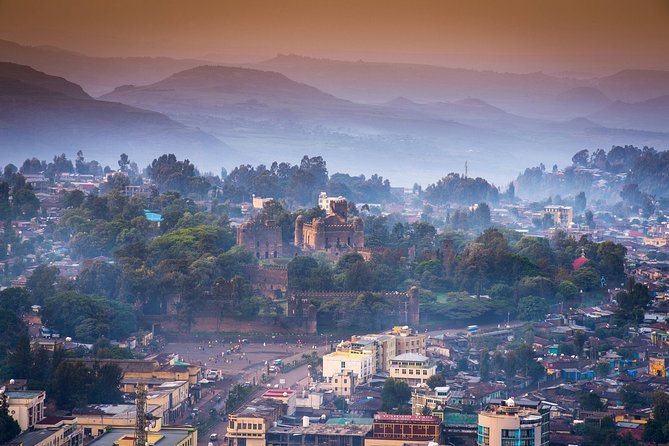
The drive from Bahir Dar to Gondar is about 180 kilometers and takes three to four hours. Gondar was founded as Ethiopia’s royal capital by Emperor Fasiladas in 1636, and the city’s main historical area gives the tour a strong architectural center.
You will visit Fasil Ghebbi, the royal compound associated with Fasiladas and later rulers. Its stone buildings and surviving castle structures offer a clear sense of Ethiopia’s imperial past without requiring a long trek between sites.
The day also includes Debre Birhan Selassie, known for its remarkable murals, and Qusquam Church. Debre Birhan Selassie is especially valuable for anyone interested in Ethiopian religious art. I would give your guide time to explain the paintings rather than rushing through for photographs.
The listed overnight hotel is not specified by name in Gondar. The program allows about four hours for sightseeing, so the visit is focused rather than exhaustive.
Same starting point, a very different trip:
- Addis Ababa: Debre Libanos, Blue Nile Gorge, and Cave Tour
★ 4.5 · 256 reviews - Addis Ababa Guided City Tour With Airport & Hotel Pick Up
★ 5.0 · 237 reviews - Breathtaking Nature, Wildlife and Cave Church Tour – Free Pickups
★ 5.0 · 225 reviews - Full-Day Private City Tour of Addis Ababa
★ 5.0 · 147 reviews
Day 4: Sanqaber in the Simien Mountains
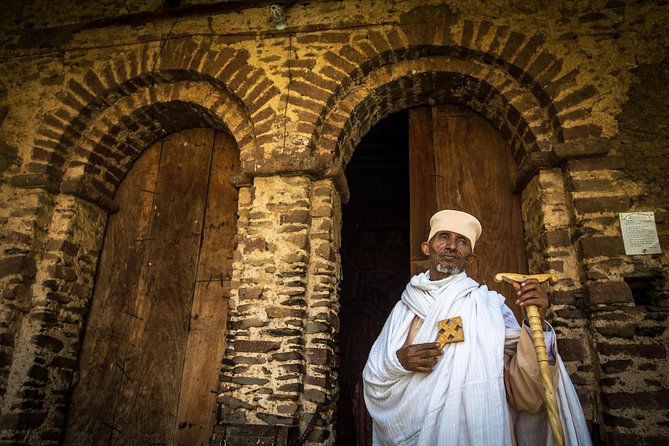
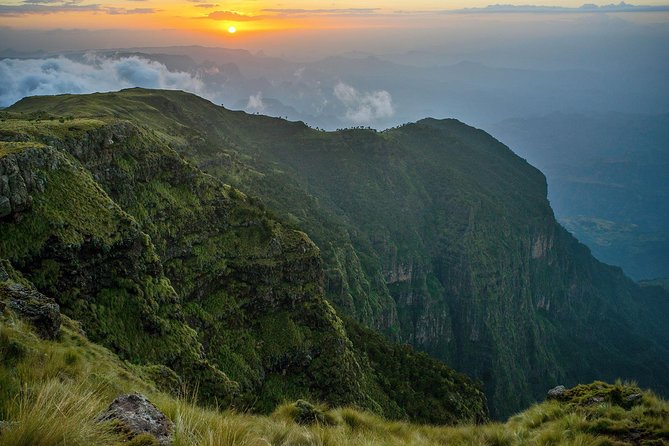
From Gondar, you travel toward Sanqaber, a section of Simien Mountains National Park. The drive and excursion take about six hours, with an overnight stay at Simen Park Hotel.
This is the tour’s major nature day. The Simien Mountains are known for steep escarpments, high ridges, and wide views across rugged country. The itinerary calls the area the roof of Africa, and the appeal is easy to understand: the scenery is on a much larger scale than the urban and historic stops that come before it.
You should be ready for cooler conditions and walking on uneven ground. The information provided calls for moderate fitness, but it does not give a specific hiking distance or route. Ask in advance how much walking is planned at Sanqaber, particularly if you have mobility concerns.
This overnight also breaks up the long road journey to Axum. It is one of the most scenic sections, but it is not a luxury mountain retreat. The attraction is the setting and the excursion, not a long list of hotel facilities.
Day 5: Sanqaber to Axum by way of Lima Limo and the Tekeze area
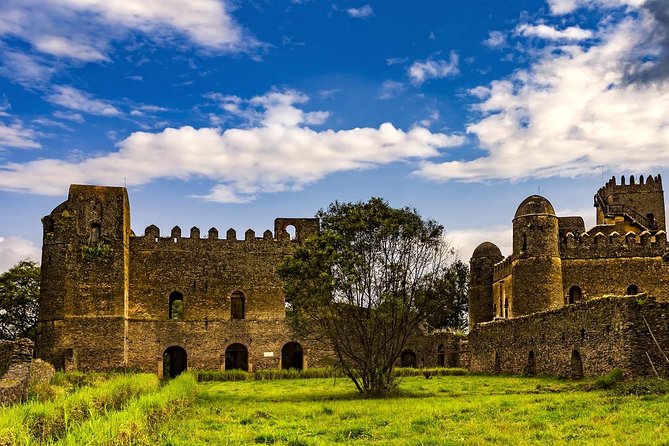
The drive to Axum takes about five hours and follows what is described as the adventurous road through Lima Limo and the Tekeze desert. The route gives you a look at northern Ethiopia beyond the main monuments.
This is another day when the drive itself is part of the experience. You will see dry country and changing elevations, with the road connecting places that are far apart on the map. Roads can make a short-looking distance take most of a day, so patience helps.
You stay at Yared Zemma Hotel in Axum. The timing should leave enough room to rest before the main Axum sightseeing day.
Day 6: Axum’s stelae, tombs, and sacred places
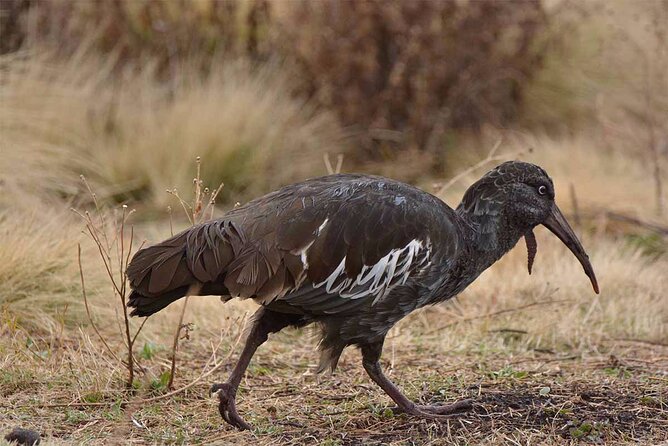
Axum is one of the strongest historical stops on the route. The city has more than 2,500 years of history and was once the center of a major empire. It is also associated with the Ethiopian tradition that the original Ark of the Covenant is kept here.
The city tour includes St. Mary’s Church and the sanctuary chapel identified as the repository of the Ark. Access and viewing arrangements at religious sites can be specific, so your guide will be important here. The stop is about understanding the traditions connected with the place, not expecting a museum-style display of the Ark.
You also visit the coronation yard, Stelae Park, the tombs of King Kaleb and his son Gebre Meskel, Ezana’s inscriptions, the Queen of Sheba’s Bath, the ruins associated with the Queen of Sheba’s palace, and Axum Museum.
That is a full five-hour program. The stelae and inscriptions are especially useful for connecting the city to its ancient political and cultural role. The museum can help put the outdoor monuments into context. Overnight is again at Yared Zemma Hotel.
Day 7: Yeha and the churches around Hawzen
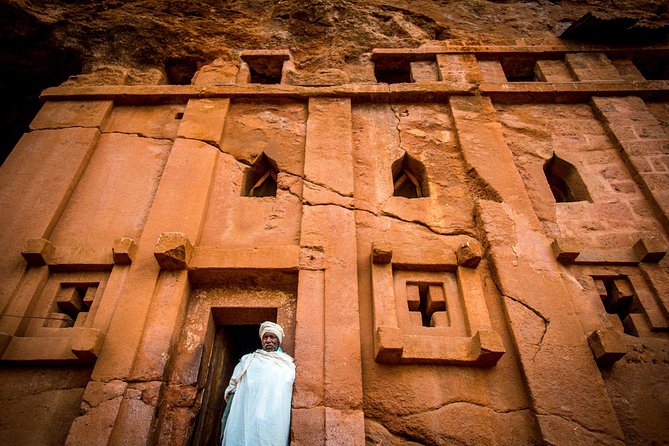
You leave Axum for Hawzen, with about six hours of driving and sightseeing. The first major stop is Yeha, home to a fifth-century temple and the oldest surviving building mentioned in the itinerary.
Yeha is valuable because it reaches back before the better-known Christian monuments. The stonework gives you a direct look at the technical skill of early builders in the region. It also helps explain that northern Ethiopia’s story is not limited to medieval churches.
You continue to Hawzen and stay at Geraltha Lodge. The area is a base for some of the most unusual religious sites in northern Ethiopia, and the next day continues that theme.
Day 8: Dugum Sellase, Abraha Atsbeha, and Wukro Cherkos
The drive from Hawzen to Mekele takes about five hours, with several important stops along the way. Dugum Sellase comes first, followed by Abraha Atsbeha, described as the first church in Ethiopia. Its interior is carefully decorated, giving you another chance to see religious art in its original setting.
The final major visit is Wukro Cherkos, a semi-rock-hewn church. This type of construction is different from the fully freestanding rock-cut churches at Lalibela. The distinction is worth asking about, since it shows how builders adapted stone, cliff faces, and existing rock formations.
You overnight at Axum Hotel in Mekele. The day combines driving with several cultural stops, so sturdy shoes and a willingness to move at a steady pace will help.
Day 9: The long road toward Lalibela
The itinerary lists this journey as roughly two days and 12 hours, which signals one of the longest transfers in the program. You travel through Sokota and see more of the country’s highland scenery before reaching Lalibela.
This is the point where the tour’s overland design becomes most demanding. The benefit is continuity: you see how the northern towns connect rather than losing the experience to airports. The cost is time in the vehicle, and you should not expect a relaxed arrival day.
You stay at Cliff Edge Hotel in Lalibela. If road conditions or timing change, the exact arrival hour may shift, so keep your evening plans light.
Day 10: Lalibela’s carved churches
Lalibela deserves a full day. The UNESCO-listed complex contains 11 monolithic and semi-monolithic churches carved directly into the mountainside at least 800 years ago.
The design is what makes the site so memorable. Churches are cut from the living rock rather than assembled block by block, and the complex includes passageways, tunnels, reliefs, and painted icons. The group includes the largest monolithic church in the world, according to the supplied tour information.
The six-hour visit should give you time to see the principal areas with a guide. Wear shoes that work on uneven stone and be ready for stairs, narrow paths, and changes in footing. The program does not specify the exact order of the church visits, so ask how the two main groups will be arranged.
Lalibela is not simply an architectural photo stop. It remains a religious place, so modest clothing and respectful behavior are sensible. Your guide can also help explain how the churches function as a connected sacred area rather than as isolated buildings.
Day 11: Nakuto Leab and the road to Kombolcha
After breakfast, you drive toward Kombolcha in South Wello. The day includes the cave churches of Nakuto Leab, with lunch scheduled at Weldya. The driving time is about eight hours.
This is another long transfer, but Nakuto Leab gives the day a clear purpose. The cave churches extend the theme of sacred spaces carved or shaped from stone, linking this section with Lalibela and the Tigray churches.
You spend the night at Sunny Side Hotel in Kombolcha. Because the drive is lengthy, this is best viewed as a practical overnight stop that positions you for the return to Addis rather than as a destination in its own right.
Day 12: Back to Addis and a traditional final evening
The final drive from Kombolcha to Addis takes about eight hours. In the evening, the program includes a folkloric dinner with several national dishes, dances representing different Ethiopian ethnic groups, and a traditional coffee ceremony.
That final event is a useful way to end the trip. You get a taste of Ethiopian food and performance after seeing churches, royal buildings, markets, and rural areas. The airport transfer follows dinner, so confirm your departure time and keep your luggage organized.
The day is long, and the airport transfer comes after the drive and evening program. Still, the final meal gives the route a cultural finish rather than ending with a simple hotel drop-off.
Guides, group size, and the practical feel
A group maximum of eight is one of the strongest features here. You are not dealing with a large coach, and a small group makes it easier to hear explanations at churches and monuments. It can also make long drives feel less anonymous.
The company has used guides and drivers including Joseph or Yosef, Sisay, Bruk, and Niko, with Aman or Amanuel involved in management and planning. Since staff assignments can change, ask who will accompany your departure and which language the guide will use.
The vehicle is air-conditioned, which matters on long road days. Lunch is included on eight days, but not all meals are covered. Flights are excluded, and the provided details do not specify every hotel facility, entrance fee breakdown, or exact driving route, so request those details before paying.
Free cancellation is available up to 24 hours before the start time. The tour also requires a minimum number of participants, so confirm what happens if that minimum is not reached.
Who should book this northern Ethiopia tour?
I would choose this trip if you want a broad first look at northern Ethiopia and prefer a planned route to arranging every hotel, driver, and entrance yourself. It suits people who care about churches, archaeology, royal history, traditional food, and scenery.
I would be more cautious if you dislike long drives or need a gentle schedule. A route covering Bahir Dar, Gondar, Simien, Axum, Hawzen, Mekele, Lalibela, Kombolcha, and Addis in 12 days is ambitious. The payoff is variety, but the pace is not leisurely.
Should you book it?
Book it if your priority is seeing the major northern sites in one organized trip, with a small group and local support. The strongest parts are Lake Tana, Gondar, Axum, the Tigray churches, and Lalibela, while the Simien Mountains add an important change from built heritage to open mountain scenery.
Before booking, confirm the hotel list, guide assignment, meal coverage, road conditions, and flight arrangements. If you accept the long driving days, the $2,288 price can offer solid value for a tightly organized cultural route. If you want more time at each place, consider a slower itinerary with internal flights or extra nights.
FAQ
How long is the tour?
The tour lasts approximately 12 days, beginning in Addis Ababa and returning there on the final day before airport transfer.
What time does the tour start?
The stated start time is 6:00 am.
What places are included?
The route includes Bahir Dar, Lake Tana, the Blue Nile Falls, Gondar, Simien Mountains National Park, Axum, Yeha, Hawzen, Mekele, Lalibela, Nakuto Leab, Kombolcha, and Addis Ababa.
Are flights included?
No. All flights are excluded from the tour price.
How many people can join?
The maximum group size is eight people.
What meals are included?
Lunch is included on eight days. The final evening includes a folkloric dinner with national dishes and a traditional coffee ceremony.
Just added out of Addis Ababa
- Yod Abyssinia Cultural Night: Dinner, Music, and Dance★ 5.0 · 7 reviews
- Locally crafted beer and wine tasting and nightlife in Addis tour★ 5.0 · 6 reviews
- Stunning Views Wonchi Crater Lake a Private Day Trip★ 5.0 · 3 reviews
- Two days Lake Wenchi and Menagesha Forest★ 5.0 · 3 reviews
- Tribes of the Ethiopian Omo Valley – 9 Day Tour★ 5.0 · 5 reviews
- Addis Ababa City Tours Full-Day Tours★ 5.0 · 5 reviews
- 3-Day Cultural Tour in South Omo Valley★ 5.0 · 4 reviews
- Day Trip to Tiya UNESCO Site & Melka Kunture Archaeological Site★ 4.5 · 3 reviews
Tours in Addis Ababa, compared.
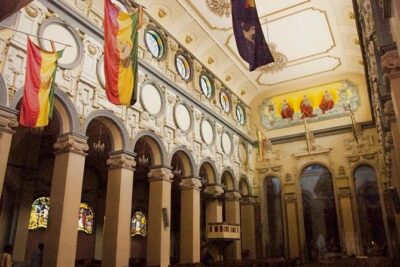
Full Day Tour of Addis Ababa with Hotel Pickup and Drop-off
Read our review →
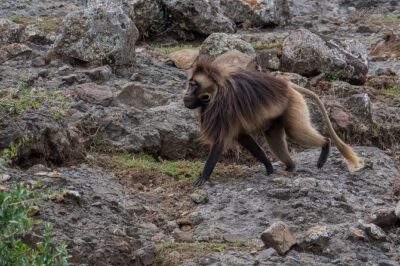
Day Trip From Addis Ababa See Historical Monastery,Stunning Nature,Animals,Birds
Read our review →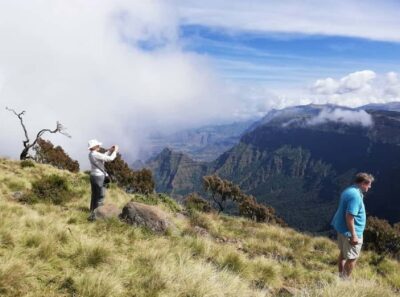
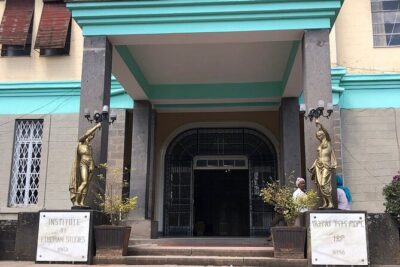
Addis Ababa Guided City Tour With Airport & Hotel Pick Up
Read our review →
Breathtaking Nature, Wildlife and Cave Church Tour – Free Pickups
Read our review →
Browse the lists this tour appears in