
Reviewed · TOURS IN ADDIS ABABA
10 Days in Northern Ethiopia Tours
Northern Ethiopia packs an astonishing amount into 10 days: island monasteries on Lake Tana, royal castles in Gondar, Gelada monkeys in the Simien Mountains, ancient Axum, and Lalibela’s churches carved straight into stone. The route gives you a broad look at the country’s history and scenery without limiting the trip to one city.
I like the private format, since your group can move at its own pace with a guide such as Mass or Mastewal. I also like the range of experiences, from a boat ride and short mountain trek to church visits and long road journeys through rural Ethiopia.
The main drawback is the pace. Several days involve long drives, and the $4,300 price does not include domestic flights, despite flights being part of the plan. Confirm exactly what is covered before paying.
Key points to know before booking

- Lake Tana by boat: A four-hour trip reaches Orthodox monasteries with painted walls and the outlet of the Blue Nile.
- Gondar’s royal core: The Royal Enclosure, Fasilidas’s Pool, and Debre Birhan Selassie fit into one strong afternoon.
- Simien wildlife and walking: A three to four-hour trek may bring you close to Gelada monkeys and Walia ibex.
- Axum and Tigray: Ancient stelae, Yeha, Debre Damo, and Wukro Chirkos show several layers of Ethiopian history.
- Lalibela’s churches: Two church clusters and Bet Giyorgis form the trip’s grand finale.
- Private guiding: Mass is described as careful and well informed, while Mastewal is praised for communication and knowledge of northern Ethiopia.
Why this route works for a first visit
Northern Ethiopia is not a single-attraction destination. Its appeal comes from the way religious sites, old kingdoms, mountain country, and daily rural life connect across the route. In 10 days, you move from modern Addis Ababa to places tied to Ethiopia’s ancient kingdoms and Orthodox Christian traditions.
This is a private tour, so only your group participates. That matters on a busy route. You can ask questions at churches, spend more time at a site that interests you, or keep moving when a long day starts to catch up with you.
The route also gives you a useful spread of transport. You fly from Addis Ababa to Bahir Dar, travel by road through Gondar and the Simien region, continue north to Axum and Mekelle, then reach Lalibela before flying back to Addis. The road sections are part of the experience, but they require patience.
Guide quality is especially important here. Mass is described as a conscientious guide with strong information about the country. Mastewal is noted for disciplined organization, clear communication, and a strong grasp of Bahir Dar and northern Ethiopia. Ask at booking which guide will lead your departure.
Other tours people book out of Addis Ababa:
- Full Day Tour of Addis Ababa with Hotel Pickup and Drop-off
★ 5.0 · 430 reviews - Taste of Ethiopia
★ 5.0 · 406 reviews - Day Trip From Addis Ababa See Historical Monastery,Stunning Nature,Animals,Birds
★ 5.0 · 303 reviews
Addis Ababa: museums, markets, and the view from Entoto
Your first day is a city introduction. The route visits the Ethiopian National Museum, the open-air market at Merkato, and Entoto for a high view over Addis Ababa.
The National Museum is the logical first stop because it gives context for the sites ahead. You are about to see places connected with Axumite civilization, Ethiopian Christianity, and the country’s long royal past. Starting with a museum helps those later visits make more sense.
Merkato offers a different kind of introduction. It is a working market rather than a polished attraction, so expect a more direct look at commerce and city life. Stay close to your guide and group, especially in crowded areas, and keep your belongings secure.
Entoto gives you a broad view of the capital and a chance to get your bearings. Since the tour begins and ends in Addis Ababa, this first day also provides a useful frame for the rest of the journey. The stated start time is 12:00 am, which is unusual and should be confirmed before departure.
Lake Tana and the Blue Nile near Bahir Dar
Day two begins with a flight to Bahir Dar, followed by a four-hour boat trip on Lake Tana. The lake visit includes Ura Kidane Mehret, Azewa Mariyam, Betre Mariyam, and the point where the Blue Nile leaves the lake.
The monasteries are the focus, not simply the boat ride. Their wall paintings offer a look at Ethiopian Orthodox art and worship, while the island and lakeshore setting gives the day a quiet change of pace after Addis Ababa.
The boat trip lasts about four hours, so this is not a quick photo stop. Bring sun protection and water, though bottled water is listed among the inclusions. Church visits require respectful clothing and behavior. Your guide can explain the customs at each site.
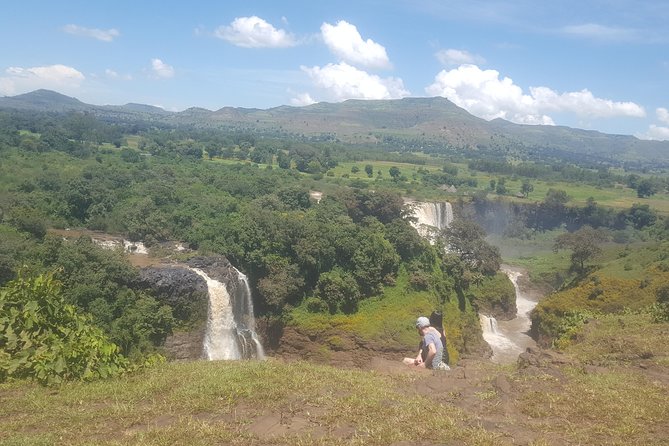
In the afternoon, you drive to the Blue Nile Falls for a short hike. The plan does not promise a long trek, which is useful to know if you are looking for a serious walking day. Still, after the boat trip, the falls add movement and scenery to an already full day.
Lunch arrangements need clarification. Lunch appears in the included section, but it is also listed as not included. That contradiction should be resolved in writing before you book.
Gondar’s castles and painted ceilings
After breakfast on day three, the drive to Gondar takes about three hours. The road passes rural villages and gives you a look at Amhara life outside the main towns.
Gondar’s Royal Enclosure is the major stop. Six castles and other buildings occupy the complex, showing the city’s importance as a royal center. Rather than seeing a single palace, you get a collection of structures from different periods, which makes the visit feel like a walk through a changing court.
Fasilidas’s Pool adds a ceremonial setting. It is still used during Timket celebrations, so your guide can connect the quiet site you see with one of Ethiopia’s major religious festivals.
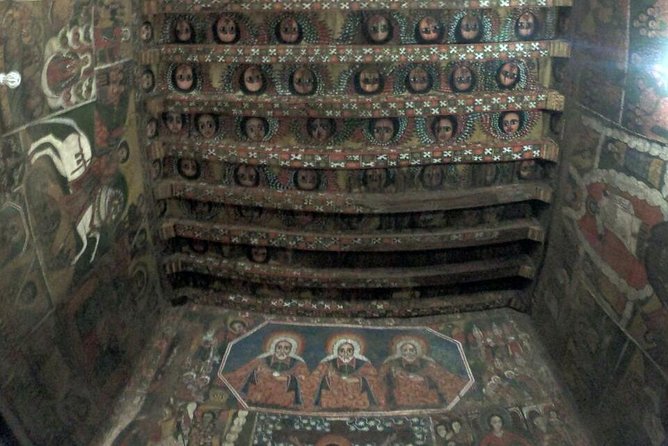
Debre Birhan Selassie is another highlight. The church is known for its painted interior and especially its ceiling. The visit is valuable because it shifts the focus from royal power to living religious tradition. You are not only looking at old buildings. You are entering places that remain meaningful to worshippers.
The schedule gives you one afternoon for all of this, so expect a focused visit rather than hours at each site. Wear shoes that are easy to remove, as church visits may require it, and follow local instructions.
Same starting point, a very different trip:
- Addis Ababa: Debre Libanos, Blue Nile Gorge, and Cave Tour
★ 4.5 · 256 reviews - Addis Ababa Guided City Tour With Airport & Hotel Pick Up
★ 5.0 · 237 reviews - Breathtaking Nature, Wildlife and Cave Church Tour – Free Pickups
★ 5.0 · 225 reviews - Full-Day Private City Tour of Addis Ababa
★ 5.0 · 147 reviews
Simien Mountains: a short trek with big views
On day four, the drive to Simien Mountains National Park takes about two hours. The plan includes three to four hours of trekking, with an overnight stay in Simien or Debark.
The Simien region is one of the trip’s strongest changes of scene. Massive ridges, deep gullies, and sharp rock formations create the setting for the walk. The route description calls the trekking tough but rewarding, so you should be comfortable with uneven ground and a few hours on foot.
Wildlife is part of the attraction. You may sit near a group of Gelada monkeys or spot Walia ibex on rocky ledges. The itinerary does not guarantee animal sightings, but these are the species the visit is designed around.
This is not a rest day. The altitude, walking time, and mountain roads may make it one of the more tiring parts of the trip. Ask your guide about the exact route and overnight location. Simien and Debark are both named as possibilities, and they do not give you exactly the same base.
Axum and the memory of an ancient empire
Day five is a long road day to Axum. You leave early, pass the Simien Mountains, stop for lunch in Adi Arkay, and continue through the Tekeze Valley.
The drive is demanding, but the route provides some of the trip’s finest views. You pass small settlements and dramatic highland country before reaching Axum, a city linked with the ancient Axumite Empire, the Queen of Sheba, and Ethiopia’s tradition surrounding the Ark of the Covenant.
Day six is devoted to Axum’s sites. The Northern Stelae Field includes the famous obelisks, including one returned from Italy and re-erected in Ethiopia. These carved stone monuments are among the clearest reminders of Axum’s former power and technical skill.
The day also includes the Queen of Sheba’s Bath, which supplies water to Axum throughout the year, King Bazen’s Tomb, and the Queen of Sheba’s Palace. The names carry legend, archaeology, and religious tradition side by side. Your guide’s explanation will help separate what is known from what is believed.
St Mary of Zion brings important restrictions. Men may enter the old church, but women may not. The chapel associated with the Ark is closed to everyone except its specially appointed guardian monk. Plan for an external visit and a conversation with your guide rather than expecting to see inside the chapel.
Yeha, Debre Damo, and Wukro Chirkos
Day seven takes you toward Mekelle, with three important stops along the way. First is Yeha, an archaeological site dating from the eighth to fifth centuries BC. It is thought to have been the capital of Ethiopian civilization before Axum.
The visit helps place Axum in a larger timeline. You are not looking at one isolated ancient city. You are tracing earlier centers of power that shaped the region before Axum became dominant.
Debre Damo comes with a firm access rule. Men must climb a 15-meter rope to enter, and women are not allowed. This is one of the tour’s clearest practical limitations. If you cannot or do not want to make the climb, confirm with the guide what can be seen from outside.
The final stop is Wukro Chirkos, a rock-hewn church in Wukro. Like Lalibela, it shows how worship spaces were carved from stone, but it appears earlier in the route and adds another point of comparison.
This is another full road day. The sequence is rewarding for people interested in archaeology and religious architecture, but it may feel rushed if you prefer slow visits.
The long approach to Lalibela
Day eight is mainly a drive to Lalibela. You pass through small villages and areas with sandstone homes associated with the Tigray people before reaching Ethiopia’s best-known church destination.
The long approach has value because it shows how much of northern Ethiopia remains rural. It also makes Lalibela feel less like an isolated attraction and more like the end point of a journey through changing regions.
At the same time, this is one of the tour’s least active days. You should expect substantial time in the vehicle. If long road journeys are difficult for you, ask for estimated driving hours and road conditions before booking.
Lalibela’s eleven churches
Day nine is the main Lalibela day. The churches are grouped into a Northwestern Cluster and a Southeastern Cluster, followed by Bet Giyorgis, the most famous church of the group.
The Northwestern Cluster includes Bet Medhane Alem, Bet Maryam, Bet Meskel, Bet Danaghel, Bet Mikael, and Bet Golgotha. Entry to Bet Golgotha is not permitted for women, so this is another place where access differs by gender.
After lunch, the route continues to Bet Gabriel-Rufael, Bet Merkorios, Bet Amanuel, and Bet Abba Libanos in the Southeastern Cluster. Seeing both clusters in one day gives you a strong overview, but it also makes for a demanding schedule. Wear comfortable shoes and expect uneven surfaces around and between the churches.
Bet Giyorgis is saved for last. Cut into the ground in the shape of a cross and dedicated to Saint George, it is the image most closely associated with Lalibela. Ending here gives the day a clear final focus rather than treating every church as just another stop.
You should approach this day as a religious and cultural visit, not simply an architectural tour. Churches remain active places of worship. Dress modestly, follow instructions about footwear and photography, and allow the guide to explain local customs.
What the $4,300 price really covers
At $4,300 per person, this is a high-cost tour. Its value depends on what the price includes and how much you value private guiding, route planning, internal transfers, hotels, and site visits across a difficult-to-organize region.
Breakfast, dinner, bottled water, entrance fees, and taxes are listed as included. Lunch is listed both as included and not included, so do not assume it is covered. Domestic flights are specifically listed as not included, even though the itinerary uses a flight to Bahir Dar and another from Lalibela to Addis Ababa. Confirm the flight cost, hotel standard, airport transfers, and vehicle arrangements before committing.
The private format adds value if you want flexibility and direct help with cultural rules. The guide’s role is not minor here. Access restrictions, church etiquette, long drives, and historical context all make a local guide useful.
The price is harder to justify if you are comfortable arranging domestic flights, hotels, and drivers yourself. It also offers less value if you prefer a slow trip, since the route covers a lot of ground in only 10 days.
Who should book this northern Ethiopia tour?
I would recommend it to you if you want a broad first visit centered on history, Orthodox Christianity, mountain scenery, and archaeology. It suits active visitors who can handle three to four hours of trekking and repeated long drives.
It also works well for a private group that wants one guide throughout the route. Mass or Mastewal can provide continuity, and the available feedback emphasizes careful guiding, discipline, communication, and strong knowledge of the north.
I would hesitate if you want leisurely mornings, long stays in each city, or guaranteed access to every church. Women should pay close attention to the restrictions at St Mary of Zion, Debre Damo, Bet Golgotha, and the chapel associated with the Ark.
Free cancellation is available up to 24 hours before the start time. Changes or cancellations inside that window are not refundable, and poor weather can lead to a different date or a full refund. The activity is private, pickup is offered, and most people can participate, but confirm the start time and all flight arrangements.
Should you book it?
Book this tour if you want the major northern sites in one organized trip and value a private guide who can explain both history and local customs. The combination of Lake Tana, Gondar, Simien, Axum, Tigray, and Lalibela is unusually broad.
Before booking, get a written answer about domestic flights, lunch, hotel categories, the assigned guide, and the exact trekking plan. If those costs are added on top of $4,300, the value changes quickly. If they are handled clearly and you are ready for long road days, this is a strong route for seeing the cultural core of northern Ethiopia.
FAQ
Where does the tour start and end?
It starts in Addis Ababa, Ethiopia, and ends back at the meeting point in Addis Ababa after the flight from Lalibela.
How long is the tour?
The tour lasts approximately 10 days.
Is this a private tour?
Yes. Only your group participates in the activity.
Is pickup available?
Yes. Pickup is offered.
Which cities and regions does the tour visit?
The route includes Addis Ababa, Bahir Dar, Lake Tana, Gondar, Simien Mountains National Park, Axum, Mekelle, Tigray, and Lalibela.
Are domestic flights included?
Domestic flights are listed as not included, although the itinerary uses a flight to Bahir Dar and a flight from Lalibela to Addis Ababa. Confirm the exact arrangement before booking.
Are meals included?
Breakfast and dinner are listed as included. Lunch appears both in the included and not included sections, so you should clarify this before booking.
Are there access restrictions at any religious sites?
Yes. Men only may enter the old church at St Mary of Zion. The Ark chapel is closed except to its guardian monk. Women may not enter Debre Damo or Bet Golgotha, and men must climb a 15-meter rope to enter Debre Damo.
What is the cancellation policy?
You can cancel at least 24 hours before the local start time for a full refund. Cancellations or changes made within 24 hours are not accepted for a refund. If poor weather causes cancellation, you are offered another date or a full refund.
Just added out of Addis Ababa
- Yod Abyssinia Cultural Night: Dinner, Music, and Dance★ 5.0 · 7 reviews
- Locally crafted beer and wine tasting and nightlife in Addis tour★ 5.0 · 6 reviews
- Stunning Views Wonchi Crater Lake a Private Day Trip★ 5.0 · 3 reviews
- Two days Lake Wenchi and Menagesha Forest★ 5.0 · 3 reviews
- Tribes of the Ethiopian Omo Valley – 9 Day Tour★ 5.0 · 5 reviews
- Addis Ababa City Tours Full-Day Tours★ 5.0 · 5 reviews
- 3-Day Cultural Tour in South Omo Valley★ 5.0 · 4 reviews
- Day Trip to Tiya UNESCO Site & Melka Kunture Archaeological Site★ 4.5 · 3 reviews
Tours in Addis Ababa, compared.
Full Day Tour of Addis Ababa with Hotel Pickup and Drop-off
Read our review →
Day Trip From Addis Ababa See Historical Monastery,Stunning Nature,Animals,Birds
Read our review →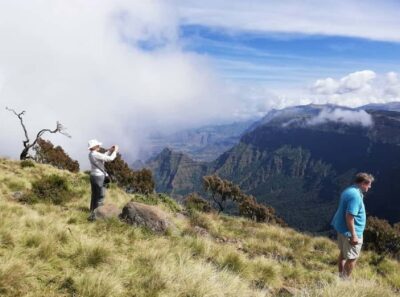
Addis Ababa Guided City Tour With Airport & Hotel Pick Up
Read our review →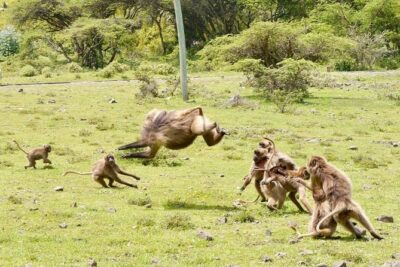
Breathtaking Nature, Wildlife and Cave Church Tour – Free Pickups
Read our review →
Browse the lists this tour appears in