
Reviewed · ETHIOPIA
2 Days Harar Tours
Harar’s most unforgettable moment comes after dark, when wild hyenas gather outside the city and take meat from a local feeder. It sounds like a circus act, but the ritual reflects a long-running relationship between Harari people and a formidable African predator. By day, you’ll walk inside Jegol, Harar’s old defensive wall, through tight lanes lined with colorful homes, mosques, shrines, and busy market stalls.
I like the way this tour pairs old-city culture with unusual wildlife in only two days. I also like the practical setup: airport pickup in Dire Dawa, air-conditioned transport, meals, hotel arrangements, and entry fees are included. The main drawback is the pace. You’ll cover a lot quickly, and the domestic flight from Addis Ababa is extra, so the final cost will be higher than the advertised $300.
Key points to know
- Hyena feeding after the city tour: Watch local feeders offer meat to wild hyenas just outside Harar’s walls.
- Harar’s compact old city: Walk narrow lanes past colorful houses, mosques, shrines, markets, and five historic gates.
- Babile on market days: The camel market operates every Monday and Thursday, with camels, goats, and cattle brought in for sale.
- The Valley of Marvels: See striking balancing rock formations outside Babile.
- A well-organized short trip: Airport pickup, an air-conditioned vehicle, meals, museum fees, wall entry, and hotel arrangements are included.
- Small-group format: The maximum group size is 15, with guides associated with the operator including Alex and Tilahun.
Why Harar makes a powerful two-day trip
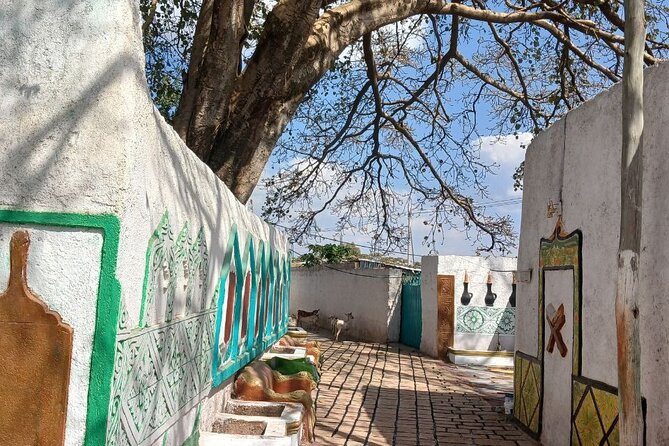
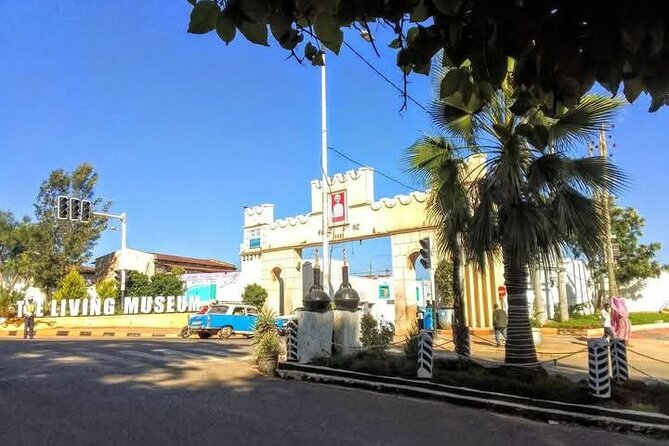
Harar is not simply another old town to tick off in Ethiopia. It is a living city with a strong local identity, packed into a small walled center. Thousands of people live within roughly one square kilometer of the old city, and that density gives the streets a close, human scale.
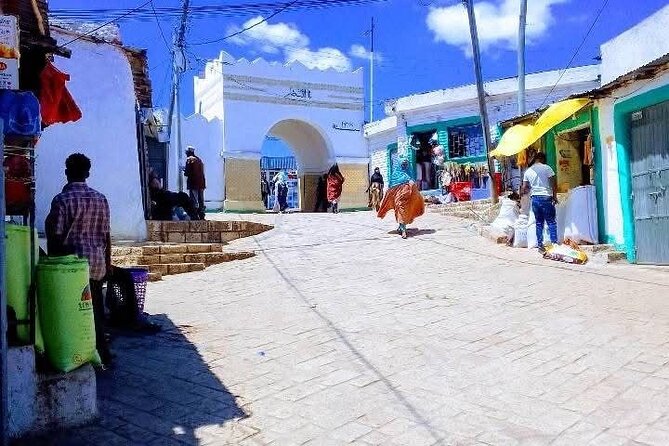
The city’s defensive wall, called Jegol, was built in the 1560s under Emir Nur. The old town remains enclosed by the wall, though a newer city has grown beyond it. Five gates lead into the historic center, and each one offers a useful entry point for understanding how Harar has protected and organized itself over the centuries.
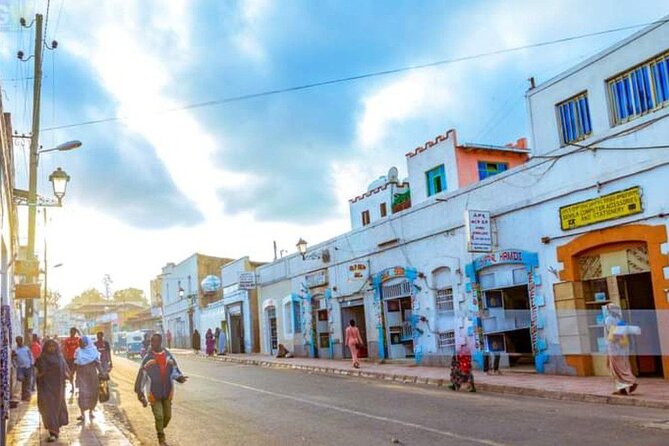
I like the fact that you experience Harar on foot rather than viewing it only from a vehicle. The lanes are narrow, the houses are brightly painted, and the city’s mosques and shrines appear around corners with little warning. You get a better sense of daily life here by walking slowly, looking up at the buildings, and letting the guide explain what you are seeing.
This is also a good place for photography. Colorful alleys, old Peugeot cars, market produce, local clothing, and activity around the city gates give you plenty to frame. You should bring a camera, but remember that a respectful approach matters more than a perfect shot. Ask before photographing people, especially in markets and residential lanes.
A few more trips from Ethiopia worth a look
- 2 Days Private Tour in Addis Ababa Ethiopia
★ 5.0 · 36 reviews - 2 Days Wildlife Safari to Awash National Park
★ 4.5 · 21 reviews - 2 Days 1 night tour to Lalibela Rock-hewn churches
★ 5.0 · 12 reviews
Day one: Dire Dawa, Harar, and the walled city
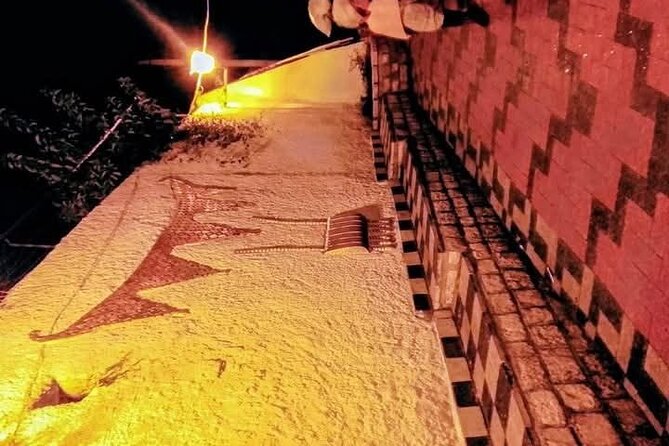
The tour begins at Dire Dawa International Airport, where a representative waits with a sign showing your name. From there, you drive to Harar, check into your hotel, and take time to rest before the city tour.
The exact flight schedule matters here. The package starts with the journey from Addis Ababa to Dire Dawa, but the airfare is not included. You’ll need to book that domestic flight separately and make sure the arrival time works with the planned pickup and city visit.
Once you reach Harar, the first day is built around walking. The old city is compact, but expect uneven pacing because you’ll stop often at museums, houses, markets, and interesting street scenes. The listed city visit takes about eight hours, so this is a full afternoon and evening rather than a quick orientation walk.
Sheriff Museum and Rimbaud House
The Sheriff Museum occupies the former honeymoon house of Ras Teferi. It gives the tour a useful political and cultural starting point, linking Harar to important Ethiopian figures and the city’s past. Rimbaud House adds another layer, connected with the French poet Arthur Rimbaud and Harar’s place in wider trade and cultural networks.
You should not expect a large museum complex with endless galleries. The value comes from seeing these places as part of Harar itself. Your guide can connect the buildings to the streets outside, which helps turn isolated exhibits into part of a larger story.
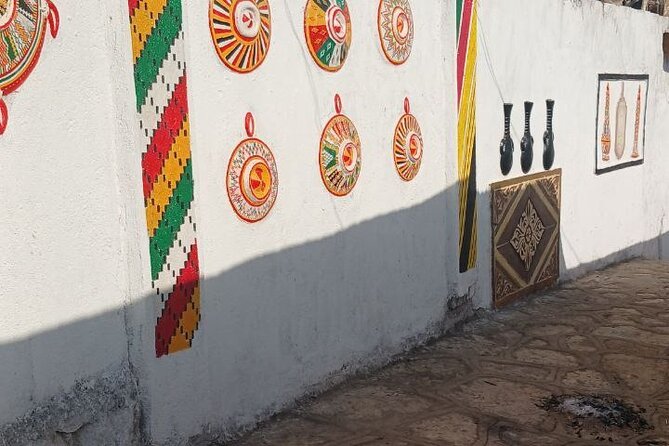
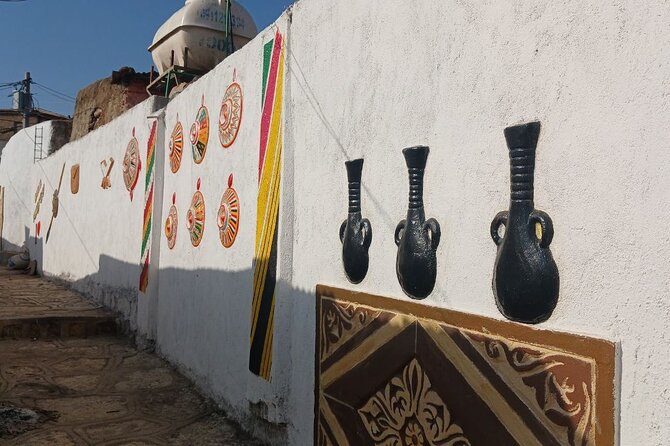
The Harari National Cultural Center is another important stop. It focuses on local traditions and the distinctive style of Harari homes. The architecture is one of the pleasures of the city, with colorful interiors and careful decoration packed into small spaces.
Harari homes, markets, and narrow lanes
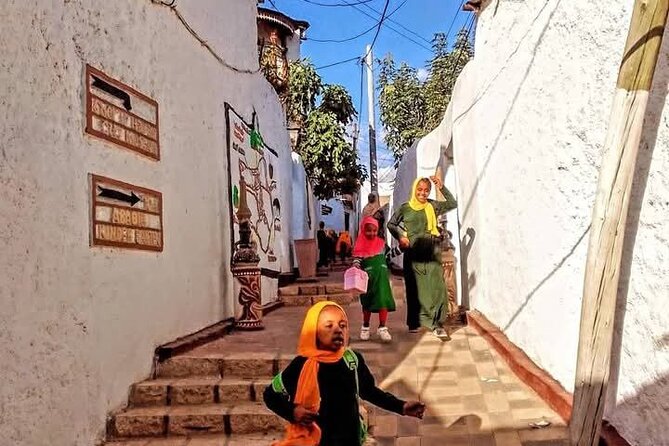
The old city is at its best when you are walking without rushing. You may pass bright walls, small doorways, mosques, shrines, and market stalls selling food and household goods. The city’s narrow paths can feel confusing at first, which is one reason a guide is useful.
The market visit brings you close to ordinary commerce rather than a staged cultural display. Produce, products, old cars, and people moving between the gates create the visual energy that makes Harar so appealing to photographers. Keep your belongings secure and stay aware of where the group is, since the lanes can be crowded.
The operator has used guides including Alex, Tilahun, and Mickey on different Harar trips. Since guide assignments can change, you should confirm who will lead your departure. The useful thing to expect is a guided walk that combines local orientation with background on the city, rather than transport from one sight to the next.
Same starting point, a very different trip:
- Full Day Tour of Addis Ababa with Hotel Pickup and Drop-off
★ 5.0 · 430 reviews - Taste of Ethiopia
★ 5.0 · 406 reviews - Day Trip From Addis Ababa See Historical Monastery,Stunning Nature,Animals,Birds
★ 5.0 · 303 reviews - Addis Ababa: Debre Libanos, Blue Nile Gorge, and Cave Tour
★ 4.5 · 256 reviews
The hyena feeding ritual after dark
The hyena feeding is the tour’s most unusual feature. Each day, local men known as hyena feeders gather outside the city walls with pieces of meat. Wild hyenas approach and take food directly from them.
You’ll see a relationship that is difficult to categorize. These are not tame pets, and the hyena remains a powerful predator. Yet the feeding ritual shows how people and animals can share the same setting under a long-established local practice.
The feeding itself lasts about an hour and is included in the tour price. It takes place after the main city visit, so expect a long first day. If you are tired from the flight and road transfer, the schedule may feel full. Still, this is the part of the trip that gives Harar a character you will not find in a standard historical walking tour.
Keep your distance and follow the guide’s instructions. The experience is built around the feeder’s control and familiarity with the animals, not around visitors handling them. Watch closely, but do not treat the hyenas as domestic animals.
Day two: Babile Camel Market and the Valley of Marvels
The second morning takes you from Harar toward Babile and the Valley of Marvels before the drive back to Dire Dawa. The route changes the focus from city life to open scenery and regional trade.
Babile’s camel market is held every Monday and Thursday. Somali and Oromo farmers bring camels, goats, and cattle to sell, making this one of the most useful stops for seeing how the surrounding region connects through livestock commerce.
Market timing is essential. If your second day does not fall on a Monday or Thursday, Babile may not be worth the stop in the same way. The tour description notes that Koremi may be visited instead on a non-market day. Ask about the exact plan before booking if the camel market is your main reason for choosing this trip.
The market is not simply a photo stop. It helps explain the economic setting around Harar and the movement between town and countryside. You’ll see people arriving with animals, negotiating, and making use of a regional meeting place. As always, ask before taking close-up photographs of people.
Balancing rocks in the Valley of Marvels
The Valley of Marvels adds a natural counterpoint to Babile. Its most striking feature is the balancing rock formations, including large stones that appear to rest on the tip of a smaller one.
The visit is brief, listed at roughly six minutes, so keep your expectations sensible. This is not a long nature walk or a full-day wilderness outing. It is a roadside-style scenic stop where the rock formations provide a memorable visual break on the route.
The surrounding scenery is also worthwhile. The formations make for strong photographs, especially when you include a person or vehicle for scale. If you like geology or unusual natural forms, this short stop will probably be one of the highlights of the drive.
Koremi as the alternate stop
When the camel market is not operating, the route may include Koremi on the way back to Dire Dawa. Koremi is described as older than Harar, with houses built in an old stone style.
That alternate stop gives the day a cultural focus rather than a market focus. It may be a better fit if you are interested in old settlement patterns and traditional building methods. Since the exact plan depends on the date, get confirmation from the operator before you leave Harar.
What the $300 price really covers
At $300 per person, this tour has solid value if you are arriving in Dire Dawa and want transport, guiding, meals, and entry fees handled together. The price includes dinner, breakfast, two lunches, an air-conditioned vehicle, airport pickup and drop-off, the hyena feeding fee, museum and wall entrance fees, government tax, and hotel arrangements.
That list removes several small costs that can add up during a short trip. You are paying for the road transfer, a local guide, coordination between stops, and the convenience of not arranging each piece separately.
The domestic flight from Addis Ababa is not included. This is the biggest budget point to remember. If you are starting in Addis Ababa, add the airfare before comparing the tour with a fully packaged trip.
The group limit is 15 people. That is not a private tour, but it is small enough to keep the city walk manageable. If your booking has fewer people, you may get a more personal experience, but the supplied information does not promise a private departure.
Who will enjoy this trip most
I would recommend this tour to anyone who wants a concentrated introduction to Harar without arranging transport, accommodation, and local visits separately. It suits photographers, culture-focused visitors, and anyone curious about the hyena tradition.
It also works for mixed-age groups. One account describes the route being completed with a three-year-old child and two adults in their seventies, with walking as the main requirement. That does not guarantee the same pace for every group, but it suggests the experience can work for families and older adults who are comfortable walking.
You should think twice if you want a slow, unstructured stay. The two-day schedule packs a city tour, museums, markets, evening hyenas, a camel market or alternate village, rock formations, and a return to Dire Dawa into a short window.
The tour has received strong praise for reliable organization, timely communication, friendly guiding, and safe handling of the route. Those qualities matter here because the trip depends on airport pickup, hotel coordination, evening timing, and a long road day. Guides such as Alex and Tilahun have been singled out for careful planning and clear service, though you should confirm your assigned guide.
Practical details before you book
Pickup is at Dire Dawa International Airport, and the activity ends back at the meeting point. The stated start time is 9:00 a.m., but your flight arrival should be checked carefully with the operator.
Confirmation is provided at booking. The activity is near public transportation, and most people can participate, but you should be ready for substantial walking through the old city.
Free cancellation is available up to 24 hours before the local start time for a full refund. Changes or cancellations inside that 24-hour window are not accepted for a refund. The tour also requires a minimum number of participants, so an operator cancellation could lead to another date, another experience, or a full refund.
Should you book the two-day Harar tour?
Book it if you want the main Harar experience in a tightly organized package: the walled city, museums, colorful homes, markets, hyenas, and a short regional excursion. The best value comes from the combination of local guiding, transport, meals, entry fees, and airport coordination.
Before paying, check three things: the domestic flight cost, whether your second day falls on Monday or Thursday for Babile’s camel market, and which guide will lead your trip. If you want a slower visit or more time for photography, add extra nights. If you have only two days and want to see what makes Harar unusual, this is a strong choice.
FAQ
Where does the tour begin?
The tour begins at Dire Dawa International Airport in Ethiopia, where a representative waits with a sign showing your name.
Where does the tour end?
The activity ends back at the meeting point at Dire Dawa International Airport.
Is the flight from Addis Ababa included?
No. The domestic flight from Addis Ababa to Dire Dawa is not included in the $300 price.
What meals are included?
Dinner, breakfast, and two lunches are included.
Is airport pickup provided?
Yes. Pickup and drop-off are included, along with transport in an air-conditioned vehicle.
When does the Babile Camel Market take place?
The Babile Camel Market takes place every Monday and Thursday.
What happens if the tour is not on a Babile market day?
The tour information says Babile may not be worth visiting on a non-market day, and Koremi may be visited instead on the way back to Dire Dawa.
How far in advance can I cancel for a full refund?
You can cancel at least 24 hours before the experience start time for a full refund. Cancellations made less than 24 hours before the start time are not refunded.
Just added out of Ethiopia
- 2 days Tigray Church★ 5.0 · 3 reviews
- 3 days tour Danakil Depression (Dallol & Erta Ale)★ 4.0 · 5 reviews
- Yod Abyssinia Cultural Night: Dinner, Music, and Dance★ 5.0 · 7 reviews
- The Rock-Hewn Churches of Lalibela: 3 Days / 2 Nights★ 5.0 · 6 reviews
- Trekking in Ethiopia’s Lalibela Wollo Highland 4 Days / 3 Nights★ 5.0 · 6 reviews
- 2 Days Dallol Trip★ 5.0 · 4 reviews
- Lasta Mountains: Highland Eco Trekking Tour in Lalibela★ 5.0 · 4 reviews
- Lalibela churches Guided Tour★ 5.0 · 6 reviews